
Indonesia initiates formation of Southeast Asia Fertiliser Association
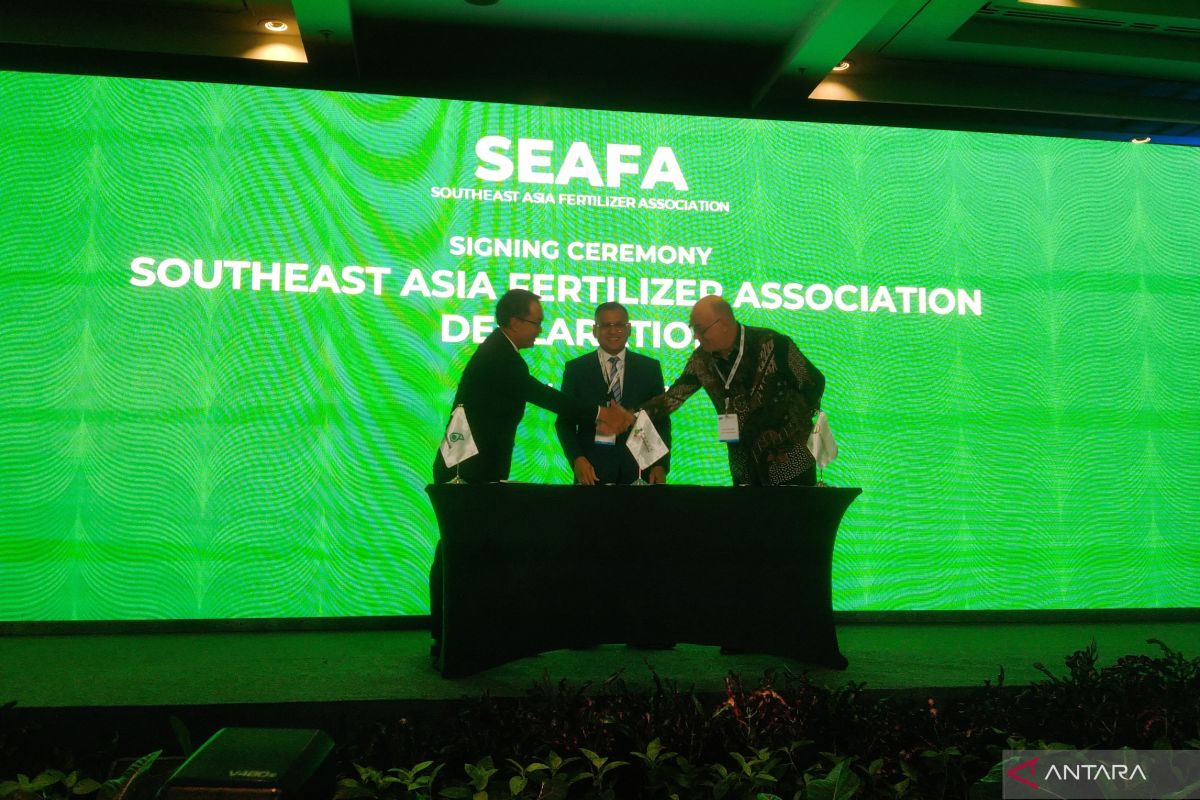
Nusa Dua, Bali - PT Pupuk Indonesia, a state-owned enterprise, has initiated the formation of the Southeast Asia Fertiliser Association (SEAFA), aimed at serving as a platform for collaboration and safeguarding supplies, particularly in the regional area.
“We took the initiative first; we discussed it with Brunei and Malaysia, and then reached an agreement,” said Pupuk Indonesia’s President Director, Rahmad Pribadi, on the sidelines of the Asia Fertiliser Conference 2026 in Nusa Dua, Badung Regency, Bali, on Wednesday.
The declaration of the association’s formation was marked by a signing ceremony involving Rahmad, alongside Harri Kiiski, President Director of Brunei’s BFI, and Bahrin bin Asmawi, representative from Petronas Chemicals Group Berhad.
The signing took place in the presence of around 200 participants from the Asia fertiliser forum, representing 30 countries.
“This is about sharing responsibilities; no single company can handle food security alone—it must be regional and global,” Rahmad stated.
Rahmad noted that the association is founded by companies from three countries—Indonesia, Brunei Darussalam, and Malaysia—and has the potential to expand to include more nations.
Meanwhile, BFI’s President Director Harri Kiiski explained that the association’s formation is deemed important, not only as a platform for cooperation but also to ensure that policymakers consider the industry’s voice.
“It is crucial that the industry’s voice is heard across the ASEAN region, as we face many challenges, from production to sustainability efforts,” he added.
The presence of this new association is hoped to serve as one solution for countries in the region, given the disruptions to global fertiliser supplies due to the Middle East conflict.
That conflict has limited access to the Strait of Hormuz in Iran, a route for approximately 30% of the world’s fertiliser.
On the other hand, Indonesia is one of the world’s largest producers of fertiliser, including urea.
As a domestic state-owned enterprise, Pupuk Indonesia has an annual production capacity of 14.5 million tonnes, with urea production reaching 9.4 million tonnes per year, while domestic urea needs amount to around 7 million tonnes.
It also produces nitrogen, phosphate, and potassium (NPK) fertilisers at an average of 4.6 million tonnes per year, other fertilisers at 0.8 million tonnes per year, ammonia at 7 million tonnes, and other chemical products at 1.6 million tonnes per year.
Regarding fertiliser raw materials, Rahmad added that they pose no issues, as urea raw materials are sourced domestically, while phosphate and potassium types are imported from countries not involved in the Middle East conflict.