
Indonesia Holds Strategic Advantage to Accelerate Furniture Industry Amid Global Conflict
Jakarta — The Indonesian Furniture and Craft Association (HIMKI) has assessed that Indonesia possesses several competitive advantages capable of strengthening the position of the national furniture industry amid uncertainty caused by conflict in the Middle East.
HIMKI Chairman General Abdul Sobur, in a statement confirmed in Jakarta on Monday, said that in the current conflict situation, global buyers will increasingly seek countries with stable supply chains, reliable production, and relatively safe business environments — advantages that Indonesia possesses.
He noted that with political stability in Indonesia, support for wood legality systems through the Forest Product Legalisation and Verification System (SVLK), and an industrial base developed over decades, the domestic furniture industry is considered strategically positioned to strengthen its role in the global furniture supply chain.
“However, what needs to be monitored is the potential increase in global logistics and energy costs, which could affect distribution and production expenses,” he said.
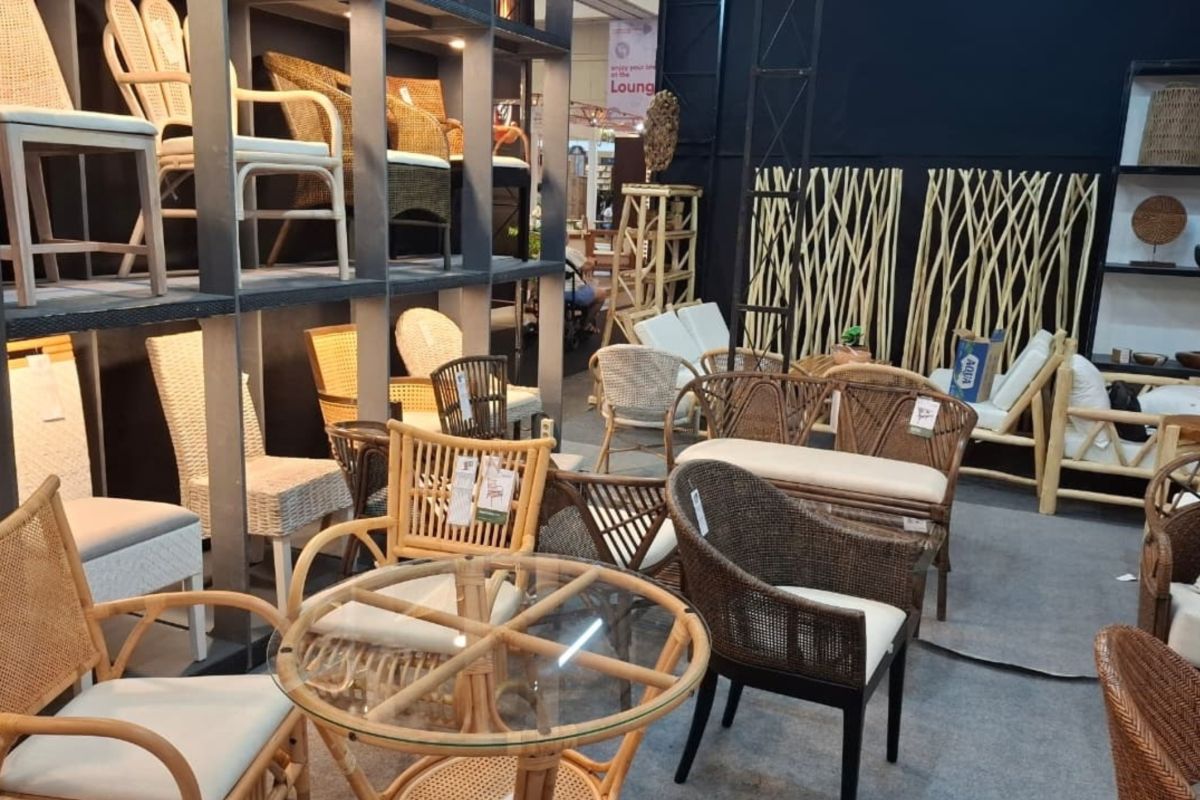
Beyond stability factors, HIMKI assessed that the main competitive advantage of the domestic furniture industry also lies in the added value of products generated. According to him, the national furniture industry has a distinctive character because it combines the wealth of natural materials such as wood, rattan, and bamboo with inherited traditional craft expertise, plus design touches inspired by the cultural diversity of the Indonesian archipelago.
“Indonesia’s advantage is not only in production, but in design creativity and cultural value embedded in every product. This is what differentiates Indonesian furniture in the global market,” added Abdul Sobur.
He also stated that to boost the competitiveness of domestic furniture products, HIMKI is organising the International Furniture Expo (IFEX) 2026, taking place from 5–8 March at ICE BSD City, Tangerang, Banten, as a space to showcase the strength of Indonesia’s creative, sustainable, and culturally rooted furniture industry.
Through this exhibition, he said, domestic producers can meet directly with buyers from various countries, build long-term business relationships, and expand access to international markets.
Over the next five years, HIMKI is optimistic that the Indonesian furniture and craft industry has significant opportunities for stronger growth with appropriate government policy support, ranging from export facilitation, strengthening raw material supplies, to financing support.
The association is targeting Indonesian furniture exports to increase gradually to reach USD 6 billion by 2030, with IFEX serving as a key engine for global market promotion and expansion.
Earlier, the Ministry of Industry (Kemenperin) targeted Indonesia to become a global furniture manufacturing production hub through strengthening sustainable wood downstream processing and improving the competitiveness of the national industry.
Minister of Industry Agus Gumiwang Kartasasmita stated in Jakarta on Friday (6 March) that the furniture industry is a crucial model of wood downstream processing because it is labour-intensive, able to create added value, and provides multiplier effects for domestic economic growth.
“This sector also absorbs hundreds of thousands of workers and is directly connected to the global market valued at more than USD 736.21 billion. Over the next five years, Indonesia is projected not only to increase production capacity, but also to lead in design and sustainability aspects,” he said.