
Indonesia Has a New 'Treasure Trove' Source, Suddenly Swarmed by Foreigners
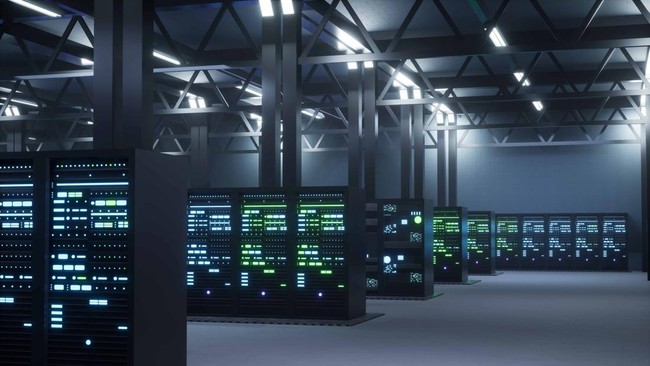
Jakarta, CNBC Indonesia - Data centre infrastructure has become a new ‘treasure trove’ in the era of the artificial intelligence (AI) technology explosion. Global technology giants are flocking to build data centres to train and develop AI technology.
Southeast Asia is poised to become one of the world’s largest data centre development hubs. Demand for data centres in the region is estimated to grow by 20% annually until 2028, according to the US-ASEAN Business Council.
Currently, there are 370 data centres in Southeast Asia, with the majority located in Singapore, Indonesia, and Malaysia, according to a report cited from Fortune, Friday (27/3/2026).
“This ecosystem has realised that if they do not capitalise on the next wave, they may end up being digitally colonised,” said Mayank Shrivastava, CEO of BDx Data Centers, headquartered in Singapore, to Fortune.
“Economic benefits flow to countries that turn raw materials into finished goods. In this case, the raw material is data,” he added.
Nevertheless, Southeast Asia faces particular challenges in developing this new ‘treasure trove’ industry. The humid tropical climate will require more energy to operate data centres compared to regions with cooler climates.
This is because the servers inside data centre infrastructure must always be kept cool. A massive amount of water and electricity supply is needed to counteract the heat generated.
The average temperature in Southeast Asia is said to be around 80-95 degrees Fahrenheit. Meanwhile, data centres ideally must be maintained at 64-81 degrees Fahrenheit, according to the American Society of Heating, Refrigerating and Air-Conditioning Engineers.
“The main issue in tropical areas is not just heat, but heat and humidity combined,” said Lee Poh Seng, a professor specialising in thermal systems at the National University of Singapore (NUS).
“In tropical climates, higher ambient temperatures make heat dissipation more difficult, while high humidity complicates dew point control, increasing the risk of condensation and corrosion, and reducing long-term reliability,” he explained.
This places data centre operators in a major dilemma. On 11 March, BDx became the first company to implement the Singapore Tropical Data Centre Standard, a set of guidelines to help data centres gradually increase operational temperatures to 26 degrees Celsius (or 78.8 degrees Fahrenheit).
Southeast Asia Becomes the New ‘King’ of Data Centres
Data centre CEOs see Southeast Asia as capable of filling gaps in the global AI ecosystem. This is because companies in the US are scrambling to address outdated electricity infrastructure and political challenges to new projects.
“The US remains the world’s largest data centre market, but it faces many challenges, especially as each state has different regulations for building data centre infrastructure,” said Eric Fan, CEO of Bridge Data Centres, to Fortune.
“Many data centre projects in the US have been delayed. Global efforts are needed to find ways to fill this gap,” he stated.
Malaysia plans to add 8 gigawatts of gas-fired power plants by 2030 to meet the growing data centre needs. Meanwhile, Singapore has pledged more than S$1 billion over the next five years for public AI research.
The global technology sector is also rushing to pour data centre investments into Southeast Asia. Giants like Amazon, Microsoft, Alibaba, and Tencent have already invested billions of US dollars to build hyperscale data centres in the region.
“Southeast Asia still has room to build [data centres],” said Lee from NUS.
“Tech giants see this region as attractive due to its population scale, connectivity, and position between South Asia and North Asia digital markets,” he added.
BDx Data Centers, founded in 2019, now spans four different countries: Singapore, Hong Kong, China, and Indonesia. Its largest operations are in Indonesia, where BDx has six data centres, including a 100MW campus in Jakarta.
Another operator, Bridge Data Centres, founded in Singapore in 2017, now operates data centres in India, Malaysia, and Thailand. The company is backed by Boston’s Bain Capital, which sold the data centre company Chindata to a China-led consortium for US$4 billion.
Climate Challenges
Although Southeast Asia has big ambitions regarding AI capabilities, companies still must think of ways to address heat and electricity supply challenges.
“AI infrastructure is essentially an energy and cooling challenge wrapped in a digital economic opportunity,” said Lee.
“Successful projects in Southeast Asia are not those that build the fastest, but those that demonstrate credible performance in power usage effectiveness, water usage, carbon intensity, and network compatibility,” he added.
He suggested that companies need to take a power-first, water-aware, and thermally smart approach, by locating projects in places with access to clean energy, using efficient designs, and shifting from room-level cooling to chip-level or liquid-based cooling.
BDx and Bridge Data Centres are said to be exploring alternative energy sources to support their operations. “The big advantage in tropical climates is that you get plenty of sunlight and wind, and you’re surrounded by water,” explained Shrivastava from BDx.
Separately,