
Indonesia Free Meals Program Faces Second Court Challenge Over Budget and Oversight
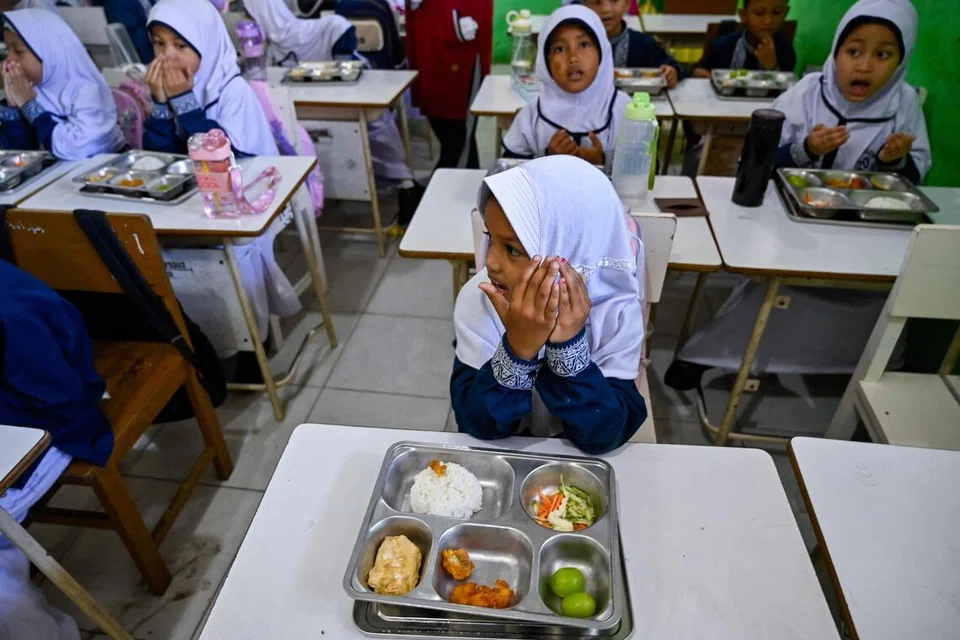
Civil groups say Prabowo’s flagship meals plan gives government too much fiscal discretion
Indonesia’s flagship free meals program is under renewed legal pressure after a coalition of civil groups challenged the 2026 budget law that funds the initiative, arguing that the spending framework is too broad, opaque, and risky.
Civil Groups Launch a Second Legal Challenge
A civil coalition known as MBG Watch has petitioned Indonesia’s Constitutional Court for a judicial review of the 2026 state budget law tied to President Prabowo Subianto’s free meals program. The coalition argues that parts of the law should be declared unconstitutional because they give overly broad discretion over public fund management and were drafted without sufficient transparency or public participation.
The challenge adds to growing scrutiny of the program, which is estimated to cost about US$20 billion a year and is designed to provide meals to more than 80 million people, mostly schoolchildren, on an almost daily basis.
A Bigger Debate Over Budget Priorities
The free meals initiative is expected to account for about 11 percent of Indonesia’s central government spending in 2026, making it one of the most politically significant and fiscally sensitive programs in the national budget. Critics say that scale could crowd out spending in other priority sectors such as education, healthcare, social protection, and infrastructure.
The coalition also argues that prioritizing such a large new program without stronger fiscal safeguards is problematic at a time when Indonesia is trying to keep its budget deficit under control. Recent market concerns have already been reflected in negative outlook changes from Fitch Ratings and Moody’s.
Another Court Case Is Already Underway
This is not the first constitutional challenge linked to the free meals program. A separate judicial review is already underway at the Constitutional Court after another foundation argued that the 2026 budget law reduces the education budget to below the constitutionally mandated 20 percent of state expenditure.
That earlier case focuses on Article 22 of Law No. 17 of 2025, with petitioners arguing that financing for the free meals program was folded into the education budget in a way that shrinks fiscal space for core education needs.
Governance and Accountability Questions Are Growing
MBG Watch says the program’s centralized implementation could weaken accountability in the management of public funds. That concern lands in a country where corruption oversight remains a major public issue. Transparency International’s 2025 Corruption Perceptions Index placed Indonesia at 109th, down three spots from the year before.
The coalition includes groups such as the Indonesian Legal Aid Foundation, the Center for Economic and Legal Studies, and Transparency International Indonesia, signaling that the challenge is not only political but also institutional and governance-focused.
What Happens Next
The Constitutional Court now faces mounting pressure to examine not just the legality of the free meals budget, but also whether the government’s planning and fiscal safeguards are strong enough for a program of this size. The court’s eventual ruling could shape how far Prabowo’s administration can go in prioritizing the initiative within future budgets.
For now, the case deepens public scrutiny of one of Indonesia’s most ambitious and expensive social programs, while reinforcing broader questions about spending discipline, transparency, and the trade-offs built into the 2026 budget.
The second court challenge shows that Indonesia’s free meals program is no longer just a welfare initiative. It has become a test of fiscal governance, legal discipline, and public accountability. For Indonesians, the core issue is whether a massive social program can be funded without weakening other essential sectors. For Singaporeans and regional observers, the case is a reminder that Indonesia’s domestic spending choices can influence investor confidence, budget stability, and wider economic sentiment across Southeast Asia.
Sources: Straits Times (2026) , Bloomberg (2026)
Keywords: MBG Watch, 2026 State Budget Law, Constitutional Court Indonesia, Free Meals Funding, Indonesia Fiscal Policy