
Indonesia Failed to Attract Rp1,500 Trillion in Investment Throughout 2024
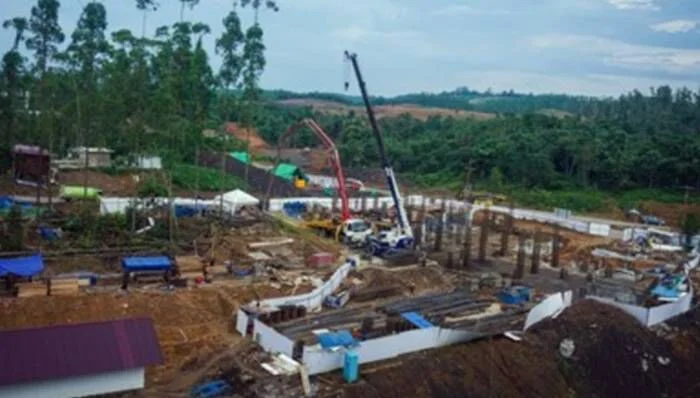
JAKARTA – Throughout 2024, Indonesia failed to attract investment worth Rp1,500 trillion. Deputy Minister of Investment and Downstreaming, who also serves as Deputy Head of BKPM, Todotua Pasaribu, cited complicated licensing and overlapping policies as the main causes.
“An unconducive investment climate, problematic licensing, and misaligned policies must be addressed collectively,” said Todotua on Thursday (3/7/2025).
He stressed the importance of input from various parties to refine policies. The Ministry of Investment, he said, has prepared a number of reform concepts.
The government has in fact implemented several strategies to attract investors. However, these efforts have not yet yielded optimal results. The following are three key policies deemed ineffective:
1. Omnibus Law on Job Creation
The government and the House of Representatives (DPR) passed Law Number 11 of 2020, or the Job Creation Law, on 5 October 2020 to simplify regulations and accelerate investment. However, the Constitutional Court declared the law conditionally unconstitutional in November 2021 due to a lack of transparency in the drafting process.
The government followed up by issuing Government Regulation in Lieu of Law (Perppu) Number 2 of 2022, which was subsequently ratified by the DPR in March 2023. Despite this, legal controversy persisted. CORE Indonesia researcher Yusuf Rendy Manilet assessed that the law was ineffective as it was born from a process that violated procedures, creating legal uncertainty that made investors hesitant.
2. Illegal Levies Eradication Task Force (Satgas Saber Pungli)
President Joko Widodo established the Illegal Levies Eradication Task Force through Presidential Regulation Number 87 of 2016. The task force was mandated to eradicate illegal levies to create a cleaner investment climate. However, illegal levies remained rampant in the regions.
DKI Jakarta Chamber of Commerce (Kadin) Chairwoman Diana Dewi noted that many entrepreneurs were forced to pay additional costs demanded by various parties, including NGOs. As a result, the cost of opening a business in the regions was far higher than in DKI Jakarta.
In Cilegon, Kadin Chairman Muhammad Salim and two of his members were even alleged to have forced PT Chengda Engineering to hand over a project worth Rp5 trillion without a tender process. Police named them as suspects.
President Prabowo ultimately dissolved the Illegal Levies Eradication Task Force through Presidential Regulation Number 49 of 2025, deeming it no longer effective.
3. Lack of Synchronisation Between Central and Regional Policies
Entrepreneurs have complained about policy discrepancies between central and regional governments. This lack of synchronisation has made the investment process increasingly convoluted and added to the costs borne by business operators.
Conclusion
Investment worth Rp1,500 trillion failed to enter Indonesia due to complicated licensing, overlapping policies, rampant illegal levies, and legal uncertainty. The government needs to undertake comprehensive reform so that investors feel confident and protected when investing capital in Indonesia.