
Indonesia Faces Waste Emergency: 132 Regions Under Strict Monitoring
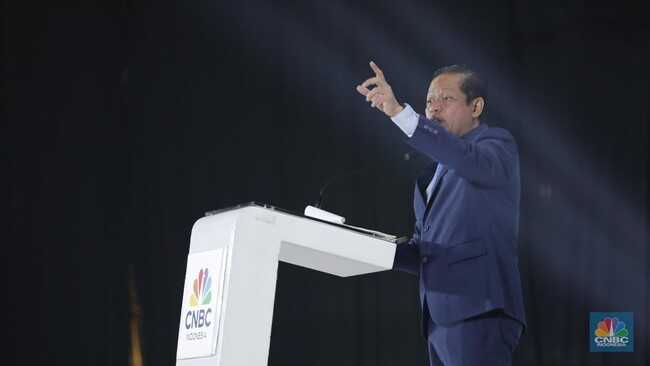
Jakarta, CNBC Indonesia - Minister of Environment and Forestry/Head of the Environmental Agency, Hanif Faisol Nurofiq, stated that the waste problem has reached an emergency stage and requires a complete change in paradigm. Currently, there are 132 regions in the monitoring category, mainly because they still practice open dumping or have waste management rates below 25%.
By the end of 2025, the national waste management rate will only reach 25%, or about 36,684 tons per day, while the remaining 75% (105,483 tons per day) is not being adequately managed and still poses a risk of environmental pollution.
“The change must start from the upstream. The old paradigm of collect-transport-dispose must be abandoned. Reduction from the source through 3R and a circular economy is the key to solving this problem,” said Minister Hanif in his official statement on Thursday (February 26, 2026).
He emphasized the optimization of waste management from upstream to downstream, with a focus on reducing waste at the source, including changing public behavior and implementing circular economy principles. This approach aims to minimize waste going to landfills and stop the practice of open dumping.
Coordinating Minister for Food Affairs, Zulkifli Hasan, also made an important statement regarding the increasingly urgent waste problem. “The President’s direction is clear that we must immediately resolve the waste problem. This is a responsibility for all of us, because almost all regions are in a state of waste emergency. Hopefully, at this National Coordination Meeting, we can align our visions and missions regarding this issue,” said Coordinating Minister Zulkifli Hasan.
This situation poses a major challenge, given that the 2025-2029 National Medium-Term Development Plan (RPJMN) targets 63.41% waste management by 2026 and 100% by 2029. With the projected national waste generation reaching 146,780 tons per day in 2029, a leap in policy and the implementation of an integrated system is needed.
On the same occasion, the Ministry of Environment and Forestry/Environmental Agency (KLH/BPLH) released the results of the 2025 waste management performance assessment for regions. The assessment results show that no region has achieved the Adipura Kencana or Adipura category. As many as 35 regions received the Certificate Towards a Clean Region. Meanwhile, 253 regions are in the guidance category and 132 regions are in the monitoring category, mainly because they still practice open dumping or have waste management rates below 25%.
“To achieve the target of 100% waste management, we cannot only rely on central government policies. Success is largely determined by the strong commitment of regional heads to prioritize integrated and source-based waste management. The central government is ready to help, but without regional commitment, this target will be difficult to achieve,” said Minister Hanif in front of 1,500 participants at the National Coordination Meeting.
The KLH/BPLH stated that this National Coordination Meeting is a consolidation point to ensure that the national waste management transformation does not stop at discourse, but is realized through concrete actions, measurable systems, and consistent law enforcement to create a clean, healthy, and sustainable Indonesia.
The Ministry of Environment and Forestry/Environmental Agency (KLH/BPLH) officially opened the 2026 National Coordination Meeting on Waste Management as part of the celebration of National Waste Awareness Day (HPSN) on February 25-26, 2026. This National Coordination Meeting is a national consolidation moment to accelerate the transformation of the waste management system from upstream to downstream through the grand vision of Collaboration for a Safe, Healthy, Clean, and Beautiful Indonesia (ASRI).