
Indonesia Faces Prolonged Drought Risk, BRIN Highlights Godzilla El Niño Phenomenon
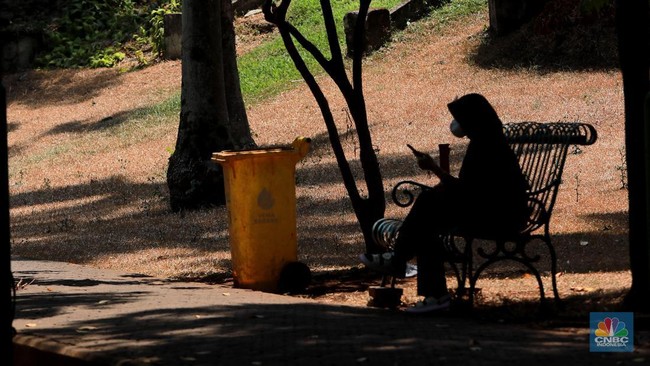
The term “Godzilla” El Niño may sound dramatic, but behind the striking name lies serious potential impacts for Indonesia, particularly regarding a dry season predicted to be longer and drier in 2026.
Researchers from the National Research and Innovation Agency (BRIN) emphasise that this information is not intended to alarm, but rather as an early anticipation measure so that society and the government can be better prepared to face extreme climate changes.
This phenomenon refers to the strengthening of El Niño, which is the warming of sea surface temperatures in the equatorial Pacific Ocean that directly affects global weather patterns, including in Indonesia. Under certain conditions, its intensity can be very strong, earning it the nickname “Godzilla”.
Based on global models released by the Japan Agency for Marine-Earth Science and Technology, signals of the El Niño emergence have been detected since April 2026. This phenomenon is expected to be strengthened by a simultaneous positive Indian Ocean Dipole (IOD).
The combination of these two phenomena has the potential to significantly alter cloud distribution. Cloud formation and rainfall activities will be more concentrated in the Pacific region, while Indonesia experiences a decline in rainfall.
“The El Niño phenomenon, including the potential for strong variations (‘Godzilla’), causes the dry season in Indonesia to become longer and drier,” BRIN states in its study.
During the period from April to October 2026, this condition is expected to dominate the dry season in Indonesia. BRIN’s seasonal prediction model shows that southern Indonesia will feel the earliest and most significant impacts.
“For April to July 2026, dry conditions are predicted in most of Java Island to East Nusa Tenggara,” according to BRIN’s analysis.
On the other hand, weather patterns will not be uniform across all regions. Some eastern parts of Indonesia are expected to continue receiving high rainfall.
“Regions in Sulawesi, Maluku, and Halmahera will largely still experience high rainfall,” BRIN continues.
These differences make the emerging impacts complex. On one hand, southern regions may face drought that threatens the agricultural sector, especially in national food production centres. On the other hand, northeastern Indonesia must prepare for flood risks during the dry season.
BRIN also warns of the potential increase in forest and land fires (karhutla), particularly in Sumatra and Kalimantan, though not uniformly across both islands.
“The impacts of super El Niño and positive IOD are not uniform across Indonesia,” BRIN writes, referring to previous similar events.
BRIN researcher Erma Yulihastin stresses the importance of cross-sectoral preparedness to face these conditions. The government is urged not only to focus on drought, but also on other potential disasters that may arise simultaneously.
“Therefore, the government needs to be wary of drought impacts that could threaten the national food barn in the northern coastal areas of Java. In addition, the impacts of karhutla in Kalimantan and Sumatra must also be mitigated. However, at the same time, the government should also prepare strategies to handle excess rainfall in Sulawesi, Halmahera, and Maluku,” she said.
Amid these potential risks, there are also opportunities that can be exploited, such as optimising salt production in southern Indonesia, which tends to be drier.