
Indonesia Expands Storage Capacity, Aims for 90-Day Oil Reserves
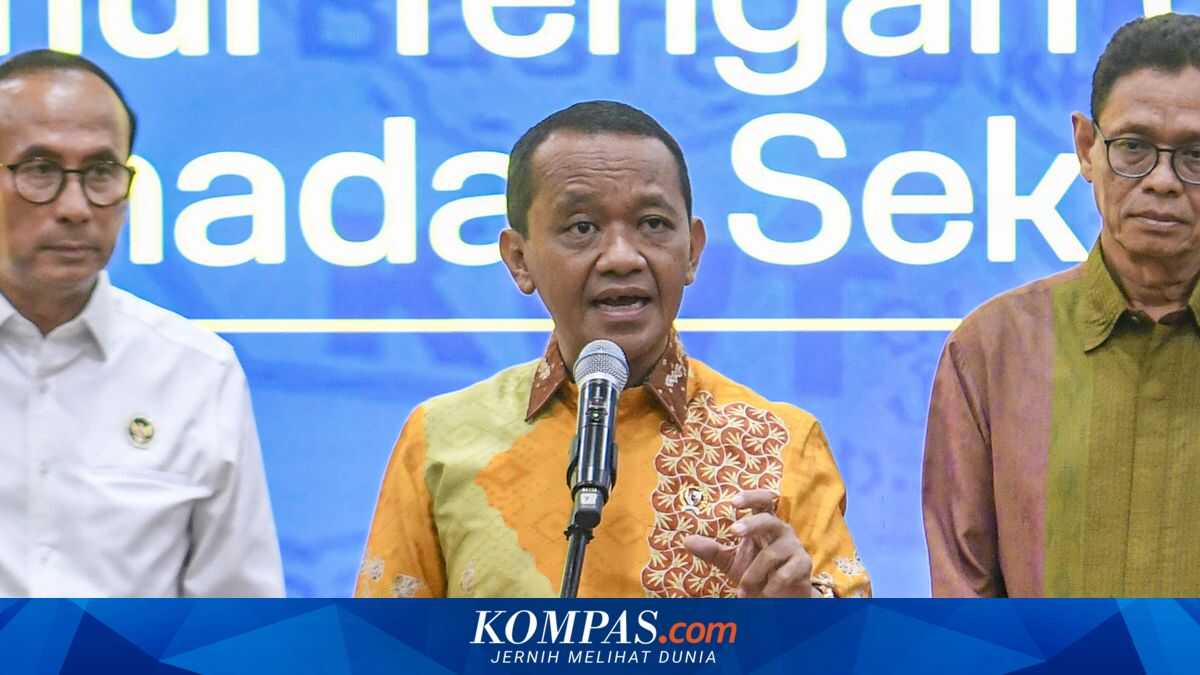
JAKARTA — Indonesian Minister of Energy and Mineral Resources (ESDM) Bahlil Lahadalia said the government will increase storage capacity to boost Indonesia’s crude oil reserves to 90 days, or three months. The move aligns with President Prabowo Subianto’s request that Indonesia’s crude oil reserves rise as tensions in the Middle East threaten global supply. He noted that current capacity for national BBM reserves is only up to 25 days. The BBM reserves held by PT Pertamina (Persero) are around 20–23 days.
“BBM storage capacity has long been a maximum of 25 days, so our national reserves have been at least 20 to 23 days. Now (the supply) BBM is 23 days, so it is above the minimum standard of national reserves as usual,” he told reporters at the Presidential Palace, Jakarta, on Wednesday, 4 March 2026.
“We cannot, say, we must stock 60 days. Where to store it? We do not have storage,” he added.
“Now the President’s directive is to immediately build storage. So it’s not that we do not have reserves to fill oil, but where to store it? This is our shortcoming, but we should not blame anyone,” he said.
“How should we fix this? By building storage, so that our reserves can reach three months,” he added.
He said that in one to two months’ time the supply situation is still reasonably safe and shows no disruption yet. But if the conflict lasts longer, it will almost certainly affect global and national energy supply.
“If up to now things have not been disrupted, they have not. But if the war is prolonged, it will certainly have an impact,” he said.
As a short-term precaution, the government decided to divert all crude oil imports from the Middle East to the US.
He noted that around 25 percent of total Indonesia’s crude imports have historically come from the Middle East. The remainder is sourced from other countries, such as Angola in Africa, the United States, and Brazil.
“From that 25 percent, we have redirected the precautionary supply to America or to countries not linked to the Strait of Hormuz,” he concluded.