
Indonesia Enters Elite Club of Global Drug and Food Regulatory Authorities
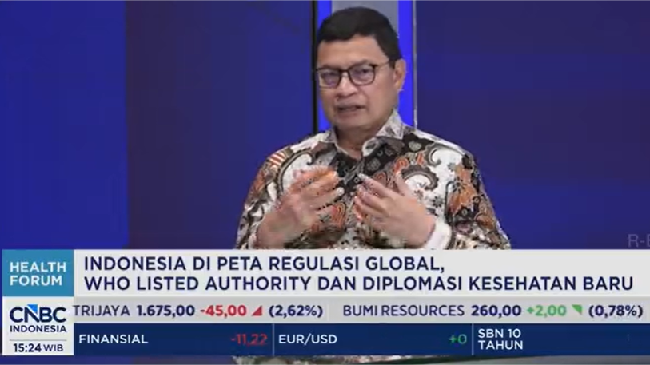
Jakarta – Indonesia’s Food and Drug Authority (BPOM) has made history in global health governance by being designated as a WHO Listed Authority (WLA) by the World Health Organization in December 2025, representing the highest form of recognition for the quality, integrity, and credibility of a country’s drug and food regulatory system.
This recognition places BPOM on equal footing with leading regulatory authorities in developed nations, such as the Therapeutic Goods Administration (TGA) of Australia. Countries achieving WLA status gain international recognition, allowing their pharmaceutical products and vaccines to be included in WHO-recommended product lists.
According to BPOM head Taruna Ikrar, Indonesia is the first developing nation to attain WLA status, which is typically reserved for developed countries. “This is a matter of great pride,” Ikrar stated at a Health Forum on 27 February 2026 titled “BPOM Achieves WLA Status: What Are the Benefits for Business Players?” “Joining this elite club, which sets the standards for drug and food regulatory oversight globally, is no simple achievement and is not available to all nations.”
The WLA designation serves as proof that Indonesia’s drug and food oversight has achieved standards comparable to or exceeding those of other nations. Notably, several major countries including China, India, and Russia have not yet achieved WLA status.
“Our entry into this list demonstrates our extraordinary standards – they are at the same level as those in America and Europe, the standards of developed nations already on the list. The first benefit is reputation. We become a reference point, a standard-setter,” Ikrar explained.
Ikrar further noted that Indonesia’s WLA status enables it to serve as a reference and standard-setter globally. Of the 196 countries in the world, only 30 have achieved WLA status.
With regulatory standards equivalent to those of America and Europe, public and institutional confidence will grow. Products previously approved by BPOM but unable to enter developed nations can now achieve higher market status, with each BPOM-approved product gaining recognition in those nations.
“There is reciprocity as well – our products can cross borders and be marketed in other countries. If a product can enter a market with such high standards, it will certainly be accepted by markets with lower regulatory maturity levels,” Ikrar stated.
He also noted that whereas BPOM’s previous market reach covered only Indonesia’s 286 million inhabitants, its scope now extends to over 8 billion people globally. This expansion will generate substantial economic impact as Indonesia opens broader markets and creates multiplier effects for the future.
“Furthermore, there are more specific aspects to consider. We can serve as a reference point, a standard, and a basis for reliance. Most importantly, we can use this as part of a bargaining chip or leverage in global health diplomacy. We are now a global player, not merely a domestic champion,” Ikrar concluded.