
Indonesia enhances Komodo protection with conservation action plan
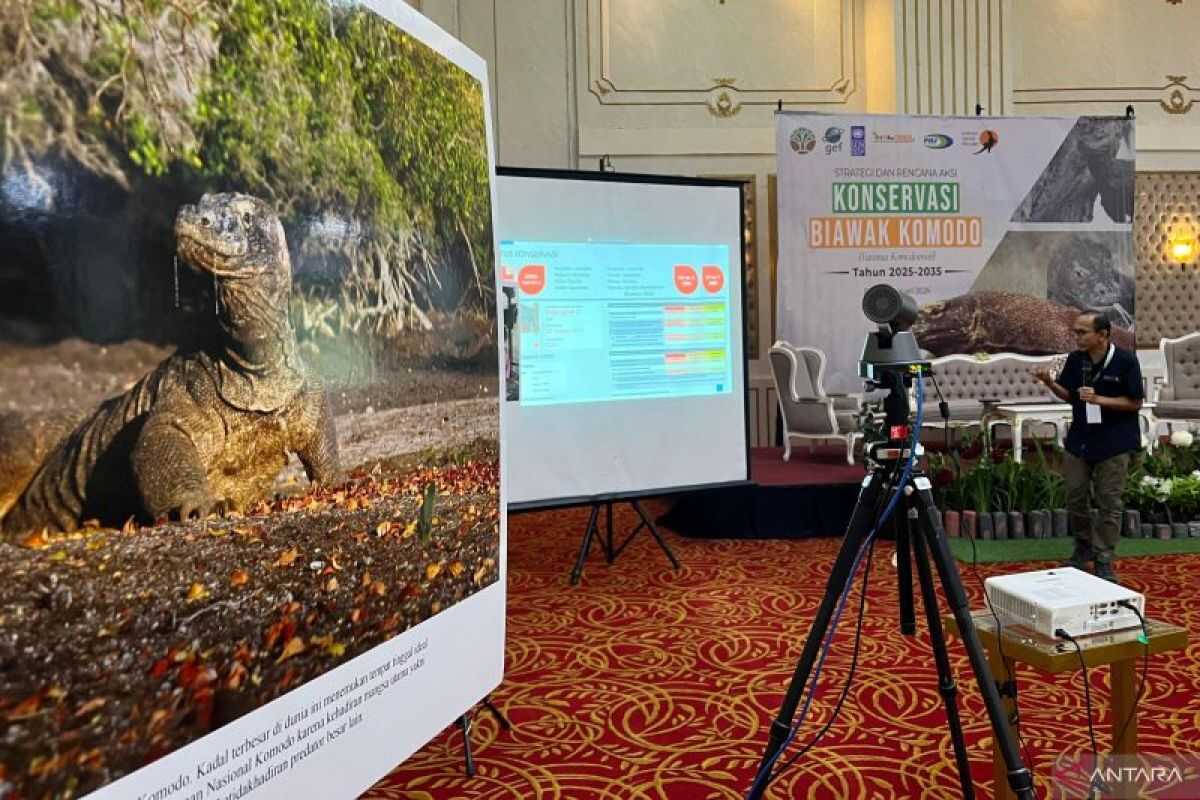
The Director of Species and Genetic Conservation at the Ministry of Forestry, Ahmad Munawir, emphasized the necessity of the SRAK, noting that Komodo dragons are an endemic species found only in Indonesia, specifically in East Nusa Tenggara (NTT) province.
“The conservation of Komodo dragons is urgent for all of us—the central government, regional governments, the private sector, NGOs, and the community,” he said during a dissemination of the Komodo SRAK in Bogor, West Java, on Thursday.
He explained that although the Komodo population within Komodo National Park is currently stable, the species remains categorized as endangered on the IUCN Red List, thereby requiring protection efforts to be strengthened continuously.
According to Munawir, threats to Komodo dragons include habitat degradation and a decrease in prey due to illegal hunting, both of which can disrupt the balance of the ecosystem.
He noted that based on estimations, there are approximately 3,200 Komodo dragons within the Komodo National Park. Meanwhile, the population outside the national park is estimated at around 700 individuals, scattered across the northern and western regions of Flores Island.
He further explained that the Komodo SRAK document is valid for ten years since it was signed in 2025 until 2035, prepared through a collaboration of various parties, such as the Ministry of Forestry, non-governmental organizations (NGOs), and conservation organizations like the Komodo Survival Program (KSP).
“The primary goal, of course, is to protect and maintain the Komodo dragon’s survival. This document outlines four main programs, strategic activities, and specific action plans,” he stated.
Chair of the KSP, Deni Purwandana, added that the greatest conservation challenges lie outside protected areas, as approximately 50 percent of the Komodo dragon distribution on Flores is located in non-formal conservation zones.
According to him, this situation requires support from all stakeholders to prevent Komodo dragon habitats from shrinking due to human activity, including the expansion of tourism in several regions.
He noted that a social approach targeting local communities living near these habitats is the key to success, pointing out that some residents remain sensitive to the term ‘conservation,’ despite having lived alongside Komodo dragons for generations.
Related news: Indonesia shut Komodo, Padar routes after cruise boat incident
Related news: Authorities name suspects in illegal hunting in Komodo National Park
Related news: Teenage komodo found dead on road in Komodo National Park
Translator: M Fikri, Raka Adji