
Indonesia Dominated by Gen Z, Millennials Step Aside!
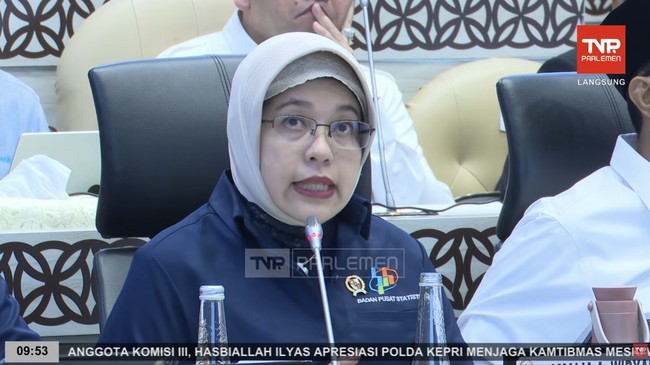
Indonesia’s population has reached 284.67 million people, according to the results of the 2025 Inter-Census Population Survey released in Jakarta on Tuesday (5/5/2026). From this total, the Central Statistics Agency (BPS) recorded Generation Z as the largest group with a percentage of 24.93%, followed by the Millennial Generation at 24.34%. The combination of the two encompasses the young generation. For the record, Generation Z refers to the population group born in 2013. It is estimated that they are up to 12 years old as of 2025. “This covers almost half of Indonesia’s population, showing the dominance of the productive generation in the current population structure,” said BPS Head Amalia Adininggar Widyasanti on Tuesday (5/5/2026). Contributions from the other four generations amount to 50.73%, consisting of Generation X at 19.70%, Post-Generation Z at 19.65%, Baby Boomers at 10.31%, and Pre-Boomers at 1.07%. Meanwhile, the 2025 SUPAS results show that the proportion of the working-age population (15-64 years) is 68.94%, an increase compared to the 2010 Census figure of 66.09%. In contrast, the non-working-age population (0-14 years and 65 years and above) shows a different pattern: the 0-14 years age group has declined compared to the 2010 Census, from 28.87% to 23.44%, while the 65 years and above group has increased from the 2010 Census, namely from 5.04% to 7.62%. “The change in the population composition of these age groups shows a shift in the age structure of the population that is beginning to narrow in the 0-14 years age group and widen in the 15-64 years age group,” she said. If the composition of these age groups is observed, the dependency ratio indicator can be derived, which is the ratio of the non-working-age population (0-14 years and 65 years and above) to the working-age population (15-64 years).