
Indonesia Could Become Prosperous by Processing Coconut and Gambier, Values Reach This Amount
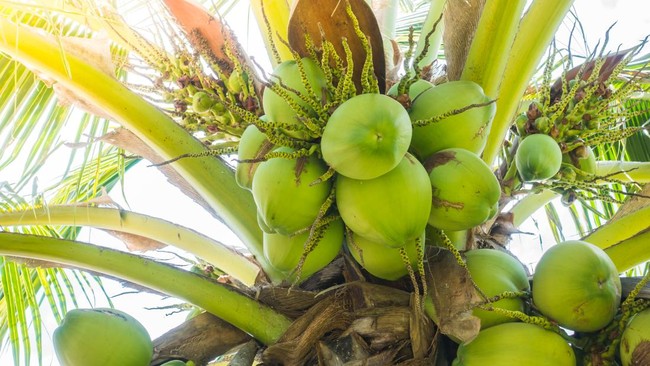
Jakarta — Agriculture Minister Amran Sulaiman has targeted an increase in economic value added of up to Rp5 trillion through a downstream processing programme for various agricultural commodities, ranging from coconut to gambier. He stated that the government wishes to encourage commodities that have historically been exported as raw materials to be processed into finished products domestically first.
Amran noted that gambier is one commodity with significant potential. Whilst Indonesia controls most of the global market, it still exports the material in its raw form.
“From Universitas Andalas, gambier. God willing, a gambier factory — we control 80% of the world market. But we export raw materials. We should be doing downstream processing; this is the President’s directive,” Amran said at a press conference at the Agriculture Ministry’s office in Jakarta on Thursday, 12 March 2026.
He explained that downstream processing would ensure the added value of these commodities remains within the country.
“We will process all these commodities downstream. This added value will then stay in Indonesia. Calculated at Rp5 trillion — the calculation is from the rector of Universitas Andalas, focussing on gambier. This can become ink, can become shampoo, can become soap, and so on,” he stated.
According to him, derivative products from agricultural commodities should be produced domestically before being exported to global markets.
“Then we export the finished goods to other countries,” Amran said.
He emphasised that the downstream processing strategy applies not only to gambier but also to various other agricultural commodities.
“The essence is that all domestic commodities, whether protein-based sectors or others, we process downstream so that this can establish Indonesia as a superpower nation — a great nation,” he said.
Amran highlighted the significant potential for downstream processing in coconut. If all coconut derivative products are processed domestically, the value is estimated to reach thousands of trillions of rupiah.
“Imagine, from coconut if we do downstream processing, the value could reach coconut water with the coconut itself — the total could be Rp5 trillion. Then gambier could be Rp5 trillion. This is based on university calculations,” he said.
Additionally, the government sees significant opportunities in the downstream processing of crude palm oil (CPO), which has been one of Indonesia’s major export commodities.
“Then our CPO, if we process it into margarine. We control 60% of the world market for CPO. If we process all of this and send finished goods, you can imagine it would create jobs, generate foreign exchange, increase our GDP, reduce poverty, and so on,” Amran concluded.