
Indonesia "Controls" 3 Global Trade Routes: If Closed, the World Would Die
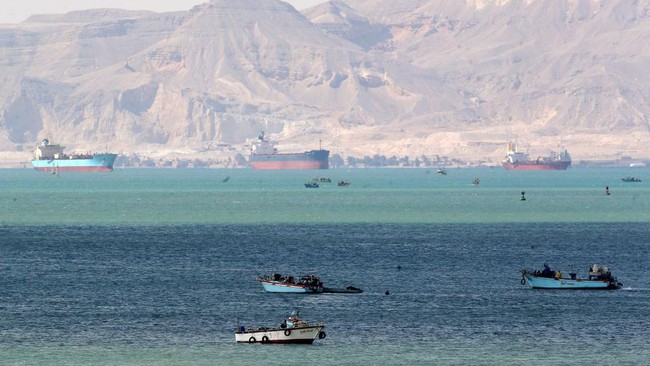
President Prabowo Subianto has warned that disruptions in the Strait of Hormuz demonstrate the profound impact a single sea route can have on global trade and economy. When one strait alone can cause energy prices to fluctuate and global markets to falter, Indonesia holds an equally strategic position in worldwide trade traffic.
According to Prabowo, Indonesia possesses numerous straits that have long served as critical pathways for energy trade, particularly for East Asian countries. Prabowo emphasised that around 70% of East Asia’s energy requirements pass through Indonesia’s seas.
“Are we aware that the Malacca Strait, Sunda Strait, Makassar Strait, and others are in Indonesian waters? Are we aware of how important Indonesia is, how key Indonesia is? 70% of the energy for Korea, Japan, Taiwan, China, the Philippines,” said Prabowo at the Presidential Briefing during the Working Meeting of the Government Members of the Red and White Cabinet at the State Palace in Jakarta on Wednesday (8/4/2026).
This statement illustrates that Indonesia’s position is not merely important geographically but crucial in the regional energy supply chain and trade.
So, how important are these three main straits in Indonesia? This is where the significant role of the Malacca Strait, Sunda Strait, and Makassar Strait lies in supporting global energy and trade flows.
Malacca Strait
The Malacca Strait is one of the most vital sea routes in the region. It connects the Indian Ocean to the Pacific Ocean via the South China Sea, while also serving as the shortest sea route from the Persian Gulf region to major markets in Asia. Therefore, the Malacca Strait has long been the primary route for energy and goods flows to East Asia.
The strait’s major role is evident from the high volume of ship traffic passing through it.
In a year, around 82,000 ships traverse the Malacca Strait. Not only that, more than 40% of global trade also crosses this route. These figures show that the Malacca Strait is not just an ordinary shipping lane but one of the world’s trade arteries.
From an energy perspective, the Malacca Strait’s role is also immense. According to the EIA, more than 20 million barrels of oil and petroleum liquids pass through the strait every day. Meanwhile, the IEA states that the Malacca Strait is one of the most important energy chokepoints in the region. This route is also vital for gas trade, as Japan and South Korea rely on the Malacca Strait for part of their LNG supplies.
However, the importance of the Malacca Strait comes with certain limitations. This route is not always ideal for very large tanker ships. Due to coral reefs and shallow waters in some areas, ships with deep drafts like VLCCs and ULCCs often opt for safer alternative routes. Nevertheless, the Malacca Strait remains a primary route that is highly determinant for smooth trade and energy supplies in the region.
Sunda Strait
The Sunda Strait, located between Java and Sumatra islands, is one of the important routes connecting the Indian Ocean to the Java Sea. From this route, shipping connectivity also links to broader Asian regions.
Although the Malacca Strait remains the main trade route in the area, the Sunda Strait still plays an important role as an alternative when traffic on the main route is congested or disrupted.
The Sunda Strait’s role cannot be underestimated. This route supports the transportation of energy, commodities, and various trade goods. Therefore, when geopolitical tensions rise or the main route faces disruptions, the Sunda Strait’s position becomes increasingly important in maintaining smooth trade flows.
The Sunda Strait is important not only economically but also from a security standpoint. Smooth shipping in this route affects regional trade and economic stability. Moreover, the International Energy Agency (IEA) records more than 3 million barrels of crude oil passing through the Sunda Strait daily.
However, the Sunda Strait also has limitations. This route is not always ideal for very large tanker ships due to natural conditions. Additionally, the Sunda Strait faces risks of disruptions from non-economic factors, such as volcanic activity, weather, and navigation safety issues.
This is what makes the security and smoothness of this route a key concern. Although not as busy as the Malacca Strait, the Sunda Strait holds a strategic role. It serves as one of the important buffers in Indonesia’s shipping system, especially when regional trade requires safe and efficient alternative routes.
Makassar Strait
The Makassar Strait is one of Indonesia’s important sea routes, located between Kalimantan and Sulawesi islands. This strait has a width of about 100-200 kilometres and a length of 300 kilometres. Its large size makes the Makassar Strait a fairly significant shipping route in the region.
If the Malacca Strait is known as the main trade route, the Makassar Strait plays an important supporting role that is also highly strategic.
This route is part of the shipping lane connecting the Indian Ocean to East Asia via the Sulawesi Sea. Therefore, the Makassar Strait serves as a gateway for trading ships from Australia heading to Asian countries, such as Japan and South Korea.
The main advantage of the Makassar Strait lies in its route conditions, which are suitable for large ships.
When large-sized ships cannot easily pass through the Malacca Strait or Sunda Strait, this route becomes an important choice. In other words, the Makassar Strait helps maintain the smooth transportation of energy and goods in large volumes in the region.
This route is crucial when large ships cannot freely navigate the Malacca Strait or Sunda Strait. That is why the Makassar Strait contributes to ensuring the smooth flow of maritime trade in the area.