
Indonesia cited as an example of sustainable fisheries management at the FAO forum
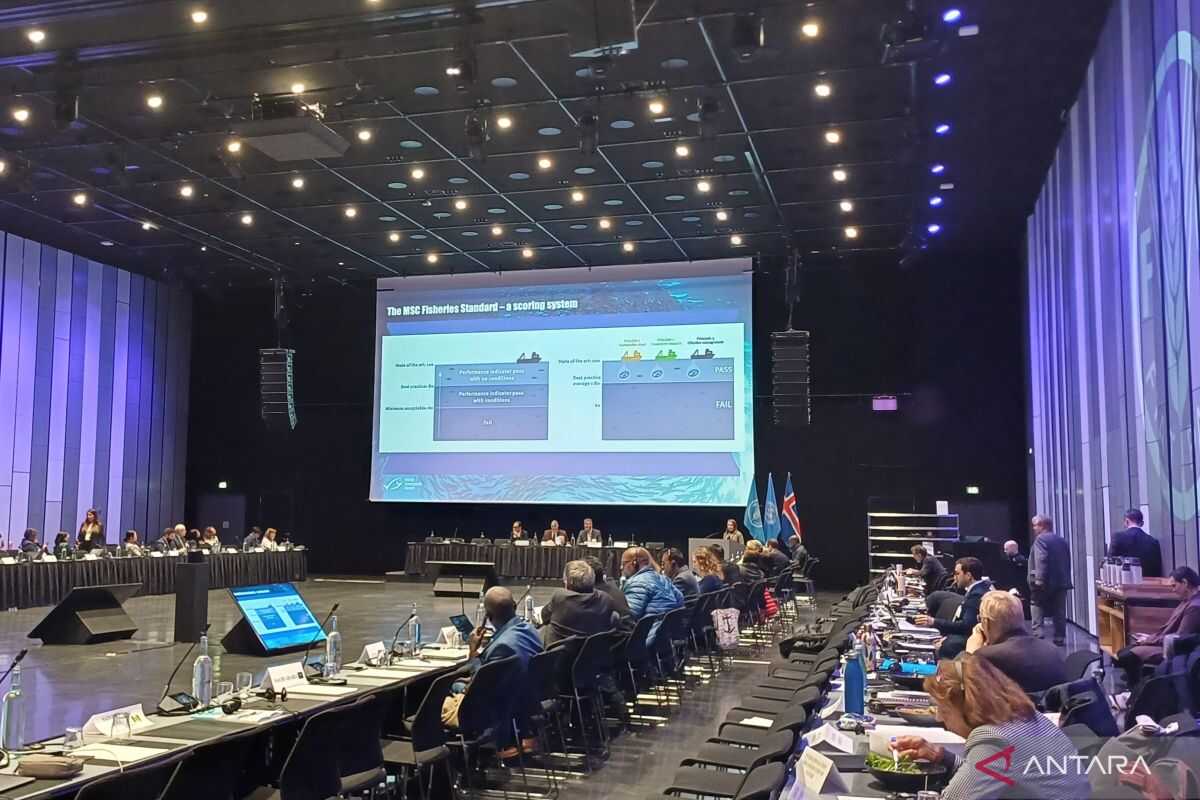
Bogor, West Java (ANTARA) - Indonesia has received praise at a global forum for being a strong example in sustainable fisheries management, particularly in the small-scale fisheries sector, at the Food and Agriculture Organisation of the United Nations (FAO) meeting in Reykjavik, Iceland.
The recognition was conveyed by the Marine Stewardship Council (MSC) during an event titled “Lessons learned from improving fisheries management: 15 years of application of MSC tools in the pre-certification space”, which was held on the sidelines of the Committee on Fisheries (COFI) meeting of the Food and Agriculture Organisation.
The Head of Fisheries Standard Accessibility at MSC, Amanda Lejbowicz, stated in a statement in Bogor, West Java, on Wednesday, that Indonesia has shown significant progress in building sustainable fisheries governance through strategic partnerships.
“Indonesia demonstrates how strategic partnerships between the government and stakeholders can create systemic impact in fisheries governance,” she said.
The forum serves as a strategic platform for FAO member countries to discuss policies and best practices in global fisheries governance.
During the event, MSC emphasised the importance of cross-sectoral collaboration in strengthening sustainable fisheries management systems.
Indonesia is considered to have successfully presented a collaborative approach through coordination between the government, businesses, fisheries associations, research institutions, and civil society organisations.
This approach serves as the foundation for driving systematic improvements in fisheries management.
A representative from the Ministry of Marine Affairs and Fisheries of the Republic of Indonesia (KKP) presented the national strategy through the National Fisheries Improvement Meeting, which aims to align various Fisheries Improvement Projects (FIP) with national policies and technical support in the field.
Currently, there are seven MSC Improvement Programmes running in Indonesia. These programmes involve fishing units, industry associations, and other stakeholders to promote more transparent, measurable, and science-based management practices towards international standards.
She added that with one certified fishery and seven fisheries active in the MSC Improvement Programme, Indonesia is considered to be building an ecosystem that supports sustainable fisheries management while strengthening its position at the global level.
Meanwhile, the Chairman of the Working Group for the Assessment of Indonesian Fish Stock at the Directorate General of Capture Fisheries of KKP, Fery Sutyawan, said that improving fisheries governance is a strategic national priority in line with the blue economy policy and quota-based management.
“Collaboration with various partners, including MSC, helps strengthen cross-sectoral coordination, increase transparency, and ensure that fisheries improvement efforts, especially at the small-scale level, are aligned with national policies,” said Fery.
Through the MSC Improvement Programme and Pathway Programme, fisheries in Indonesia obtain a framework to identify gaps in sustainability standards, develop improvement roadmaps, and enhance management capacity.
This approach includes strengthening fishing strategies, implementing harvest control rules, developing management strategy evaluation, and improving the quality of fisheries data with limited information.
MSC believes that the success of the transformation of the fisheries sector depends on supportive regulations, science-based management, and market incentives that promote responsible practices.
Indonesia is considered to have successfully demonstrated how national coordination can accelerate this improvement process.
This forum also reaffirms Indonesia’s position as one of the countries that actively shares experiences in sustainable fisheries management, while also strengthening the credibility of national fisheries products in the international market.
In the future, MSC stated its commitment to continue expanding partnerships with the Indonesian government and stakeholders so that fisheries improvement efforts not only produce technical progress but also improve the economic value and welfare of coastal communities sustainably.