
Indonesia calls WTO fisheries subsidy ban unfair to developing nations
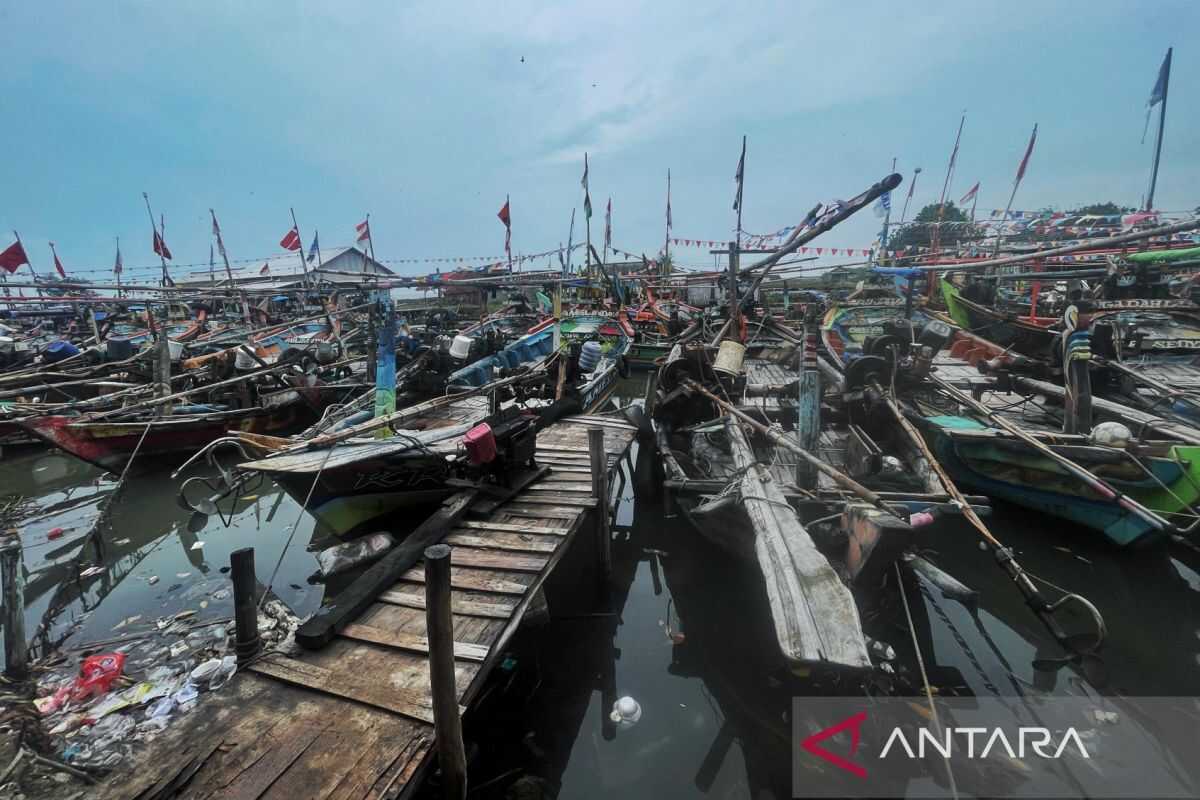
An Associate Expert Trade Negotiator at the World Trade Organization Negotiations Directorate at the Ministry of Trade, Jeremy Kumajas, said that the one-size-fits-all regulation does not reflect the differences in the characteristics of the fisheries sector between countries.
According to Kumajas, about 90 percent of Indonesian fishermen are small-scale fishers who continue to depend heavily on operational subsidies, such as fuel, to carry out fishing activities.
“Subsidies in developing countries are not intended to massively expand fleets or distort global markets, but rather serve as a social safety net, protection from poverty, and an instrument for food security,” he remarked in a discussion on Thursday (March 5).
The AFS is an agreement adopted at the WTO Ministerial Conference (MC12) in Geneva in June 2022 and officially came into effect on September 15, 2025, after being ratified by 116 WTO members.
In the first phase (AFS I), WTO members agreed to prohibit subsidies for illegal fishing practices, subsidies for overfished fish stocks, and subsidies for high seas fishing operations not under the management of regional fisheries organizations.
Indonesia has not yet ratified the first phase of the AFS and stated the need to ensure the agreement aligns with national policies, including the mandate of Law Number 7 of 2016 concerning the Protection and Empowerment of Fishermen.
Meanwhile, negotiations for the second phase of the AFS are still underway, focusing on rules governing subsidies that contribute to excess fishing capacity and overfishing, including support for fishing fleets such as fuel subsidies, vessel construction, and gear modernization.
For the second phase of the AFS negotiations, Indonesia pushed for strengthening the special and differential treatment (S&D&T) mechanism for developing countries, Kumajas explained.
He mentioned that in the latest draft, the scheme includes a full exemption for least developed countries (LDCs) from the ban on subsidies that contribute to excess capacity and overfishing.
Furthermore, developing countries with a share of global fisheries production below 0.8 percent, or categorized as de minimis, are still allowed to maintain certain subsidies.
The proposal also allows developing countries to continue granting subsidies for fishing within their exclusive economic zones (EEZs) and in areas under regional fisheries management organizations (RFMOs) during a transitional period, subject to compliance with notification requirements.
Kumajas emphasized that Indonesia views the ratification of the first phase of the AFS and the completion of the second phase of negotiations as inseparable.
According to him, Indonesia will only ratify the fisheries subsidy agreement if its provisions are comprehensive, including a ban on subsidies for illegal fishing practices, overfishing and overcapacity, as well as subsidies for long-distance fishing fleets.
“Furthermore, we are also preserving national policy space to ensure the government can keep offering vital social support or subsidies for small-scale and coastal fishers,” he said.
Related news: Indonesia calls on EU to enforce WTO decision on palm oil dispute
Related news: Indonesia urges strong political will for WTO reform
Related news: Indonesia calls for inclusive WTO reform amid global uncertainty
Translator: Shofi Ayudiana, Resinta Sulistiyandari