
Indonesia Builds First Melamine Factory with Rp10.23 Trillion Investment in Gresik SEZ
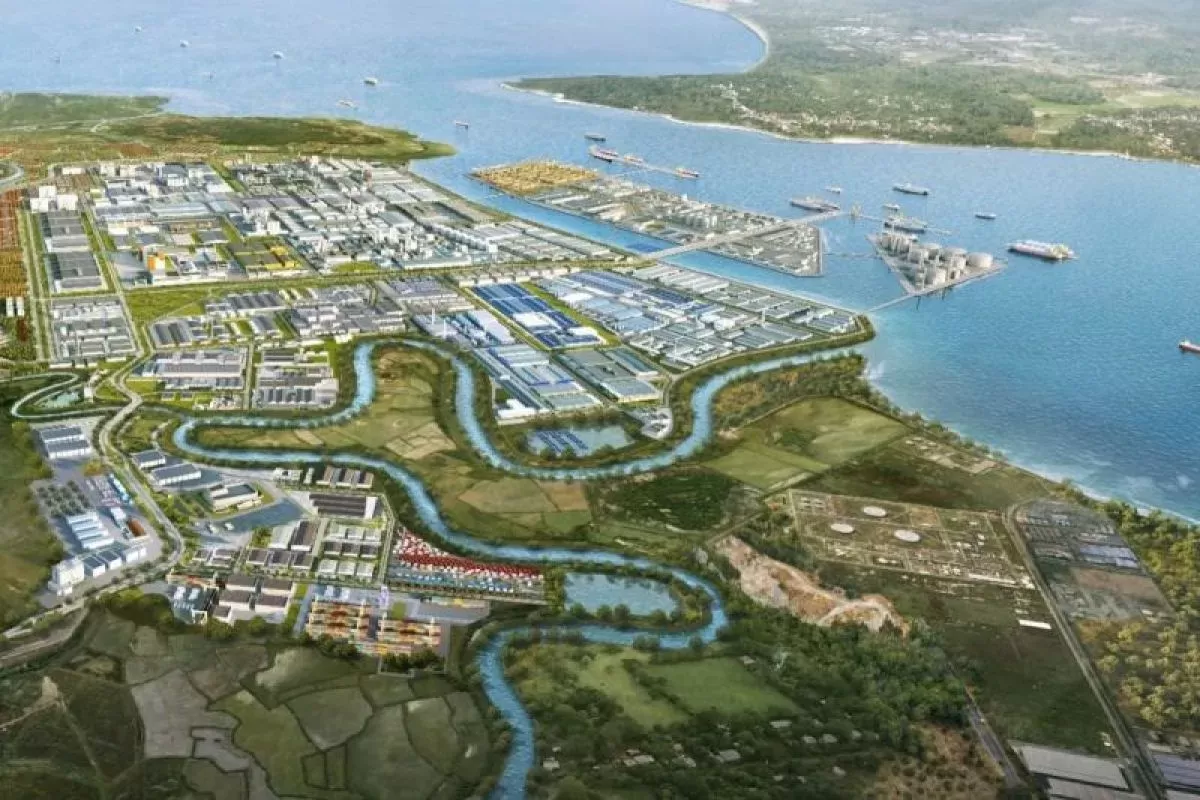
The first melamine factory in Indonesia has begun construction in the Gresik Special Economic Zone (SEZ), East Java, with an investment of US$600 million or the equivalent of Rp10.23 trillion.
The melamine factory project, developed by PT GEABH Joint Technology, forms part of the development of downstream industries based on natural gas. Through this project, natural gas will be processed into liquid ammonia, which will then be developed into derivative products such as urea, melamine, and ammonium nitrate with high added value.
“We gather here today to witness an important milestone in Indonesia’s industrial journey, namely the groundbreaking of the first and largest melamine factory in Indonesia,” said Coordinating Minister for the Economy Airlangga Hartarto in his statement in Jakarta on Thursday.
These products are expected to support various strategic sectors, including agriculture, the chemical industry, and manufacturing, while opening up export opportunities and strengthening Indonesia’s position in the global supply chain.
In addition, this project is also expected to create jobs and increase economic activity in the surrounding area.
“The Indonesian government remains committed to ensuring a conducive investment climate. We will continue to provide support and incentives so that PT GEABH Joint Technology and all investors in this SEZ can grow and develop optimally,” said the Coordinating Minister.
By the end of 2025, the cumulative total investment in SEZs nationwide will reach around US$19.7 billion, with a significant contribution from the Gresik SEZ of US$6.1 billion or about 31 per cent of the total national SEZ investment.
This investment performance is supported by national macroeconomic stability. In 2025, the Indonesian economy grew by 5.11 per cent, driven by strong domestic consumption, increased investment, and solid export performance. Investment realisation in the fourth quarter of 2025 also recorded growth of 9.7 per cent (year-on-year) with a value of US$29.2 billion.
The Gresik SEZ, as one of the national priority zones, plays a strategic role in driving industrial downstreaming and export growth. This zone contributes significantly to the regional economy, where the manufacturing sector in East Java accounts for 31.32 per cent of the economy, while in Gresik Regency, the manufacturing sector reaches 52.58 per cent of the Regional Gross Domestic Product (PDRB).
In addition to driving economic growth, the development of the Gresik SEZ also has a positive impact on community welfare. This is reflected in the decline in the unemployment rate from 8.00 per cent to 5.47 per cent over the last five years, as well as an increase in the Human Development Index (HDI) from 76.98 in 2021 to 79.69 in 2025.