
Indonesia Builds Culinary Diplomacy through Blue Food for MBG Book in South Korea
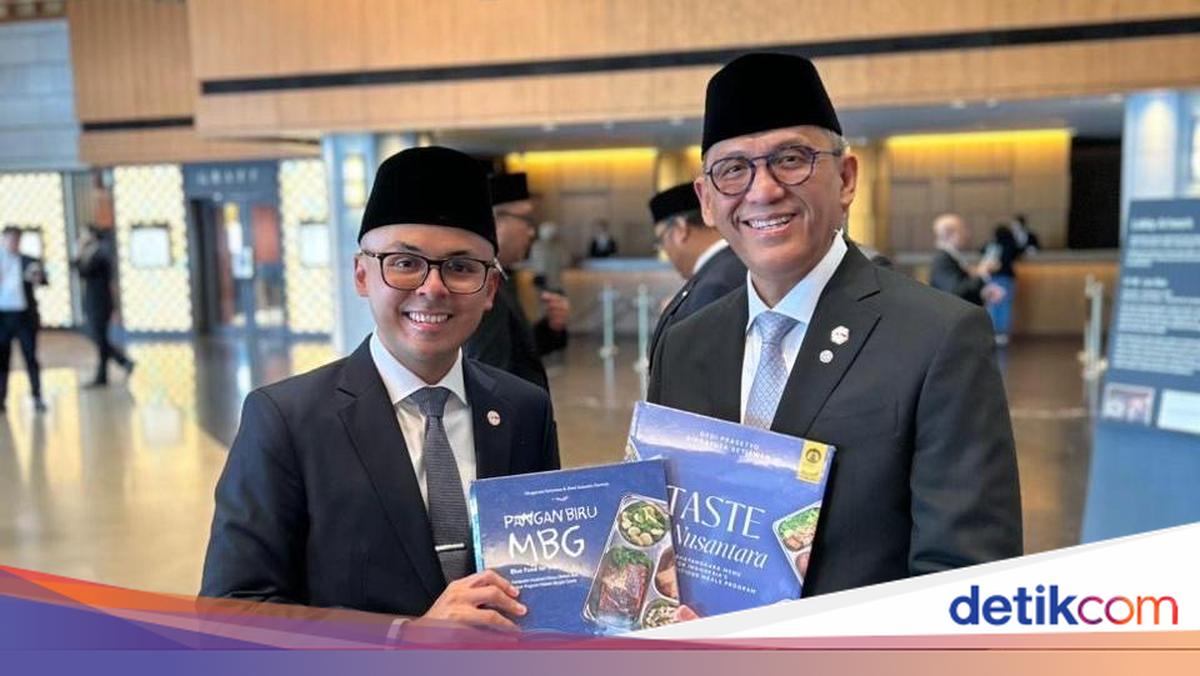
The Indonesian government has introduced the Free Nutritious Meal (MBG) programme to the South Korean government and public through two books compiling MBG menus, titled Pangan Biru MBG (Blue Food for MBG) and Taste of Indonesia.
The handover of the books was carried out by Presidential Special Assistant Dirgayuza Setiawan to the Indonesian Ambassador to South Korea, Cecep Herawan, while accompanying Indonesian President Prabowo Subianto on a state visit to Seoul, South Korea.
“The presence of these two books at the Indonesian Embassy in Seoul will strengthen culinary and cultural diplomacy between the two nations, both of which implement universal MBG, to foster mutual understanding and culinary exchange,” Dirgayuza stated in a written remark on Wednesday (1/4/2026).
Dirgayuza explained that MBG is a longstanding national programme in South Korea with an annual budget of around Rp 80 trillion. In the Land of Ginseng, MBG is not merely a nutritional fulfilment programme but part of the culture and identity of the society.
Top chefs from schools providing MBG often appear in major TV shows in South Korea and internationally, such as Culinary Class Wars, he added.
This indicates that the programme has a truly positive impact on society. Indonesia has been implementing MBG since the administration of President Prabowo Subianto, targeting schoolchildren, pregnant women, and breastfeeding mothers.
“In particular, the Blue Food for MBG book, which is a collection of the best fish menus in Indonesia’s MBG, will be very appealing to Koreans, who, like Indonesians, are a maritime nation and meet much of their protein needs from fish, both freshwater and seawater,” Dirgayuza said.
Meanwhile, Special Staff to the Minister of Marine Affairs and Fisheries (KKP) for Public Relations and Communications, Doni Ismanto, added that the ‘Blue Food for MBG’ book is designed as a visually based communication medium, emphasising photos, graphics, and narratives to introduce the richness of Nusantara cuisine based on marine and fishery products.
“Through this book, we aim to encourage a shift in public perception of fish as a food ingredient that is no less appealing than meat or chicken, while highlighting the nutritional content and protein in fish, which is considered superior for supporting schoolchildren’s intelligence,” Doni explained.
The Blue Food for MBG book features five main blue food commodities: skipjack tuna, shrimp, patin catfish, tilapia, and mackerel, each presented with recipes based on the principles of affordable, easy, and delicious, along with nutritional content tables adjusted for various age groups, from kindergarten pupils to pregnant women.
The 209-page book also includes a map of fish-producing regions in Indonesia, as well as narratives on the Red White Fishermen’s Village (KNMP) programme as part of the KKP’s Blue Economy agenda.