
Indonesia and US sign reciprocal trade agreement offering zero-tariff access to key exports
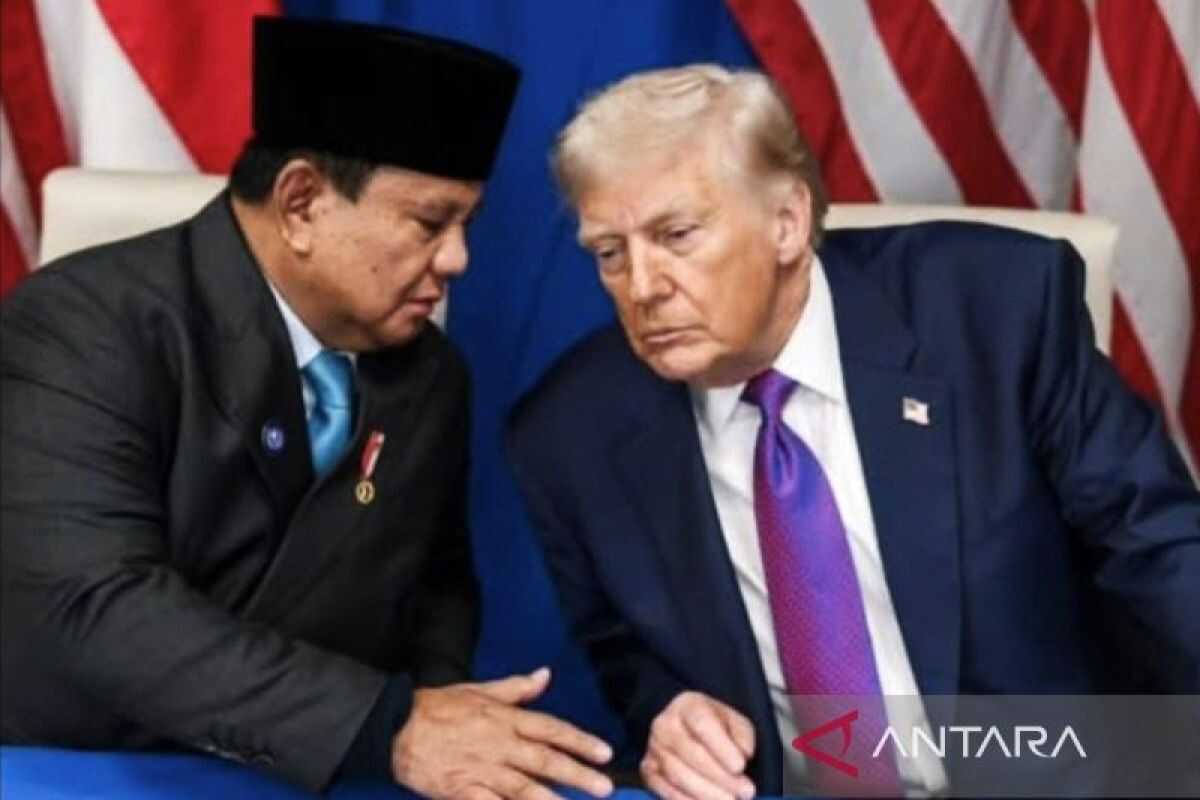
The agreement, signed by Indonesian President Prabowo Subianto and US President Donald Trump in Washington, D.C., on Thursday (February 19), is said to strengthen economic security, encourage growth, and contribute sustainably to global prosperity. In a statement released by the White House, the two leaders emphasized that the agreement’s implementation will lay the foundation for a “new golden era” of the US-Indonesia alliance. Unlike similar agreements the US is dealing with other countries, negotiations with Indonesia focused solely on trade and investment, according to Coordinating Minister for Economic Affairs Airlangga Hartarto. In this case, the US agreed to revoke articles that are not related to economic cooperation, including those related to nuclear reactor development, South China Sea policy, as well as defense and border security. Products eligible for zero percent import duties into the US include palm oil, coffee, cocoa, spices, rubber, electronic components including semiconductors, and aircraft components. In addition, Indonesia and the US agreed to grant tariff exemptions for textile and garment products under a tariff rate quota (TRQ) mechanism. He explained that TRQ allows Indonesia to export textiles and garments to the US duty-free within certain volume limits, provided that the products use raw materials imported from the US, including cotton and man-made fibers. This arrangement will benefit around four million workers in the sector and have an impact on approximately 20 million Indonesians, Hartarto said. He added that products outside the specified tariff lines will remain subject to a 19 percent import duty. As part of the agreement, Indonesia has also agreed to eliminate tariffs on several US imports, particularly agricultural commodities such as wheat and soybeans. Soybeans and wheat are foundational to Indonesia’s food and beverage sector, serving as the primary ingredients for national staples such as tofu, tempeh, and instant noodles. The Indonesian government viewed that eliminating tariffs is a strategic move to suppress import costs and production expenses, ultimately ensuring consumer prices remain stable. This means Indonesians will not pay import duties on products derived from soybeans or wheat, including noodles, tofu, and tempeh. Consumers will not bear additional costs related to import duties on these US raw materials, Hartarto noted. Indonesia is also committed to simplifying import licensing and standardization of industrial and agricultural products from the US, as well as reducing tariff and non-tariff barriers, particularly in the information and communications technology (ICT), health, and pharmaceutical sectors. This reciprocal trade agreement will come into effect 90 days after all legal processes in each country have been completed. In Indonesia, this phase involves consultation with the Indonesian House of Representatives, while in the US, it involves internal parliamentary mechanisms. Boost exports Trade Minister Budi Santoso expects increasing exports to the US following the signing of a reciprocal trade agreement between the two countries. He referred to expanded zero-tariff access for Indonesia’s key products to enter the US, which remains one of Indonesia’s largest trading partners. From January to December 2025, Indonesia posted a US$21.12 billion trade surplus with the US, driven largely by electrical machinery and equipment, knitted apparel and accessories, and footwear. Indonesia’s exports to the US reached US$30.96 billion, led by mechanical machinery and equipment, vehicles and parts, and iron and steel products. Imports from the US totaled US$9.84 billion, mainly mechanical machinery and parts, oilseeds and oleaginous fruits, and electrical machinery and equipment. The minister said he hopes the ratification process for the reciprocal trade agreement can be completed this year, enabling prompt implementation and providing certainty for exporters. The reciprocal trade agreement can also be used by Indonesia as a negotiating tool to expand market access, according to chief economist of Permata Bank, Josua Pardede. He explained that this agreement can provide momentum to reduce dependence on a single market. He added that diversification can be accelerated by optimizing existing trade cooperation and exploring new agreements with potential partners. However, the benefits are considered relatively limited, given that their application is limited to certain commodities and subsectors. Indonesia still needs to strengthen its competitiveness and product standards, in addition to increasing added value through downstreaming and industrialization, Pardede noted. Otherwise, this market shift will only be substitutionary, without any improvement in the productivity and quality of our exports, he said. Downstreaming Executive director of the Center of Reform on Economics (CORE) Indonesia, Mohammad Faisal, reminded the government of the importance of continuing the downstreaming agenda following the Indonesia-US trade agreement. This concern must be addressed because most products that receive tariff exemptions are raw materials that have not been processed or given added value, such as palm oil, coffee, cocoa, spices, and rubber. He emphasized that exporting raw materials has the potential to hinder downstreaming, which the government has designated as a priority agenda. Furthermore, Faisal stated that raw material exports could impact efforts to develop domestic industries for these commodities. “For example, we have been experiencing a shortage of cocoa, because not only is domestic production increasingly limited, but many of the products that are already produced are preferred for export… because they generate more profit,” he said. Therefore, Faisal urged the government not to neglect the agenda of accelerating downstreaming to boost domestic industries, which is considered a crucial step in Indonesia’s efforts to achieve its 8 pe