
Indonesia and UN Expand Financial Services Access for Smallholder Farmers
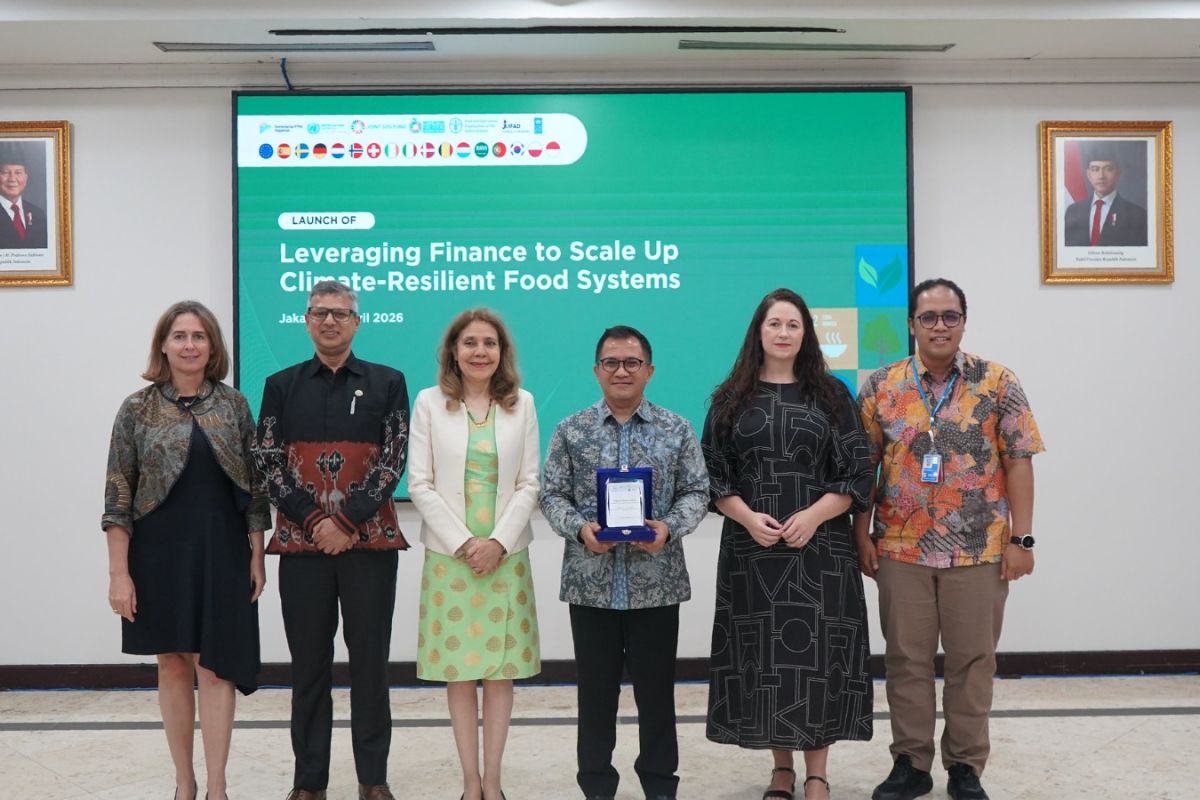
The Indonesian government and the United Nations in Indonesia are committed to supporting smallholder farmers in reducing climate risks by expanding access to financial services and strengthening their capacities. This effort is being carried out by adopting sustainable farming practices through a joint programme focused on Indonesia’s two largest food-producing provinces, East Java and Lampung. “The goal of this programme aligns with national priorities, particularly in promoting food system transformation and sustainable development direction,” said Deputy for Food, Natural Resources, and the Environment at the Ministry of National Development Planning/National Development Planning Agency (Bappenas), Leonardo A. A. Teguh Sambodo, during the launch of the UN Joint Programme: Leveraging Finance to Scale Up Climate Resilient Food Systems, according to an official statement in Jakarta on Friday. Bappenas hopes this programme will improve financing access for farmers and encourage the adoption of Climate-Smart Agriculture, enhance farmer welfare, strengthen food security, and integrate with other priority programmes such as the Free Nutritious Meals (MBG). Extreme weather, prolonged droughts, and pest outbreaks are seen as increasingly threatening the livelihoods of smallholder farmers, posing risks to rural incomes and national food security. To address these challenges, the programme will provide training to adopt climate-smart and innovative farming practices, focusing on climate-resilient food agriculture such as water-saving rice for at least 15,000 farmers in East Java. Climate-smart agriculture encompasses a range of practices and technologies sensitive to local contexts, enabling farmers to increase productivity while reducing greenhouse gas emissions and strengthening resilience to climate change. This includes Indonesia’s climate insurance scheme, Sustainable Development Goals Bonds (SDGs Bond), Green Sukuk (Sharia bonds for environmentally positive projects), and financing from the Environmental Fund Management Agency (BPDLH). “Through this programme, small-scale farmers will be supported to implement sustainable agriculture as a prerequisite for accessing climate insurance, including expanding access to advanced climate-smart technologies, such as solar-powered irrigation,” Teguh stated. The programme also aims to mobilise $150 million from Indonesia’s annual issuance of SDG Bonds, Green, and Green Sukuk based on projects to finance sustainable practices and rice biofortification for at least 300,000 smallholder farmers. The Food and Agriculture Organization (FAO) will lead this programme during 2026-2027, working with the International Fund for Agricultural Development (IFAD), United Nations Development Programme (UNDP), and United Nations Resident Coordinator Office (UNRCO). “From the Joint Programme’s investment of $2 million, we target mobilising $205 million in public and private financing,” said the Head of the United Nations Representation in Indonesia, Gita Sabharwal. By combining technical expertise from FAO, UNDP, and IFAD, Gita said, the programme will implement innovative and climate-smart farming practices, reduce sustainable production risks through insurance for rice farmers, and expand proven inclusive financing mechanisms in Indonesia.