
Indonesia and Japan Agree on US$23.6 Billion Investment for Real Estate and LCGC
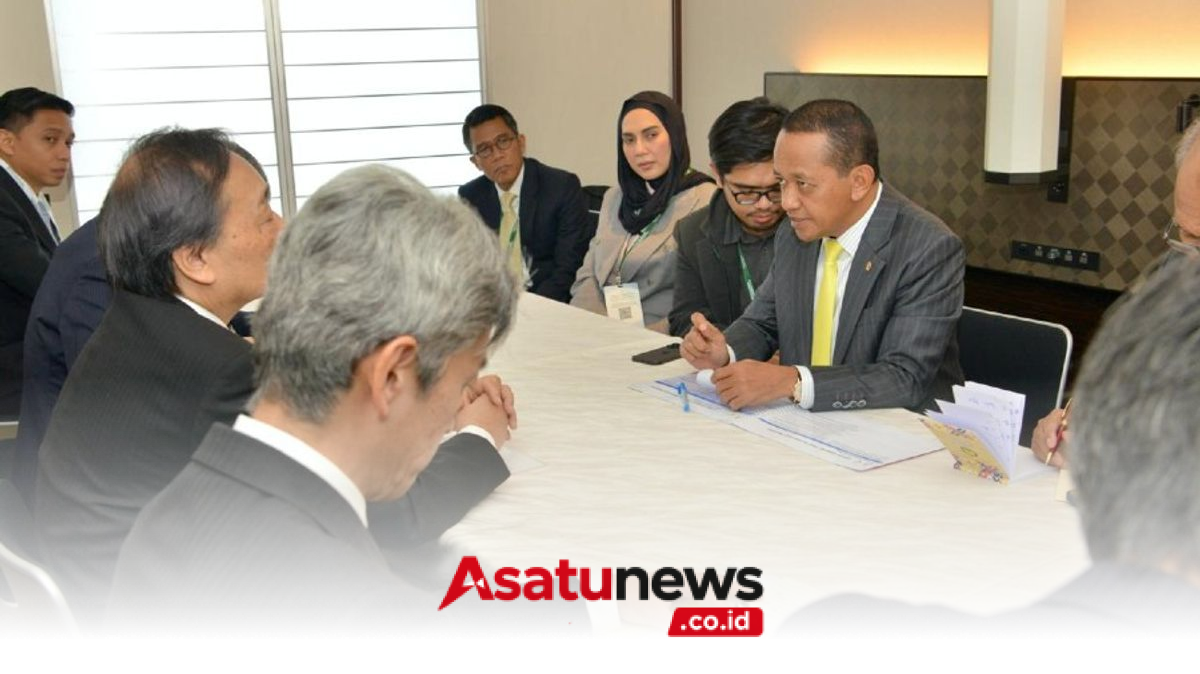
The Ministry of Investment or the Coordinating Agency for Investment (BKPM) has reported the signing of a memorandum of understanding (MoU) between Indonesia and Japan. This agreement is valued at US$23.6 billion, equivalent to Rp401.4 trillion, as reported by Bloomberg Technoz on Thursday (2/4/2026). The investment commitment covers the development of the real estate sector as well as the production of low-cost green cars (LCGC). In addition, Japan will support the production of E10 and E20 engines compatible with blended fuels. Minister of Investment and Downstreaming/Head of BKPM, Rosan Roeslani, emphasised that the investment will continue to proceed. “The investment will continue to run and will have a positive impact on the national economy,” said Rosan in his press release. During his visit with President Prabowo Subianto, Rosan invited CEOs of major Japanese companies. This meeting aimed to hear the Head of State’s directives regarding the Indonesian government’s commitment to strengthening bilateral economic and investment cooperation. Economic relations between Indonesia and Japan have been closely intertwined for a long time, even since the 1960s to support Indonesia’s economic recovery. The government also listens to views and input from Japanese companies regarding their investment activities in Indonesia. The President expressed his appreciation to the CEOs of Japanese companies. “The President also appreciated the CEOs of Japanese companies who have conveyed investment developments and various constructive inputs in that meeting,” said Rosan. Several investment commitments and strategic project developments conveyed in the meeting with CEOs of Japanese companies include: Tokyo Gas will collaborate with PLN to accelerate the development of a power plant gasification project in eastern Indonesia. This project aims to replace diesel power plants with the use of more environmentally friendly liquefied natural gas (LNG). Mitsui is committed to developing the digital economy, real estate, retail, and food sectors. The company has contributed significantly to important projects in Indonesia such as the Paiton Power Plant, fertiliser and ammonia projects with PT Pupuk Indonesia, supporting phase 1 of the Jakarta MRT programme, the Tangguh LNG Project, and the NPCT1 container terminal. Toyota Corporation, with a “multiple pathway” approach, offers “mobility for all” through LCGC production, Hybrid EV, EV batteries, and E10 and E20 compatible engines. Toyota’s 55-year investment in Indonesia has supported the absorption of 360,000 workers from a supply chain network involving 1,700 companies. Itochu is involved in two important projects related to Indonesia’s energy independence, namely the 2 GW Power Plant in Central Java and the 300 MW Sarulla project. The company hopes for government support for capacity increases, to enable potential expansion of geothermal projects in the future. Inpex Corporation has a commitment to developing the Abadi LNG Project in the Masela Block, Tanimbar Island, Maluku Province. This project has received environmental approval and is now entering the completion stage of Front-End Engineering Design (FEED) and community compensation before groundbreaking. Dominance of Manufacturing and Concentration in Java Realised Japanese investment in Indonesia for the 2021–2025 period reached US$17.1 billion. This investment shows an average growth of 13.2% and has successfully absorbed 278,887 workers. Currently, Japan ranks as the fifth largest investor in Indonesia. Based on BKPM records, Japanese investment in Indonesia is dominated by the manufacturing sector with a contribution of around 65%. The services sector contributes 30%, followed by the primary sector at 2%. This dominance underscores Japan’s strategic role in driving national industrialisation and downstreaming. Geographically, Japanese investment is still highly concentrated on Java Island, reaching 94%. The main distribution includes West Java (46%), DKI Jakarta (15%), East Java (14%), Central Java (10%), and Banten (10%). The government assesses that this commitment will strengthen Japan’s role in developing industry, clean energy, and national economic transformation in the future.