
Indonesia and China Launch Cross-Border QRIS
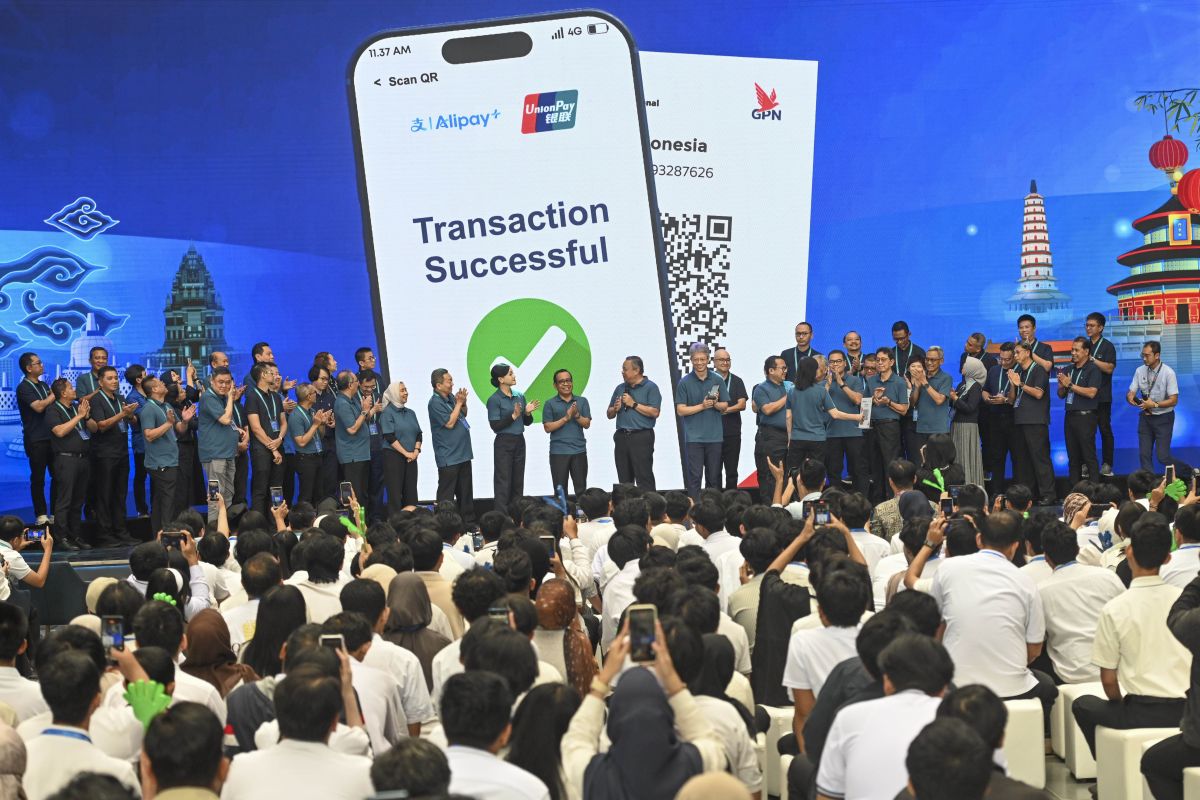
Jakarta (ANTARA) - The cross-border QRIS, or QRIS between Indonesia and China, has been launched as an innovation in the digital payments sector. The initiative, introduced by Bank Indonesia on Thursday (30/4), allows users from both countries to make retail payments seamlessly by scanning cross-border QR codes. The system is expected to support tourism, trade activities, and people-to-people exchanges, while strengthening regional payment connectivity across Asia. This collaboration reflects Bank Indonesia’s broader efforts to promote local currency transactions and reduce dependence on global reserve currencies in cross-border payments, particularly the US dollar. Speaking at the launch ceremony in Jakarta, Bank Indonesia Governor Perry Warjiyo emphasised that this interconnection demonstrates tangible progress in bilateral financial integration. The initiative is built on a local currency settlement (LCS) mechanism directly between the Indonesian rupiah and the Chinese yuan, enabling transactions without involving a third-party currency. The system is expected to reduce exchange rate risks, lower transaction costs, and enhance financial autonomy for both countries. Meanwhile, Liu Yue, assistant country manager at the Bank of China Jakarta Branch, highlighted the role of financial institutions in ensuring efficient exchange flows and currency transaction settlements. Xie Dai, deputy general manager of UnionPay International Southeast Asia, stated that the project represents a significant step forward in simplifying cross-border payments. “This makes cross-border payments smoother and simpler. In the past, travellers needed to exchange currency or withdraw cash, but now they can directly scan QR codes using familiar platforms such as the UnionPay Yunshanfu app or the Alipay app,” he said. “The use of local currency transaction mechanisms, particularly direct quotations between the rupiah and yuan, increases efficiency and reduces costs, ultimately benefiting consumers,” Liu added, noting that the QR interconnection also addresses long-standing payment challenges faced by tourists and business travellers. Beyond technical integration, this initiative is viewed as part of a broader strategic vision for digital sovereignty and innovation. The launch comes amid rapid growth in Indonesia’s digital economy. Bank Indonesia reported 14.39 billion digital transactions in the first quarter of 2026, up 33.76 percent year-on-year. QRIS transactions themselves surged by 119 percent, driven by increased adoption among micro, small, and medium enterprises as well as retail users.