
Indonesia Advances Global Cooperation at the 69th CND Session
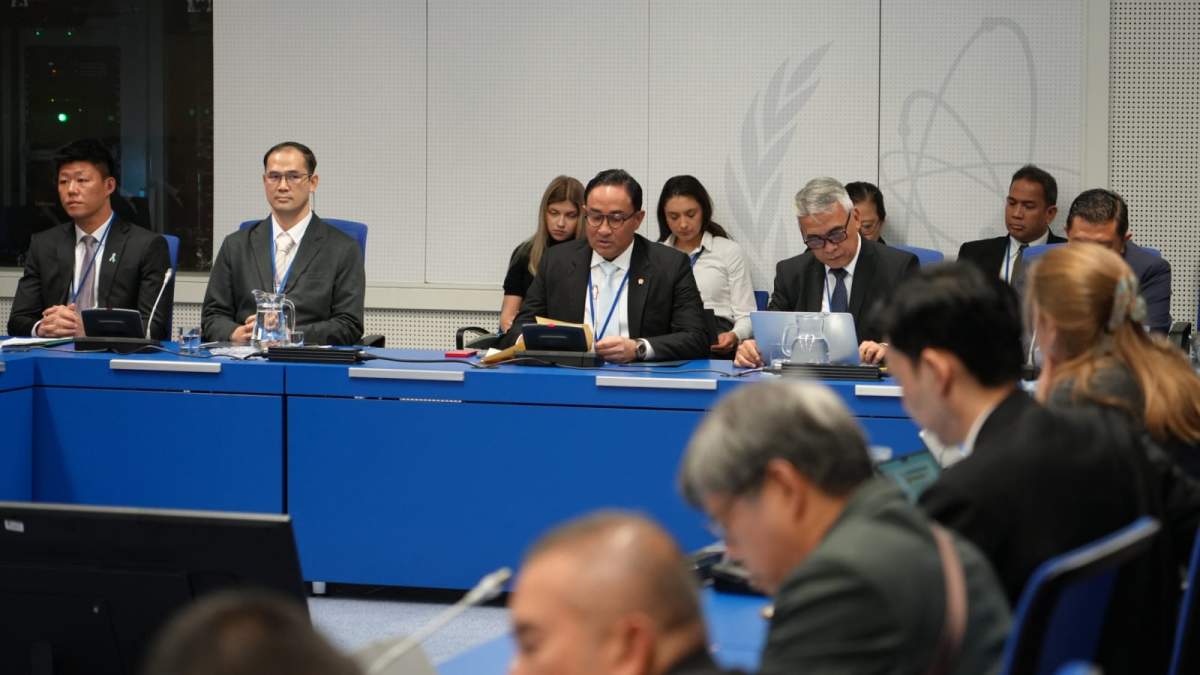
Indonesia’s delegation participated actively in the 69th session of the Commission on Narcotic Drugs (CND) held at the Vienna International Centre (VIC), Austria, from 9-13 March 2026. The CND is the United Nations’ primary forum for discussing global policy to address the world’s drug problem.
The Indonesian delegation, led by the Head of the National Narcotics Board (BNN) and comprising representatives from the Ministry of Foreign Affairs, Ministry of Health, Food and Drug Authority (BPOM), and the Indonesian Embassy in Vienna, took part in the session. The embassy also coordinated Indonesia’s participation in various session agendas and supporting activities during the CND meeting.
In the General Debate, the BNN Head delivered Indonesia’s national statement, highlighting the increasing complexity of the global narcotics situation, including the proliferation of synthetic drugs, the exploitation of maritime routes by drug trafficking networks, and the use of digital platforms by transnational criminal syndicates.
Indonesia emphasised firm action against drug trafficking networks whilst ensuring a humanitarian and human rights-based rehabilitation approach for drug abuse victims.
During the session, Indonesia presented its national achievements in narcotics control, including the uncovering of hundreds of drug cases, the dismantling of drug trafficking networks including international syndicates, and the strengthening of rehabilitation programmes through the “Ananda Bersinar” campaign, which involves hundreds of rehabilitation institutions throughout Indonesia.
As part of Indonesia’s contribution to global discussions, the country organised an exhibition at the Rotunda Hall of the VIC during the CND session, themed “Enhancing International Cooperation for Future Development Starting from Children: ‘Ananda Bersinar’ to Address Drug Challenges.” The exhibition was organised by the BNN in collaboration with the Indonesian Embassy. The opening ceremony was conducted by the BNN Head and attended by the Indonesian Ambassador and Permanent Representative, as well as ambassadors and permanent representatives from friendly nations in Vienna.
The exhibition showcased various community-based drug prevention programmes and alternative development approaches. One programme displayed was the Grand Design Alternative Development in Aceh, which promotes the transition from illegal crop cultivation to productive commodities such as coffee, as part of community economic empowerment and sustainable narcotics crime prevention.
Indonesia also organised a side event titled “Vape and Narcotics: A Bad Combination – Addressing Narcotics-Contaminated Vaping Products through Preventive, Regulatory, and Cooperative Frameworks” on 10 March 2026.
The discussion featured speakers from Indonesia, Singapore, Thailand, and the United Nations Office on Drugs and Crime (UNODC), including the BNN’s Deputy Head for Law and Cooperation, who highlighted the growing trend of using narcotics-contaminated vaping devices and emphasised the importance of strengthening regulation, international cooperation, and early warning systems in addressing this phenomenon.
During the session, the Commission adopted several resolutions addressing various aspects of global narcotics control, including strengthening early warning mechanisms for emerging synthetic drugs and new psychoactive substances, increasing supply chain integrity to prevent the misuse of precursors and equipment for illegal drug production, and strengthening the implementation of UN Guiding Principles on Alternative Development.
As a member of the Commission on Narcotic Drugs for the 2024-2027 period, Indonesia supported the adoption of these resolutions as part of its commitment to strengthening international cooperation in addressing the evolving challenges of the global narcotics problem.