
Indonesia Accelerates Carbon Market with SRUK System Trial
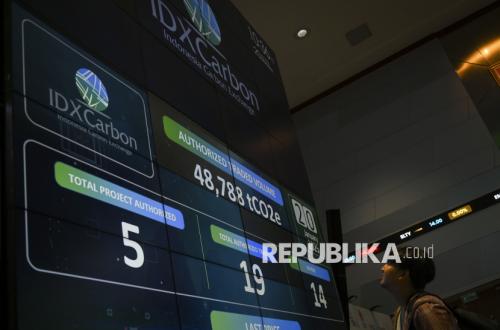
The government is accelerating the development of national carbon trading infrastructure through the trial of the Carbon Unit Registry System (SRUK). This step is being taken to meet the increasing demand for climate financing.
This digital platform will serve as the central hub for recording all carbon credit activities in Indonesia, as well as the main foundation for the national carbon market.
Deputy Minister of Environment Diaz Hendropriyono stated that SRUK is targeted to begin operations in July 2026. The government is now opening trials for carbon project developers who already have project design documents.
“SRUK’s operational target is in July, in line with the directive from the Coordinating Ministry for Food, so if there are project developers who are ready with their PDD, they can now conduct trials to input data into that registry,” said Diaz.
SRUK functions as a digital “ledger” that records emission reduction projects, carbon credit issuance, up to transactions and ownership. The system is also designed to prevent double-counting to maintain the credibility of the market.
In this system, the project design document (PDD) is the primary requirement. Without that document, a project cannot produce valid carbon credits for trading.
Diaz considers the trial phase important to ensure the system’s readiness and that of market participants before full launch. The government wants the carbon ecosystem to run immediately when the system is officially operated.
“We need to continue pushing carbon trading to help address funding issues, and we are still in the process for various matters, so we need assistance from you to participate in the trial phase, so that when launched, everything is ready to go,” said Diaz.
Carbon trading is seen as an important solution to close the large climate funding gap. Globally, climate funding needs reach 8.6 trillion US dollars per year until 2030 and could rise to 10 trillion US dollars, while realisation is only around 1.4 to 1.9 trillion US dollars.
Domestically, Indonesia’s climate funding needs reach around 470 trillion rupiah per year for the 2020–2030 period. However, the available realisation is only around 76 trillion rupiah.
Through carbon trading, emission reduction projects can generate credits that have economic value and can be traded. This scheme is expected to attract investment while expanding sources of climate financing.
Diaz also appreciated the support from various parties in developing the national carbon market. Cross-sector collaboration is considered important to accelerate the formation of a credible ecosystem.
British Ambassador to Indonesia and Timor Leste Dominic Jeremy expressed support for Indonesia’s steps. “This forum aligns with the President’s mandate to develop carbon trading through Indonesia-UK cooperation; we hope UK support can be sustainable and long-term,” said Dominic.
The government hopes that with the SRUK trial and early involvement of project actors, Indonesia’s carbon trading can soon operate effectively and attract global investment.