
Indobuildco Claims Hotel Sultan Execution Plan Has Legal Defects
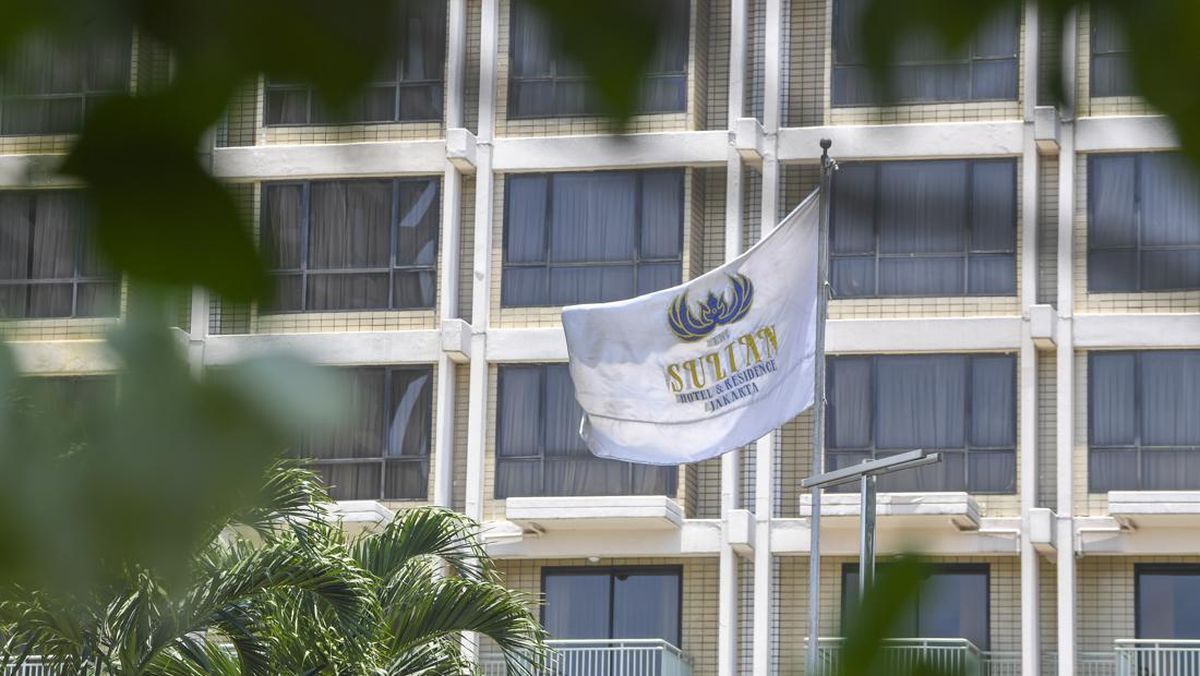
The legal team of PT Indobuildco has stated that the planned execution of Hotel Sultan land cannot be implemented legally because the disputed object has changed. This was conveyed by Indobuildco’s legal counsel, Hamdan Zoelva, during a press conference following a site inspection process (constatering or matching of the disputed object) on Monday (16 March).
Hamdan explained that the on-site examination revealed discrepancies between the land described in the case and the actual conditions on the ground. Land with Land Use Right certificates (HGB) No. 26/Gelora and No. 27/Gelora in the name of PT Indobuildco is recorded as having a different area from the object now cited as the basis for execution.
According to Hamdan, the on-site matching process revealed that the land area subject to dispute has decreased by approximately 4.5 hectares compared to the area specified in the case documents.
“The change in area demonstrates that the object intended for execution is no longer identical to the object in the court decision,” said Hamdan.
Beyond the area reduction, Hamdan disclosed that his team also found that portions of the disputed land are no longer entirely under PT Indobuildco’s control. He stated that the inspection showed some areas are now recorded as being owned by the DKI Jakarta Provincial Government and other parts by third parties.
“Because some areas have been released for toll road development, then for the MRT, and then released to other parties. For this reason, with these two facts, the condition of HGB 26 and 27 has changed, so it does not match. Because of this non-matching condition, it cannot be executed,” Hamdan explained.
Hamdan noted that under Indonesian civil procedure law, clarity regarding the boundaries, area, and ownership of the disputed object is a prerequisite for execution. If the object named in the decision differs from the object found on the ground, the judgment cannot be executed.
Hamdan also cited Supreme Court jurisprudence stating that if a site inspection reveals that the land controlled does not match the boundaries and area mentioned in the claim or decision, the case cannot be executed. This condition in law is known as obscuur libellum, meaning an unclear subject matter of the case.
“If the object intended for execution has changed in area or ownership, then the execution becomes legally defective and cannot be carried out or is non-executable,” he stated.
“Therefore, we object to the execution. First ensure which land is to be executed,” he added.
Furthermore, Hamdan affirmed that PT Indobuildco will continue to pursue legal certainty over Hotel Sultan land through applicable legal channels.
“We respect the legal process, but the law must also be enforced fairly and objectively. Execution should not be forced if the object is unclear and inconsistent with the court decision,” he concluded.
Previously, the Central Jakarta District Court (PN Jakarta Pusat) conducted a site inspection (constatering) to match the disputed object details as follow-up to the planned execution of Hotel Sultan land in Jakarta on Monday (16 March).
According to observations, the inspection was attended by representatives from PN Jakpus, the State Secretariat Ministry and the Gelora Bung Karno Complex Management Centre (PPKGBK) as execution applicants, the Ministry of Agrarian Affairs and Spatial Planning/National Land Agency (ATR/BPN), and police.
“The constatering, meaning matching and ensuring that boundaries conform to what we as applicants—PPKGBK and State Secretariat Ministry applicant—are requesting regarding state property in Block 15,” said PPKGBK Chief Executive Officer Rakhmadi Afif Kusumo to journalists on Monday.
“This morning we heard directly from the clerk that a constatering has been conducted, being conducted for Block 15, checking former HGB 26 and former HGB 27 which should have already become state property,” he added.
Rakhmadi also affirmed that Hotel Sultan land is state property, so the execution process will continue.
“So from our perspective, we hold that this has become state property (BMN), where this property has already become state property. Our commitment, following direction from State Secretariat Ministry leadership, is how to secure this state property and optimise it,” he said.