
India Struggles to Revive the "Dying" Rupee, What About Indonesia?
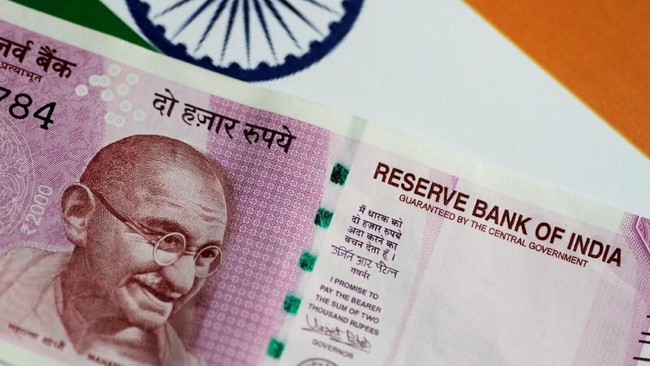
The movements of currencies in emerging countries throughout 2026 are under pressure against the US dollar. The Indian rupee and the Indonesian rupiah alike are struggling to strengthen amid the robustness of Uncle Sam’s currency.
This pressure is reflected in the continued strength of the US Dollar Index (DXY), an index measuring the US dollar’s movement against six major world currencies. When the US dollar is sought by global market players as a safe asset, the room for other countries’ currencies to strengthen automatically becomes more limited.
For emerging countries, this situation is even heavier because they not only face a dominant US dollar but also capital outflows, rising import costs, and fluctuations in global energy prices.
In such a situation, central banks are required to act quickly so that currency weakening does not turn into greater pressure on domestic economic stability.
Indian Rupee
According to Refinitiv data, year-to-date, the Indian rupee is under pressure by 3.57% against the US dollar to the level of INR 93.06/US$ at Monday’s (6/4/2026) close.
In fact, the Indian rupee once breached its all-time weakest level on 27 March 2026, when it closed down 0.57% to INR 94.77/US$.
Pressure on the rupee this year also comes from various directions. In addition to being driven by the strengthening US dollar, the Indian currency is also pressured by foreign fund outflows, a surge in oil prices due to the Iran war, and waning investor confidence.
This condition makes the pressure on the rupee even heavier, as India is a highly sensitive energy-importing country to rises in global oil prices.
The surge in oil prices also adds to market concerns over the widening of India’s current account deficit. When energy prices rise, import needs increase, and demand for the US dollar also rises.
At the same time, the outflow of foreign funds from the stock and bond markets further narrows the room for the rupee to strengthen.
With the weakening trend in its exchange rate, the Reserve Bank of India (RBI) is not staying idle.
Policies of the Indian Central Bank
India’s central bank, the Reserve Bank of India (RBI), has begun taking more aggressive steps after the rupee continues to be pressured against the US dollar amid the Iran war, surging oil prices, and foreign fund outflows.
Here are the policies taken by the RBI:
Indonesian Rupiah
The rupiah’s exchange rate movement is not much different from the Indian rupee. Year-to-date, the rupiah has weakened by around 2.14% to Rp17,030/US$ at Monday’s (6/4/2026) trading close. This condition places the rupiah at its all-time weakest level, and it is the first time the Garuda’s currency has closed above the psychological level of Rp17,000/US$.
Pressure on the rupiah throughout this year is also heavily influenced by external factors. The strengthening US dollar, global oil price surges, and increasing demand for safe assets amid the US-Iran war make the room for rupiah strengthening very limited.
On the other hand, domestic factors also add to the pressure. The market is highlighting concerns over Indonesia’s fiscal prospects, particularly the possibility of the state budget deficit approaching or even breaching the 3% limit in 2026 if oil price pressures persist.
These concerns are causing market sentiment towards domestic assets to be pressured, thus burdening the rupiah’s movement.
Nevertheless, Bank Indonesia (BI) is also not staying idle. BI has undertaken various steps to maintain rupiah exchange rate stability, from interventions in the foreign exchange market to refinements in foreign exchange transaction rules to ensure US dollar demand remains healthy and not driven by speculation.
Here are the policies taken by BI:
CNBC Indonesia Research