
Independent and Proactive Foreign Policy and National Sovereignty
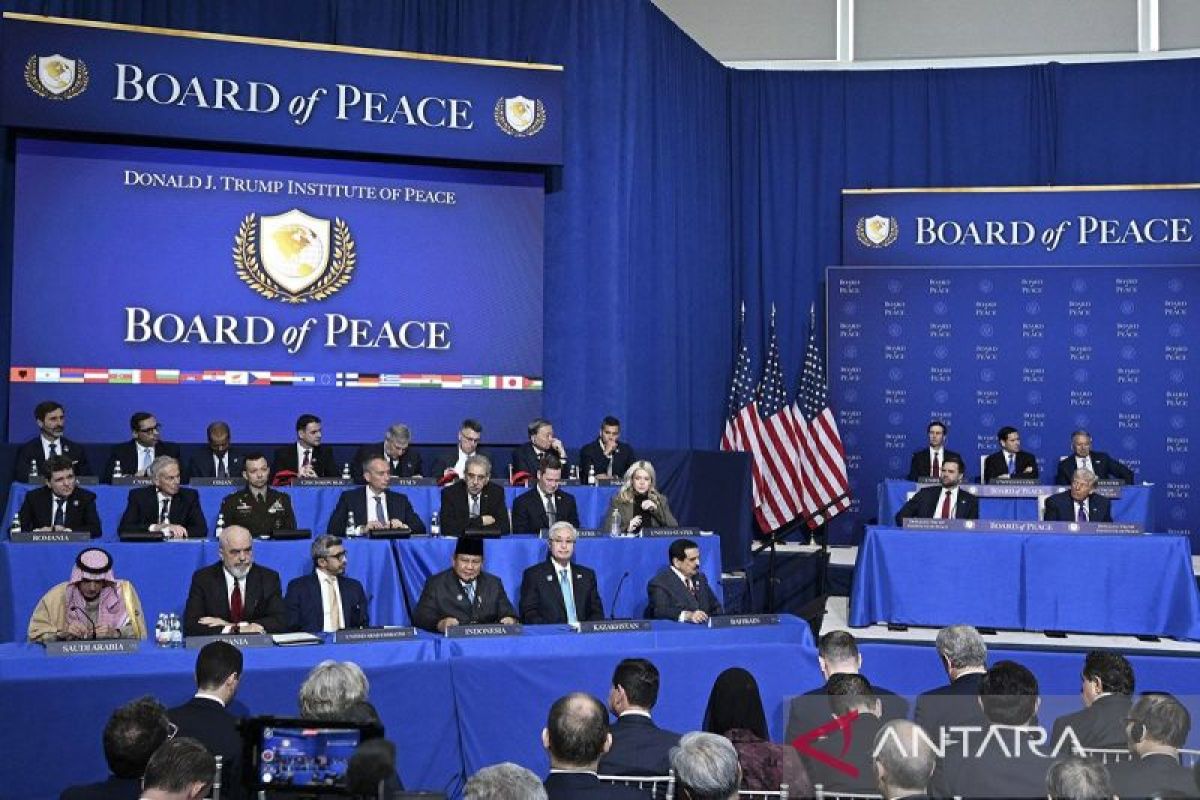
Jakarta (ANTARA) - The crisis in the Middle East in the past few days has transformed into open warfare between the (coalition) United States–Israel and Iran, marking a new chapter in global political dynamics. Every country now recalculates its readiness to face the direct impacts of this war, including potential closure of the Strait of Hormuz. The open conflict in the Middle East has lengthened the world’s list of uncertainties, as a result of geopolitics that also plays out elsewhere, such as the protracted war between Russia and Ukraine. East Asia also holds potential conflicts, connected to competing territorial claims in the South China Sea. There is also latent conflict related to the future of China’s relations with Taiwan, which is feared could become a full-blown war. The global geopolitical situation today is increasingly complex. Escalations of conflict and war are qualitatively increasing, with increasing complexity that seems hard to unravel. Domestic politics and global geopolitical rivalries are at a stage where they threaten civilisation, such as in Gaza these days. History shows that once geopolitical rivalries enter a conflict, the time taken to resolve it becomes longer. Bebas-aktif principle. Indonesia’s participation in the Board of Peace (BoP) is a manifestation of the nation’s constitutional commitment to play an active role in maintaining world peace and strengthening international stability through diplomacy. Indonesia’s presence in the Board of Peace must be understood as part of the role in preserving peace. Participation in international peace forums, such as the BoP, is in line with the mandate of the 1945 Constitution of the Republic of Indonesia, which asserts the obligation of Indonesia to help uphold world order based on independence, eternal peace, and social justice. Indonesia’s decision to join the Board of Peace marks a new chapter in the articulation of its foreign policy that is increasingly adaptive, flexible, and oriented toward concrete results. In the face of global dynamics fragmented by great-power rivalries, Indonesia no longer merely emphasises the bebas-aktif principle as a normative doctrine, but translates it into measured strategic steps.