
Independent and collaborative TKA at PKBM realise an adaptive examination model
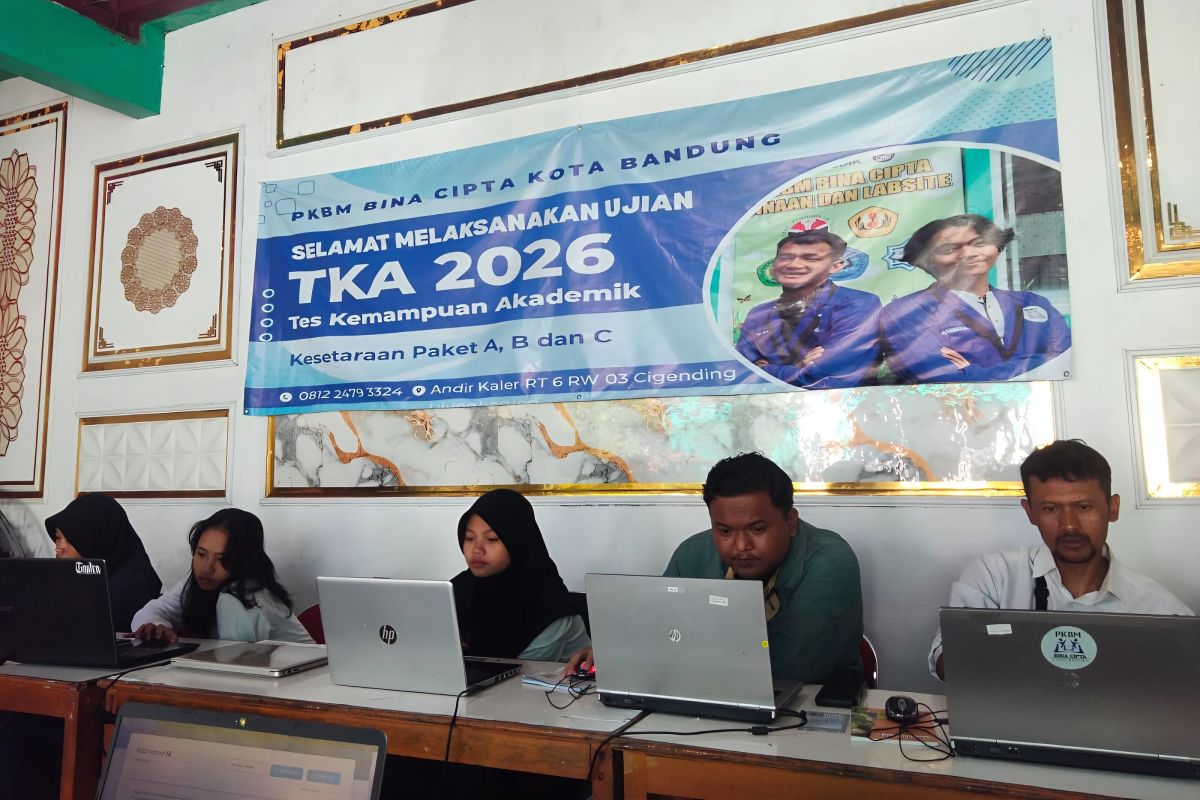
Jakarta (ANTARA) - The Ministry of Basic and Secondary Education (Kemendikdasmen) states that the organisation of independent and collaborative Academic Ability Tests (TKA) at various Community Learning Activity Centres (PKBM) embodies an adaptive examination model suited to the needs of participants.
Director General of Secondary Education and Special Education at Kemendikdasmen, Tatang Muttaqin, explained that the differences in implementation models between independent and collaborative PKBM demonstrate that TKA policies not only emphasise standardisation but also provide room for adaptation for non-formal educational units.
“This approach is considered effective in addressing the specific challenges of PKBM, such as age heterogeneity, work busyness, and limitations in facilities and infrastructure,” said Dirjen Tatang in Jakarta on Wednesday.
Tatang also emphasised that the increasingly orderly and structured implementation of TKA marks an important shift in the non-formal education evaluation system.
If previously flexibility was the main characteristic, now the balance between flexibility and standards is key.
“This strengthens the position of PKBM as an integral part of the national education system,” he added.
With increasingly mature implementation, Tatang said TKA not only functions as an evaluation tool but also as a strategic instrument to enhance the credibility of non-formal education graduates.
The profile of independent TKA is evident at PKBM Bina Cipta Ujungberung, Bandung, West Java.
There, he explained, the TKA for Paket B (equivalent to junior high school) held on 11–12 April 2026 proceeded smoothly with 100 per cent attendance.
He mentioned that 26 learners participated in the exam in two sessions per day, covering numeracy, literacy, and learning environment surveys.
“From far in advance, we have built commitment with the learners to attend every session. The exam was held on Saturday and Sunday due to their different characteristics; many work and have time constraints,” he said.
According to Santi, adjusting the schedule to the weekend is a strategic step that remains aligned with national provisions but responsive to learners’ needs.