
INDEF views plastic raw material disruptions as opportunity to strengthen recycling
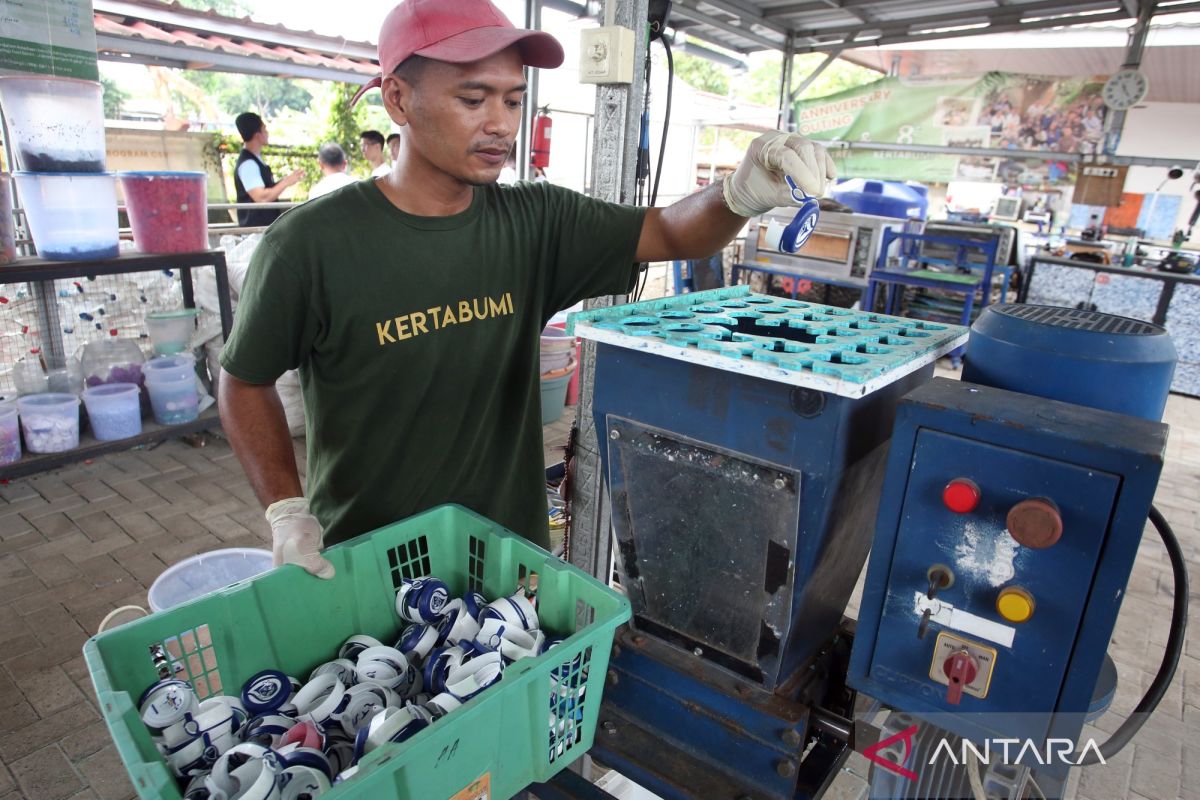
Jakarta (ANTARA) - The Institute for Development of Economics and Finance (INDEF) assesses that the global disruptions in plastic raw material supplies, which have triggered price surges, should be utilised as a momentum to strengthen the use of recycled packaging domestically.
“We should use this situation as a momentum to become a turning point for using more products with recycled packaging,” said INDEF Executive Director Esther Sri Astuti when contacted in Jakarta on Friday.
According to her, the price surge triggered by conflicts in the Middle East region is exerting significant pressure on micro, small, and medium enterprises (MSMEs), particularly in the culinary sector that heavily relies on plastic packaging.
She explained that the rise in raw material prices directly impacts the swelling of production costs. According to her, several business actors have reported that plastic prices have increased up to twofold, forcing them to allocate larger capital to maintain operations.
Furthermore, Esther warned that this situation has the potential to drive inflation, given that the majority of business actors tend to raise selling prices rather than drastically compressing profit margins.
However, the price increase also risks reducing sales volume and ultimately eroding business turnover. If the global conflict persists, she estimates that inflationary pressures will intensify.
Therefore, Esther emphasised the importance of turning this situation into a turning point to reduce dependence on conventional plastic.
She assessed that the current global trend shows that the use of plastic is becoming increasingly expensive, while recycled-based packaging is more competitive in terms of price, as well as more environmentally friendly and healthier.
In addition, she also highlighted the importance of policy interventions through economic instruments, such as the implementation of a Pigovian Tax in the form of a plastic excise to encourage changes in consumer behaviour towards more sustainable alternatives.
Thus, according to Esther, the pressures due to global supply disruptions should not only be seen as a risk but also as an opportunity to accelerate the transformation of the packaging industry towards a more efficient and sustainable system.
Industry Minister (Menperin) Agus Gumiwang Kartasasmita emphasised that the domestic upstream-downstream plastic industry provides assurances of stock availability for domestic needs amid raw material supply chain disruptions.
He conveyed that from a meeting between his side and the upstream to downstream plastic industry held in Jakarta on Thursday (16/4), optimism emerged regarding the availability of plastic stocks domestically.
“We received assurances from the industry that plastic stocks should not be a problem. I underline the word ‘should’, because the government continues to monitor global developments closely that impact production and stocks in this subsector,” Agus stated in a confirmed statement.
Previously, the Industry Minister also affirmed that the government continues to strive for raw material diversification and to promote recycling utilisation to maintain national plastic availability amid global geopolitical pressures.