
Indef Values Consumer Purchasing Power Must Be Protected Amid Global Pressures
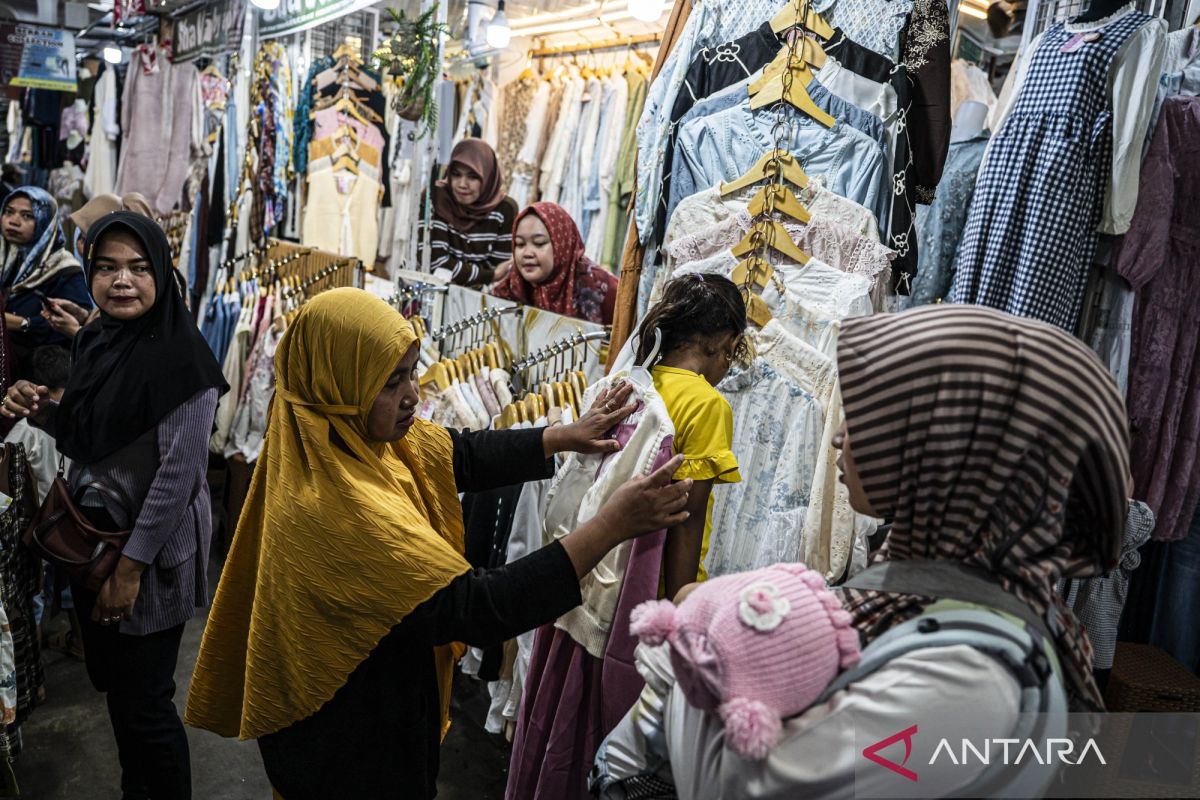
Jakarta (ANTARA) – The Institute for Development of Economics and Finance (Indef) has assessed that consumer purchasing power must become a primary priority for protection amid escalating global economic pressures triggered by geopolitical upheaval and rising energy prices.
M Rizal Taufikurahman, Head of Indef’s Macroeconomics and Finance Centre, stated during an online discussion monitored from Jakarta on Saturday that stabilising consumer purchasing power is critical because Indonesia’s economic structure remains heavily dependent on household consumption.
“Because our economic structure relies so heavily on consumption—53 percent—it simply must be maintained and preserved,” he said.
He explained that current global economic dynamics are influenced by the United States, which faces fiscal and trade pressures. The country’s budget deficit has reached approximately 6.5 percent, whilst total debt has surpassed around $127 trillion.
Furthermore, the large trade deficit has prompted various expansionary economic policies from the United States to maintain economic stability.
“This has led to policies including trade barriers and expansionary policies such as those currently in place, all designed to maintain America’s economic stability,” Rizal noted.
According to him, such policies influence the global economy and impact other nations, including Indonesia. If not anticipated, these conditions could impose serious pressure on Indonesia’s domestic economic stability.
One risk to be monitored is a surge in global oil prices due to geopolitical escalation, as Brent crude prices have approached and could potentially exceed $100 per barrel.
If this trend continues, he warned, energy inflation pressures will increase and could widen the fiscal deficit of energy-importing nations such as Indonesia.
Additionally, exchange rate volatility and global financial market instability could also worsen domestic economic conditions.
Rizal assessed that lower-middle income groups are most vulnerable to such pressures. If their purchasing power weakens, household consumption—the primary driver of economic growth—will also face strain.
“Policy intervention is clearly necessary to support purchasing power and household consumption,” he stated.
Therefore, he argued that government intervention is required to prevent external shocks from directly impacting consumer purchasing power.
One policy option available is reducing fuel sales tax to ensure that energy price increases are not entirely passed to consumers.
The government could also distribute fiscal assistance through cash transfers or additional subsidies to maintain household purchasing power.
“This intervention must be designed to contain external shocks so they do not directly hit purchasing power,” Rizal said.
Indef has also conducted simulations on the impact of geopolitical conflict on Indonesia’s economy through three scenarios: mild, moderate, and severe.
In these simulations, without anticipatory policies, Indonesia’s gross domestic product growth could potentially decline by up to 0.12 percent.
However, with impact-mitigating policies such as energy subsidies and fiscal assistance, pressure on economic growth can be reduced, resulting in relatively smaller effects.
Meanwhile, Indef Founder Didin S Damanhuri highlighted that rising global oil prices due to geopolitical conflict could impose substantial pressure on Indonesia’s state budget, particularly through increased energy subsidy burdens.
Didin explained that if average oil prices reach $100 per barrel, Indonesia’s budget deficit could increase by approximately Rp240 trillion, approaching 4 percent.
According to him, this scenario could worsen if global conflict persists longer. Should conflict continue for about one and a half months with oil prices surging to $150 per barrel, energy subsidy costs could rise to approximately Rp544 trillion, with the budget deficit estimated to reach 5–6 percent.
In an even more extreme scenario, if conflict lasts two to five months and oil prices spike to Rp180–200 per barrel, Didin estimates energy subsidies could balloon to Rp884 trillion.
This situation, he noted, could potentially push the budget deficit beyond 6 percent, a condition he likened to fiscal pressures experienced during the COVID-19 pandemic.