
Indef: Rupiah stability crucial to support 2027 economic growth target
Jakarta (ANTARA) – Esther Sri Astuti, Executive Director of the Institute for Development of Economics and Finance (Indef), said currency stability is a crucial factor in underpinning the government’s growth target for 2027.
She said the government needs to make extra efforts to maintain macroeconomic stability amid projections for the rupiah within the framework of the 2027 KEM-PPKF (Economic Framework and Key Fiscal Policy) 2027.
“If the US dollar is projected at Rp16,800 to Rp17,500 per US dollar in 2027, then in my view the government must make extra effort again,” Esther told ANTARA in Jakarta on Wednesday.
According to her, the focus on stabilising the exchange rate and inflation should be the primary concern amid global pressures and potential market uncertainty.
She also noted that the government should safeguard investor confidence to anticipate potential capital outflows.
“Focus on stabilising the exchange rate and prices,” she said.
In addition, Esther stressed the importance of maintaining the independence of the central bank to support economic stability and the rupiah’s exchange rate.
President Prabowo Subianto previously outlined rupiah exchange-rate assumptions in the KEM-PPKF 2027 at Rp16,800-Rp17,500 per US dollar.
The government also targets economic growth for 2027 in the range of 5.8-6.5% with inflation projected at 1.5-3.5%.
Esther said that coordination between fiscal and monetary policy needs to be strengthened to maintain national economic stability and to achieve these targets.
She noted that economic stability will also be the main foundation in achieving sustainable economic growth.
According to her, the government could also consider efficiency and prioritisation in programmes amid global economic pressures to maintain macroeconomic stability.
She cited the experience of Indonesia under President Bacharuddin Jusuf (BJ) Habibie, who focused on maintaining exchange-rate stability and economic recovery amid a crisis.
“President Habibie managed to reduce the exchange rate from around Rp17,000 per US dollar to around Rp6,500 per US dollar at that time,” she said.
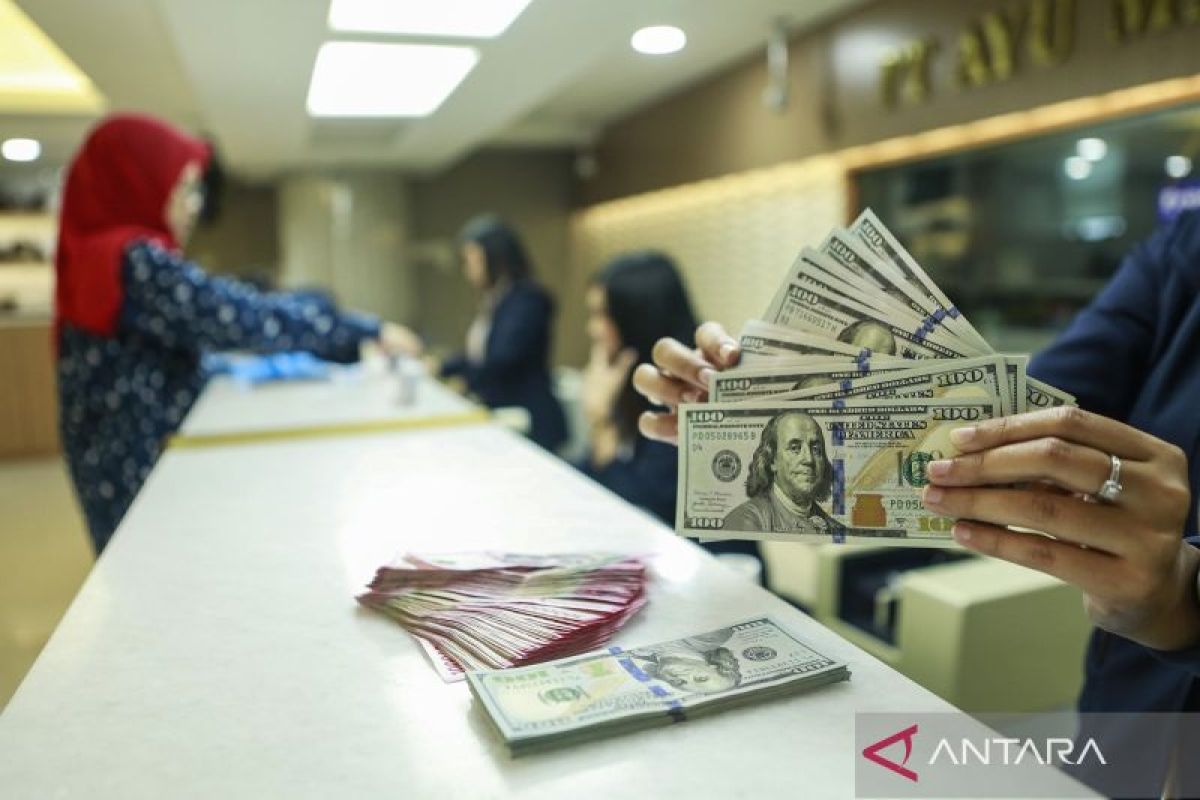
Meanwhile, the rupiah traded on Wednesday morning weaker by 37 paise or 0.21% to Rp17,743 per US dollar, compared with the previous close at Rp17,706 per US dollar.
FX market observers say the rupiah’s trend remains influenced by global economic uncertainty, the direction of US interest rates, and international geopolitical dynamics.
Bank Indonesia Governor Perry Warjiyo is optimistic the rupiah will return to stability, supported by BI’s commitment to maintaining exchange-rate stability, keeping inflation low, and the prospects for Indonesia’s economic growth, which are regarded as still solid.