
Indef: Ramadan and Iledul Fitri Present Economic Opportunities, but Overshadowed by Inflationary Pressures
Researchers at the Macroeconomic and Finance Centre of the Institute for Development of Economics and Finance (Indef), Abdul Manap Pulungan, view the Ramadan and Iledul Fitri period as a crucial moment for Indonesia’s national economy, as it has the potential to boost consumer activity.
According to him, increased consumption is typically driven by the disbursement of holiday bonuses and increased population mobility during the migration season.
“The Iledul Fitri moment is one of the most important moments each year as it presents both opportunities and challenges for the economy. From the demand perspective, Ramadan and Iledul Fitri typically drive increased consumption, particularly from holiday bonuses and migration activities,” he stated at a public discussion forum titled “Iledul Fitri Economy Amid War Turmoil” held online on Monday (9 March).
He noted that increased consumption is expected to drive business activity, particularly among micro, small, and medium enterprises (MSMEs), thus raising production capacity and increasing money circulation among the public.
“We hope this activity can spur MSMEs to move and expand their production capacity, which will ultimately affect the volume of money in circulation during the Ramadan and Iledul Fitri period,” he said.
However, Pulungan also noted that this momentum is typically accompanied by challenges that occur almost every year, particularly rising inflation ahead of Ramadan and Iledul Fitri.
“The challenge we frequently face is rising inflation, particularly in the food commodities group due to limited food stocks. This is a recurring problem but has not been resolved fundamentally,” he stated.
Beyond food price pressures, he assessed that global factors also potentially affect price stability domestically, particularly through impacts on energy prices.
According to him, inflation stemming from government-administered prices also demonstrates considerable pressure.
“Looking at February’s inflation, administered price inflation had already reached approximately 12 per cent,” he noted.
He also highlighted other challenges for those undertaking migration travel, such as infrastructure conditions, fuel prices, and potential congestion that could increase travel costs.
“Infrastructure challenges such as fuel, road conditions, and congestion can add extra costs for migrants. Funds that should be used for consumption could instead be absorbed by unexpected expenses,” he said.
Additionally, disasters such as flooding can influence household spending allocation, including the use of holiday bonuses received ahead of Iledul Fitri. In the current year’s situation, Pulungan assessed that economic challenges become more complex as Ramadan occurs amid global economic pressures.
“Conditions this year are somewhat different because Ramadan and Iledul Fitri are occurring when the global economy is experiencing stress. This will affect the rupiah exchange rate and ultimately impact domestic inflation,” he said.
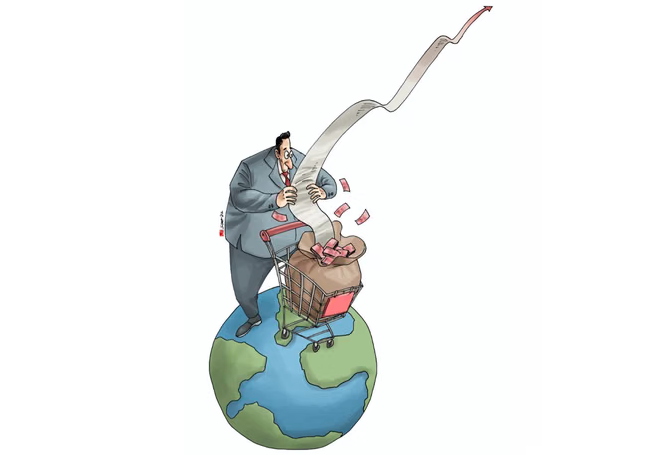
He explained that a combination of food inflation, energy inflation, and rupiah currency depreciation potentially increases import inflation and constrains household purchasing power.
According to him, these conditions raise the question of whether additional income from holiday bonuses can genuinely boost purchasing power or merely offset inflationary impacts.
“The hypothesis is whether the additional holiday bonus received by society can truly increase purchasing power or merely prevents inflation from eroding it,” he stated.
He added that inflationary pressures from multiple sources—both supply and demand-side—make the potential for increased consumption during Ramadan and Iledul Fitri suboptimal.
“When inflation comes from multiple sources such as food, energy, infrastructure, and exchange rates, then the additional holiday bonus that society receives will be difficult to maximise for boosting consumption,” Pulungan explained.