
Indef: Private sector role could drive Indonesia's 2027 economic growth
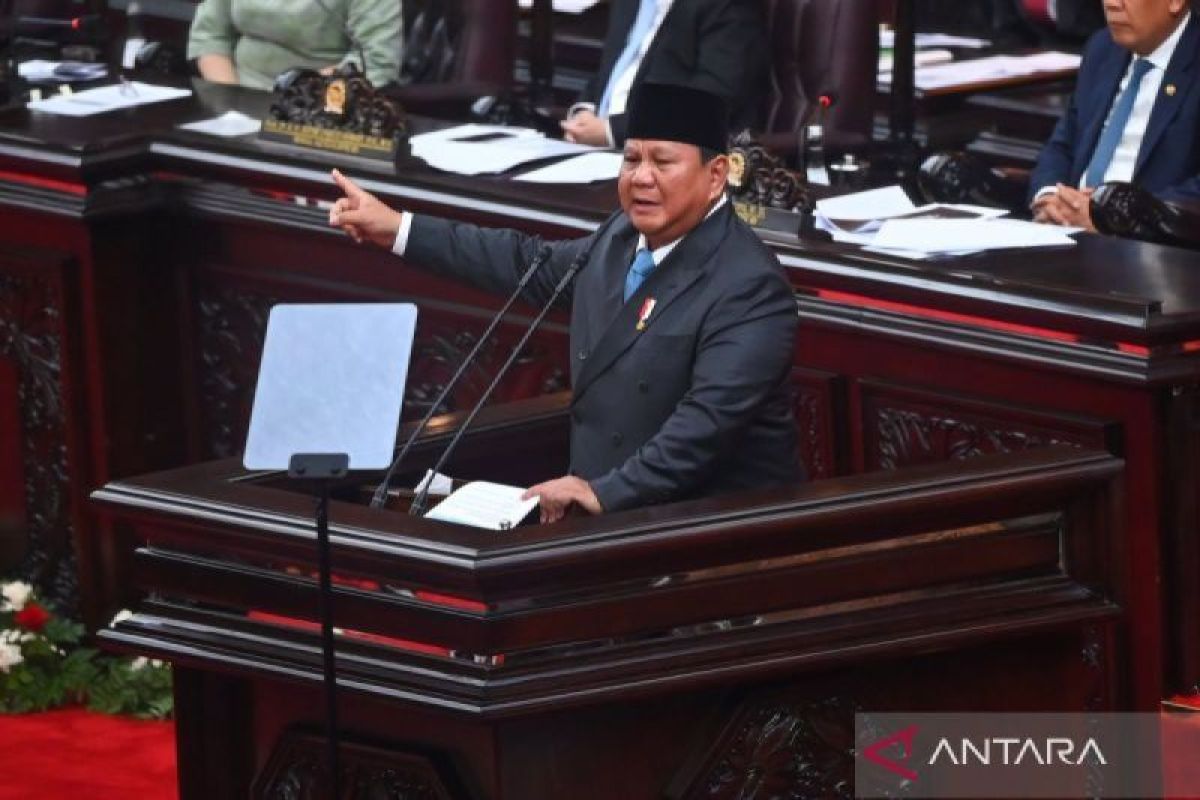
An economist from the Institute for Development of Economics and Finance (Indef), Eko Listiyanto, has assessed that the private sector’s role can push Indonesia’s economic growth to the projected range of 5.8 to 6.5 per cent in 2027. ‘That figure, in general, is of course optimistic,’ he said when contacted by ANTARA in Jakarta on Wednesday, adding that if the target is as such, the efforts required should focus on making the private sector more strategic. He also noted that the fiscal deficit side should be prudent as well. ‘With a prudent fiscal design like that, the engine of growth is what is expected from the private sector, because government spending will be more moderate,’ he said. President Prabowo Subianto has stated that the government projects Indonesia’s economic growth to reach the 5.8 to 6.5 per cent range in 2027 through the implementation of a proper economic strategy and prudent and sustainable fiscal policy. The government has also stressed that the growth target must be reflected in real improvements in the welfare of the people through reductions in poverty and the unemployment rate domestically. In relation to this, the government has set a target to reduce poverty to a range of 6.0 to 6.5 per cent, representing a reduction from the previous target of 6.5 to 7.5 per cent. Meanwhile, the open unemployment rate (TPT) is targeted to fall to around 4.30 to 4.87 per cent from the previous target of 4.44 to 4.96 per cent. To support various priority and vital programmes, national expenditure in the 2027 State Budget (APBN 2027) is planned to be in the range of 13.62 to 14.80 per cent of Gross Domestic Product (GDP). On the other hand, state revenue is targeted to reach between 11.82 and 12.40 per cent of GDP, while the budget deficit will be kept in the range of 1.80 to a maximum of 2.40 per cent of GDP. This figure is lower than the 2025 realised APBN deficit of 2.92 per cent. President Prabowo Subianto delivered the Macro Economic Framework and Key Fiscal Policy (KEM-PPKF) for the RAPBN 2027 directly to the House of Representatives at the 19th Plenary Session of the DPR RI for the 2025-2026 Session in Jakarta on Wednesday. He also became the first Indonesian president to present the RAPBN introduction, which includes the macroeconomic framework and key fiscal policy, to members of the DPR.