
INDEF Highlights Inaccurate Social Assistance Data, Middle Class Overlooked
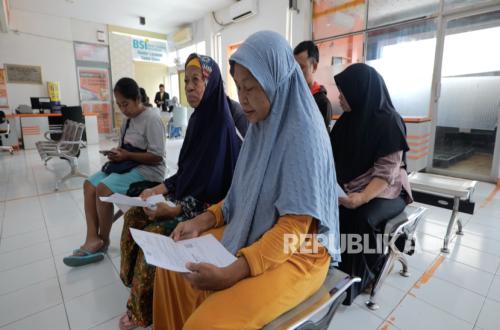
Researcher from the Center of Macroeconomics and Finance at INDEF, Riza Annisa, has highlighted a classic issue in the management of state budgets, particularly the inaccuracy of targeting for subsidies and social assistance in Indonesia. According to Riza, the main root of the problem lies in the quality of data for beneficiaries, which remains not fully accurate to this day.
“Actually, the problem is classic; the first is the data issue. There have been several updates to the data for the poor group, but again, to this day, this data problem has not been resolved,” said Riza during a discussion titled “2 Months of the Israel-US War vs Iran: Beware of Impacts on the Economy!” in Jakarta on Thursday (30/4/2026).
Besides the data issue, Riza continued, the government often overlooks the conditions of the middle-class group, which has varying vulnerabilities. Riza assessed that policies not considering variations within the middle-class group could potentially leave some people untouched by assistance, even though they still need it.
“It’s not that all middle class are capable, because there are levels. There are those who are truly middle class, and those who are upper middle class; that needs to be considered,” she added.
Riza also highlighted inequalities in energy subsidy policies. On one hand, she said, the industrial sector receives various incentives, while on the other, some households face sharply rising energy burdens.
“In the case of fuel (BBM), industry is helped, there are tax incentives issued, and Pertalite is maintained. Meanwhile, for households that cannot use the 3-kilogram gas cylinder, the increase is sharp,” she stated.
Additionally, Riza spotlighted the implementation of the Free Nutritious Meals (MBG) programme, which is not yet fully on target. She urged the government to reprioritise it so that the benefits are more optimal and do not target groups that are actually already capable.
“Actually, MBG has been discussed several times; it needs to be reprioritised, perhaps many schools that are upper middle class no longer need assistance,” she explained.
She described how some schools in the upper middle-class group even have their own catering facilities with adequate funding capabilities, so they no longer need intervention from the programme. In conditions of budget limitations, according to her, the government needs to be more selective so that social programmes truly reach vulnerable groups.
“They can be left alone, so that can be given to those who need it more, especially in 3T areas and extreme poverty areas,” Riza continued.
Riza emphasised that reallocating the MBG programme is very important to reach regions with high poverty rates, including remote areas with limited infrastructure access. She assessed that even on Java Island, there are still pockets of extreme poverty that require serious attention from the government.
“Because even on Java, there are still many areas with extreme poverty, let alone outside, especially the 3T ones, where road access is still difficult and many things need to be fixed,” she added.
Besides sharpening the targets, Riza also encouraged a more active role for the government in directing programme distribution to truly target children from incapable families. This is considered important to support nutritional fulfilment and optimal child growth and development in vulnerable groups.
“So perhaps there needs to be a policy here from the government to redirect the MBG target to children who are indeed in poverty pockets that need help,” Riza continued.
Riza hopes that the MBG programme should not run independently but be integrated with other existing nutrition programmes, such as interventions for pregnant women and toddlers in the first 1,000 days of life. With such integration, policy effectiveness can be enhanced through the optimisation of basic health services.
“It should be calibrated, elaborated, so that the use of posyandu and puskesmas can be optimised to provide free nutritious meals,” said Riza.