
Indef: Escalation of Iran–Israel–US Conflict Could Pressurise the Rupiah
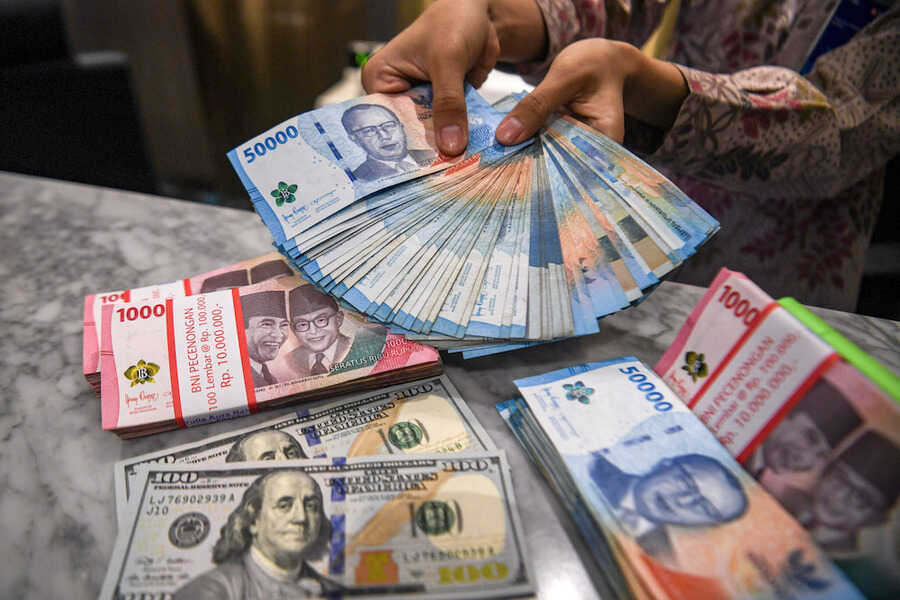
The escalation of the Middle East conflict between Iran and Israel, which also involves the United States, is seen as potentially adding pressure on the rupiah in the near term. Heightened geopolitical tensions raise uncertainty in international financial markets.
‘In the short term, the escalation of the Iran-Israel-US conflict tends to put additional pressure on the rupiah. Geopolitical tensions typically trigger a flight to safety, with global investors moving funds from developing markets to safer assets such as the US dollar and US government bonds,’ Rizal said when contacted on Friday, 6 March.
He said this movement would cause the US dollar to strengthen and weigh on developing-country currencies, including the rupiah. This is reflected in the rupiah’s exchange rate recently moving towards the Rp16,900 to Rp17,000 per US dollar range as global uncertainty rises and capital flows exit the domestic financial market.
Rizal added that pressure on the rupiah also stems from higher global oil prices, which usually occur when tensions in the Middle East intensify. As a country still classified as an energy importer, Indonesia could face a higher foreign exchange requirement to pay for energy imports if oil prices continue to rise.
‘A surge in oil prices would increase the foreign exchange needed for energy imports and widen the current account deficit. If oil prices stay high for several months, the demand for dollars for energy imports could rise and further weaken the rupiah,’ he said.
Nevertheless, Rizal considers the rupiah’s weakness not necessarily permanent. Indonesia’s external fundamentals are believed to remain relatively intact, especially supported by surpluses in key commodities such as coal, palm oil (CPO), and nickel that can cushion external pressures.
In addition, Bank Indonesia also has a number of stabilisation instruments that can be used to maintain exchange-rate movements, from interventions in the foreign exchange market, to Domestic Non-Deliverable Forward (DNDF) operations, to interest-rate policy.
‘In the short term, the rupiah could remain under pressure and move close to Rp17,000 per US dollar. However, the medium-term direction will depend heavily on the evolution of geopolitical tensions, global energy price movements, and domestic monetary policy responses,’ he noted.