
Indef Economist: Whoosh Project Would Take 100 Years to Break Even
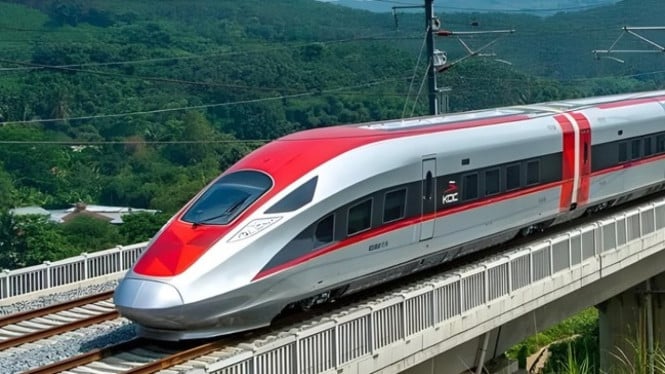
Jakarta, VIVA – The Jakarta-Bandung High-Speed Rail project, known as Whoosh, continues to attract scrutiny following indications that PT Pilar Sinergi BUMN Indonesia (PSBI) has incurred losses exceeding Rp4 trillion.
The losses must be borne by PSBI, which holds a 60 per cent stake in PT Kereta Cepat Indonesia-China (KCIC).
Economist Esther Sri Astuti of the Institute for Development of Economics and Finance (Indef) said the high-speed rail project requires a thorough evaluation, as the payback period could stretch to 100 years.
“In my view, all physical procurement projects have the potential to give rise to allegations of corruption — not just Whoosh, but others as well,” Esther said in a statement on Monday, 23 February 2026.
The PSBI consortium comprises several state-owned enterprises (SOEs), namely PT Kereta Api Indonesia (Persero), PT Wijaya Karya Tbk (Persero), PT Jasa Marga Tbk (Persero), and PT Perkebunan Nusantara (Persero), also known as PTPN I.
Esther explained that oversight of KCIC’s management could be carried out through a straightforward method: comparing the quality of goods or work delivered against prevailing market prices.
This approach, she said, could serve as an early indicator for detecting irregularities.
“It’s easy to check — simply compare the quality of goods received against existing market prices,” she continued.
According to Esther, the primary strategy for minimising potential losses is through consistent project monitoring and evaluation. Should irregularities be found, they must be followed up with law enforcement action.
Beyond governance concerns, Esther also highlighted the financing aspects of the Whoosh project. She noted a significant gap between the government’s debt burden and the potential revenue from the high-speed rail’s operations.
“The gap between the government’s debt for Whoosh and the potential revenue from Whoosh is extremely large,” Esther said.
This situation also affects the length of the payback period.
Based on her calculations, at Whoosh’s current occupancy rate, the project’s payback period would require an extraordinarily long time.
“This results in a very lengthy payback period for the Whoosh project. I have previously calculated it at approximately more than 100 years at the current Whoosh occupancy rate,” she said.