
INDEF Director: Food and Energy Security Key to Sustainability of MBG Programme
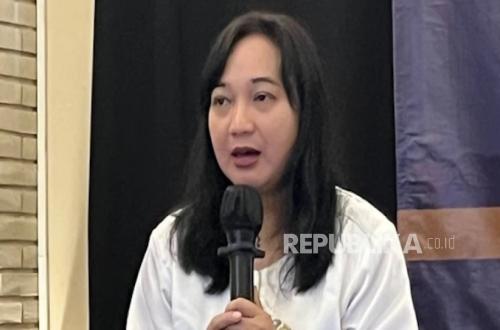
Global crises triggered by geopolitical tensions and worldwide economic pressures are likely to have a significant impact on Indonesia’s economy. One of the most immediate effects is rising inflation, particularly in the food sector, which will ultimately affect the sustainability of various government programmes, including the Free Nutritious Meals (MBG) Programme.
Dr Esther Sri Astuti, Director of the Institute for Development of Economics and Finance (INDEF), assesses that in a global crisis situation, food prices tend to rise. This occurs due to disruptions in the global supply chain, increased logistics costs, and Indonesia’s dependence on imported raw materials.
“When food prices rise, the cost of providing nutritious meals in government programmes also increases. On the other hand, the government has limited fiscal space in the State Revenue and Expenditure Budget,” said Esther in Jakarta on Wednesday (8/4/2026).
She emphasised that the state budget is not used solely for one priority programme. The government must still fund various other needs such as energy subsidies, infrastructure spending, social protection, education, and health. Therefore, under global pressures, the government must be cautious to ensure that implemented programmes do not excessively burden the fiscal position.
According to Esther, the Free Nutritious Meals Programme must still be maintained as it is the President’s political promise and a strategic programme for improving human resource quality. However, its implementation should not be carried out massively across all regions simultaneously.
She suggested focusing the programme first on areas with high stunting rates and the most needy regions such as 3T areas. A more targeted approach is considered to make budget use more efficient and on target.
“If the programme is run massively amid fiscal pressures, it is feared that it will reduce the government’s flexibility in responding to global economic turbulence, especially if there is an increase in oil prices and depreciation of the rupiah exchange rate against the US dollar,” she explained.
Esther also highlighted the impact of global geopolitical conflicts, including tensions between Iran, the United States, and Israel. These conflicts could hinder international trade, particularly in energy and industrial raw material distribution routes. When global distribution is disrupted, logistics costs rise and the prices of imported raw materials increase.
As a country that still relies on imports for several raw materials, Indonesia will be affected. Rising production costs due to expensive imported raw materials will drive up domestic product prices.
“If this condition persists for a long time, inflation will increase and people’s purchasing power could be pressured. Ultimately, this situation will also affect the sustainability of government social programmes,” she clarified.
In that context, Esther emphasised that the key to the success of the Free Nutritious Meals Programme is ensuring that raw material supplies come from within the country. She stated that the government’s food and energy self-sufficiency programmes are very important to reduce dependence on global markets.
She believes Indonesia has great potential to develop alternative energy. Renewable energy sources such as hydropower, wind, and solar are abundantly available. In addition, processing waste into energy can also be an alternative to reduce dependence on fossil fuels. If domestic energy needs can be met independently, the pressure from rising global energy prices will not significantly impact food production costs.
In the food sector, Esther urged the government to provide full support for strengthening agricultural infrastructure. This support includes building irrigation, providing fertiliser, modern agricultural technology, farmers’ access to financing, and strengthening the distribution of harvest results. With adequate infrastructure, agricultural productivity can increase and Indonesia can strengthen food security, which is very effective for supporting local MBG supplies.
She also affirmed that in economic theory, a country does not have to produce all goods. A country should focus on commodities that have a comparative advantage and can be produced more efficiently. In Indonesia’s context, rice is a realistic commodity to achieve self-sufficiency again. She recalled that Indonesia successfully achieved rice self-sufficiency in 1984, so that achievement is not impossible to repeat.
In addition to rice, food diversification also needs to be encouraged. Esther noted that not all Indonesians rely on rice as their staple food. Commodities such as cassava, konjac, breadfruit, and sago have great potential as alternative carbohydrate sources. With food processing technology support, these commodities can be processed into nutritious rice substitutes with economic value.
She emphasised that food and energy security are the keys to ensuring Indonesia is not overly affected by global turmoil. If global energy prices rise, domestic gas and fuel oil prices could also rise. This condition will increase food production and distribution costs. However, if Indonesia can achieve food and energy self-sufficiency, the impact can be minimised so that social programmes like Free Nutritious Meals can continue.
Esther also reminded that the budget for the Free Nutritious Meals Programme could potentially swell. Therefore, the government needs to conduct a comprehensive evaluation of the programme’s implementation. One aspect that needs to be reviewed is the target area focus, nutritional adequacy, and programme success standards.
She assessed that there are still many complaints regarding the nutritional standards in the programme. Therefore, food quality supervision must