
Indef Assesses EV Infrastructure and Clean Energy Incentives as Economic Boosters
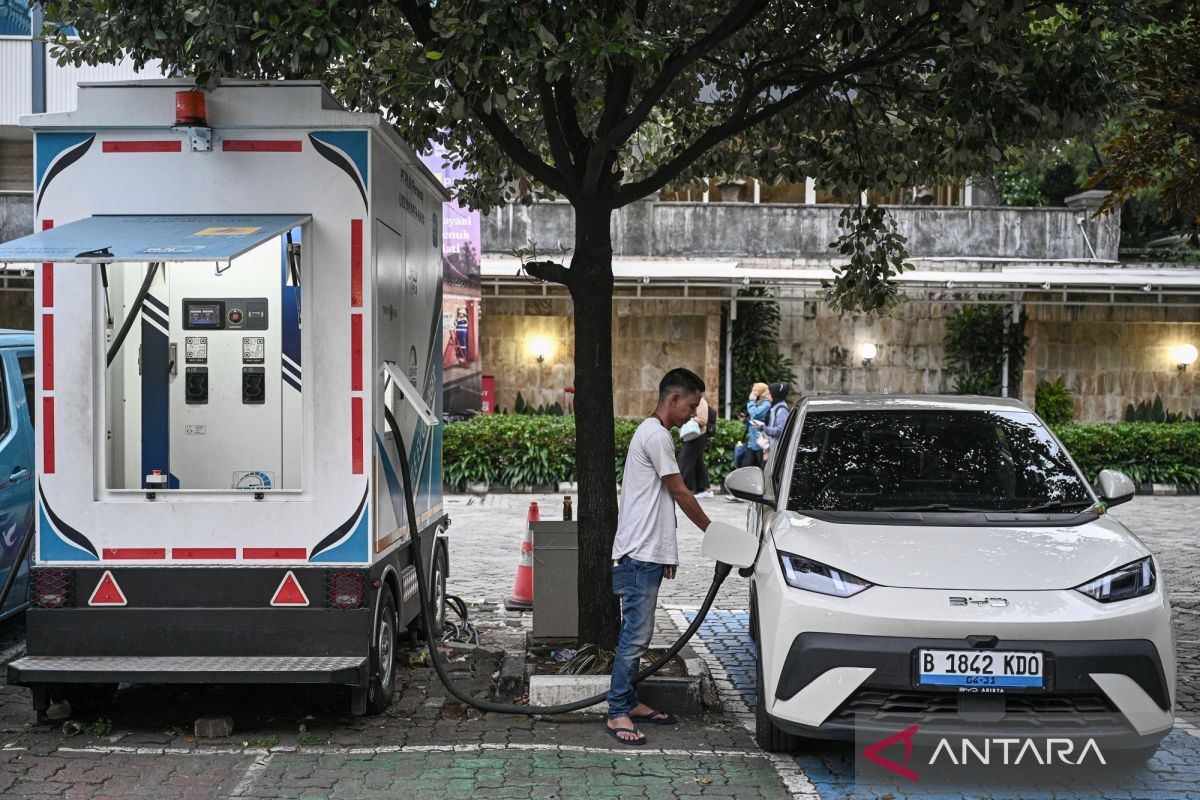
Jakarta (ANTARA) - The Institute for Development of Economics and Finance (Indef) assesses that providing incentives for the development of electric vehicle (EV) infrastructure and renewable or clean energy could serve as a strategy to bolster Indonesia’s economy.
Indef Executive Director Esther Sri Astuti, when contacted in Jakarta on Tuesday, projected Indonesia’s economic growth at 5% in 2026, a scenario heavily influenced by structural challenges and the impact of the global economic slowdown.
Nevertheless, macroeconomic stability is expected to remain intact with inflation around 3% and the rupiah exchange rate hovering at Rp17,000 per US dollar.
The banking sector is also deemed to continue as the primary pillar of the economy through its intermediation function and credit distribution.
In facing global pressures, she believes the government needs to expand incentive policies, including for the renewable energy sector and electric vehicles.
According to her, building EV infrastructure can strengthen public confidence in switching to EVs while encouraging new investments in the green industry and clean energy sectors.
“If we want to provide greater incentives to generate renewable energy so that the supply of renewable energy in Indonesia increases. Then provide incentives for building electric car infrastructure so that people buy without fear of running out of power or are confident that electric cars use cheap energy,” she said.
Additionally, the banking sector is assessed to still need to maintain financial system stability through accommodative macroprudential policies to ensure a balance between economic growth and stability.
Indef also warns of risks from global economic shocks that could affect the informal sector and SMEs.
The global economic slowdown is seen as potentially pressuring Indonesia’s exports due to declining global demand and prices of leading commodities such as coal and crude palm oil (CPO).
Previously, she was convinced that EV electrification incentive policies represent long-term fiscal investments capable of becoming a national economic driver.
Indef assesses that such policies not only accelerate the energy transition but also enhance economic growth and strengthen the country’s fiscal resilience.
According to her, previous government incentive policies have successfully attracted global producers to invest capital and build production bases domestically.
Indef notes that foreign investment in Indonesia’s electric vehicle sector has reached $2.73 billion over the last three years.
Meanwhile, the Central Statistics Agency (BPS) recorded Indonesia’s economy growing 5.61% (year-on-year/yoy) in the first quarter of 2026, with gross domestic product (GDP) on a constant price basis reaching Rp3,447.7 trillion, and on a current price basis at Rp6,187.2 trillion.