
Indef assesses chilli price increases ahead of Ramadan as seasonal inflation
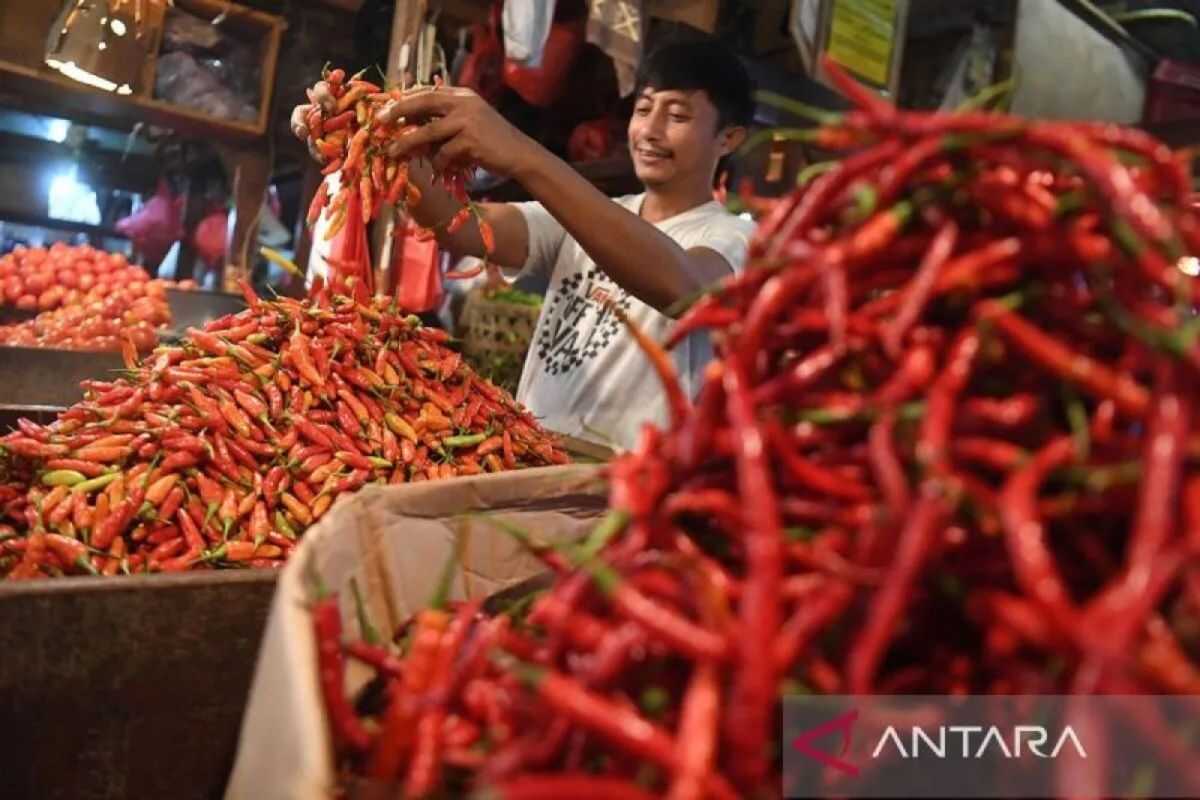
The Executive Director of the Institute for Development of Economics and Finance (Indef), Esther Sri Astuti, has assessed that the rise in red cayenne chilli prices ahead of Ramadan 1447 H constitutes seasonal inflation that recurs annually and can be anticipated by the government.
Esther made the remarks in response to the movement of red cayenne chilli prices, which over the past week have remained at around Rp80,000 per kilogram across a number of traditional markets, having previously breached the Rp90,000–Rp100,000 per kilogram mark.
“The increase in chilli and food staple prices is essentially ‘seasonal inflation’ that typically occurs during Ramadan and Lebaran, compounded by weather effects,” Esther told ANTARA in Jakarta on Wednesday.
She explained that the pattern of price increases for horticultural commodities occurs almost every year, particularly when high rainfall hampers harvesting and picking activities, resulting in suboptimal supply to markets.
“The government and markets should be able to predict and respond to these price increases because they have occurred repeatedly,” she said.
According to Esther, price control policies through the setting of floor prices and ceiling prices risk being ineffective if not accompanied by adequate supply guarantees in the market.
“If the government merely issues floor price or ceiling price policies, they are usually disregarded. Historical data shows that such measures actually risk causing goods to disappear from the market,” she noted.
She argued that a more effective approach would be to strengthen market operations by increasing supply directly to major markets, particularly ahead of high-demand periods such as Ramadan and Eid al-Fitr.
Based on monitoring at the Kramat Jati Central Market in Jakarta on Tuesday (17 February), red cayenne chilli supplies were recorded as relatively available, including from outside Java such as South Sulawesi, with supply volumes estimated at approximately 20 tonnes per day, although consumer-level prices remain influenced by distribution costs of around Rp10,000 per kilogram.
Furthermore, Esther emphasised the importance of developing post-harvest technology to maintain the quality and shelf life of chillies, so that supply does not depend solely on the harvest season.
“Post-harvest technology needs to be employed so that chillies last longer and supply remains available at all times,” she said.
She cited practices in several countries that have managed to maintain supply stability and pricing through post-harvest management. One example is the Netherlands, where apple farmers can store their harvest for longer using preservation technology, enabling the commodity to be sold throughout the year.
“Prices do not plummet during harvest. When it is not harvest season, the public can still find apples at standard prices in supermarkets,” Esther said.
Meanwhile, the government through the National Food Agency (Bapanas) has prepared a Food Distribution Facilitation (FDP) programme as one of its intervention instruments to help suppress red cayenne chilli prices at the consumer level, particularly in areas experiencing supply and distribution pressures ahead of Ramadan and Eid al-Fitr.
The FDP will see the government bearing part of the logistics costs for food commodities from production centres to consumer markets, in order to maintain supply and suppress price volatility at the consumer level.