
Inaugurates 12 Officials, Labour Minister: Positions Are More Than Just Roles, Public Service Must Be the Priority
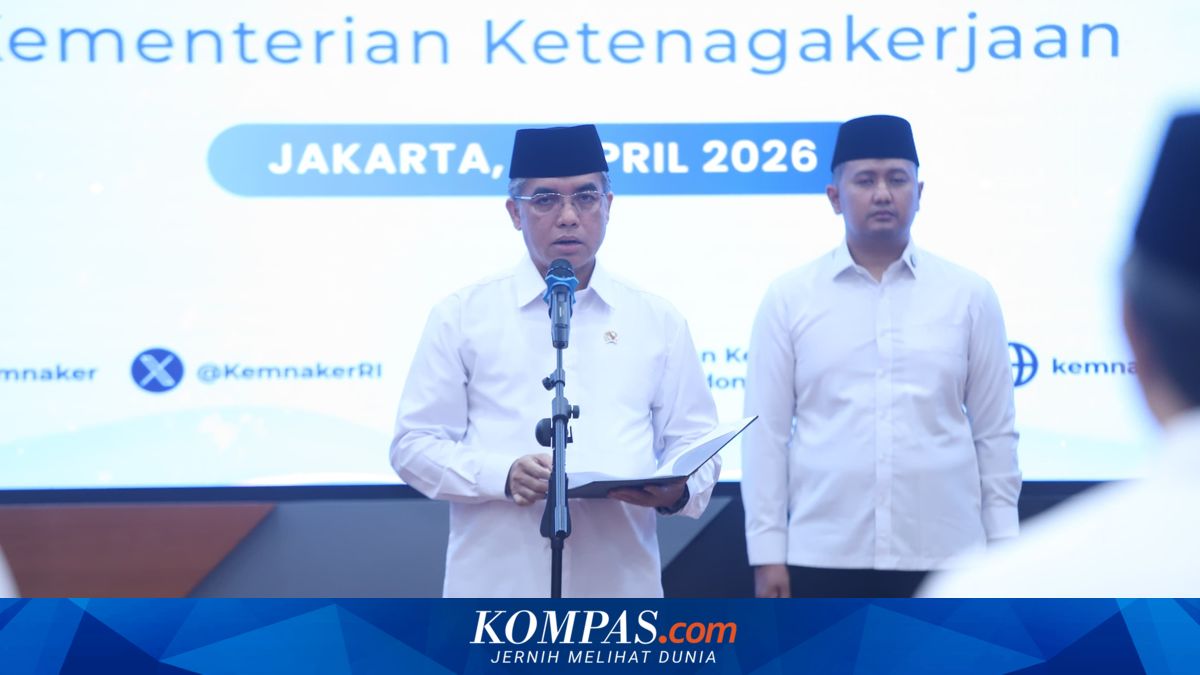
Labour Minister Yassierli inaugurated and administered the oath of office to 12 high-ranking pratama-level officials at the Ministry of Manpower in Jakarta on Tuesday (7 April 2026).
The inauguration, attended by Deputy Labour Minister Afriansyah Noor, forms part of strengthening strategic positions directly related to labour services for the public, workers, job seekers, and the business world.
Of the 12 officials inaugurated, 11 came from an open selection mechanism and one through inter-agency mutation.
This process demonstrates the Ministry of Manpower’s commitment to transparency, accountability, and professionalism in managing civil servant (ASN) talent.
On this occasion, Yassierli stressed that positions should not be viewed merely as roles, but as a mandate to be carried out with dedication, integrity, and responsibility to the nation and state.
He stated that the Ministry of Manpower currently manages a workforce of 155.27 million people.
On the other hand, developments in information technology have raised expectations and demands from job seekers and workers for higher quality government services.
Therefore, Yassierli asked all ranks, especially the newly inaugurated officials, to ensure that public services run even better, more responsive, and with tangible impact.
According to him, the quality of work by these officials in strategic positions will directly influence labour market services, vocational training, expansion of job opportunities, resolution of industrial relations disputes, occupational safety and health (K3), strengthening of labour data, and internal ministry governance.
Yassierli conveyed that the Ministry of Manpower currently faces seven complex and urgent challenges.
These challenges include strengthening link and match as well as optimising Job Training Centres (BLK), providing decent and inclusive employment for vulnerable groups, and preparing and updating labour regulations.
Additionally, enforcing labour norms and K3 in industry, implementing transformative industrial relations, developing the Labor Market Information System through the SiapKerja platform, and bureaucratic reform at the Ministry of Manpower.
To address these challenges, the Ministry of Manpower is implementing six transformation agendas, namely building and restoring public trust, transforming labour services to be more oriented towards community needs, and preparing future workforce through upskilling and reskilling.
The 12 inaugurated officials are as follows: