
INACA Deems Government's Strategy to Mitigate High Jet Fuel Impact as Appropriate
JAKARTA, KOMPAS.com - The surge in jet fuel prices due to the geopolitical crisis in the Middle East has compelled the government to swiftly introduce a policy package, which airlines now deem to be on the right track as it manages to contain the impact on the industry as well as the public.
The Indonesia National Air Carriers Association (INACA) assesses that the policy accommodates the needs of the aviation industry while safeguarding public interests, amid mounting operational cost pressures.
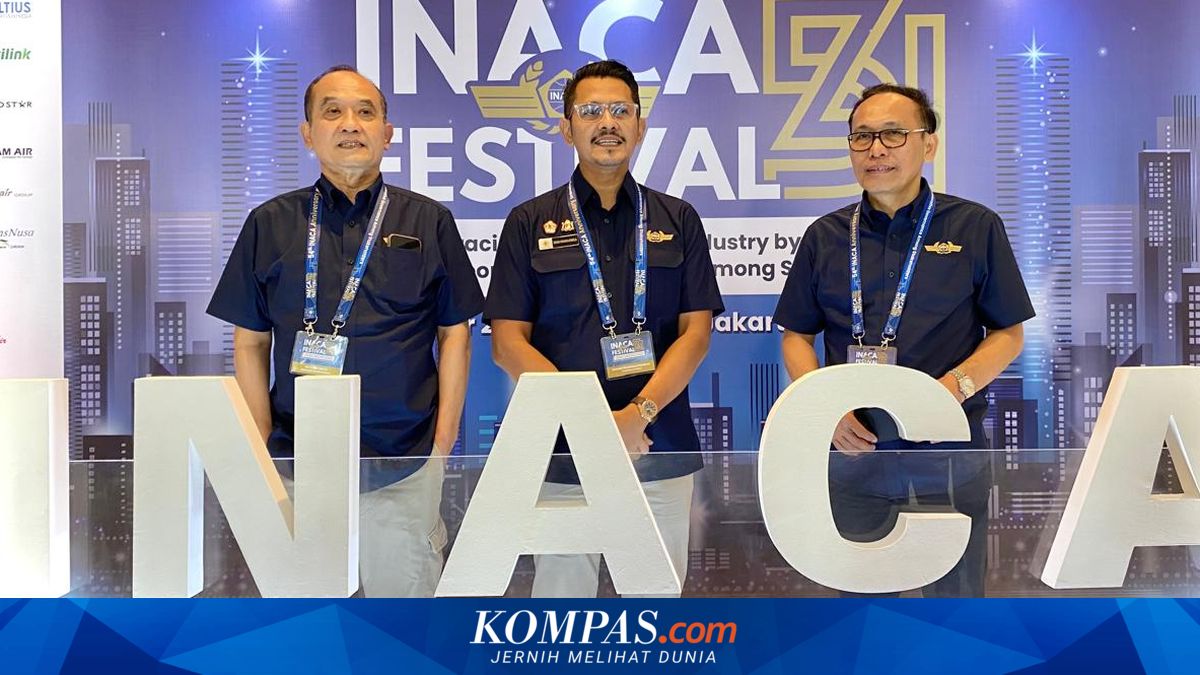
INACA General Chairman Denon Prawiraatmadja stated that the government’s steps, announced in a press conference by Coordinating Minister for the Economy Airlangga Hartarto, represent a strategic response in a challenging situation.
“We appreciate this government policy, as it is indeed not easy to address the very high increase in jet fuel prices due to the Middle East geopolitical crisis,” Denon said in an official statement on Monday (6/4/2026).
Furthermore, the policy applies for two months, and discussions on raising the upper tariff limit (TBA) have been temporarily postponed, thereby preventing further pressure on flight fares in the near term.
According to Denon, this combination of policies reflects efforts to maintain a balance between the sustainability of airline operations and public purchasing power.
“We view this policy as aligned with the needs of airlines and the public, and it includes government support through the temporary elimination of the 11% VAT and the reduction of import duties on spare parts to 0%,” he added.
INACA hopes that the implementation of the policy can proceed effectively soon so that its benefits can be immediately felt by the industry and the public.
“We hope this policy can be implemented promptly to assist airline operations in maintaining flight safety and comfort, as well as to help the public and government in preserving air transport connectivity,” he concluded.
The government has subsequently raised the fuel surcharge to 38% from the previous 10% for jet aircraft and 25% for propeller aircraft. However, this increase is not standalone, as it is accompanied by impact-mitigating fiscal measures.
The government is covering the 11% VAT on economy-class domestic flight tickets with a monthly allocation of Rp 1.3 trillion, and reducing import duties on aircraft spare parts to 0%. Through this combination, the estimated ticket price increase is around 9% to 13%.
For illustration, the ticket price for the Jakarta-Yogyakarta route, previously around Rp 972,780, is estimated to rise to about Rp 1.06 million to Rp 1.09 million, while the Jakarta-Balikpapan route, from around Rp 2.6 million, will become Rp 2.8 million to Rp 2.9 million.