
In Women's Empowerment Month, Language Agency Holds Book Dissection on the Power of Language
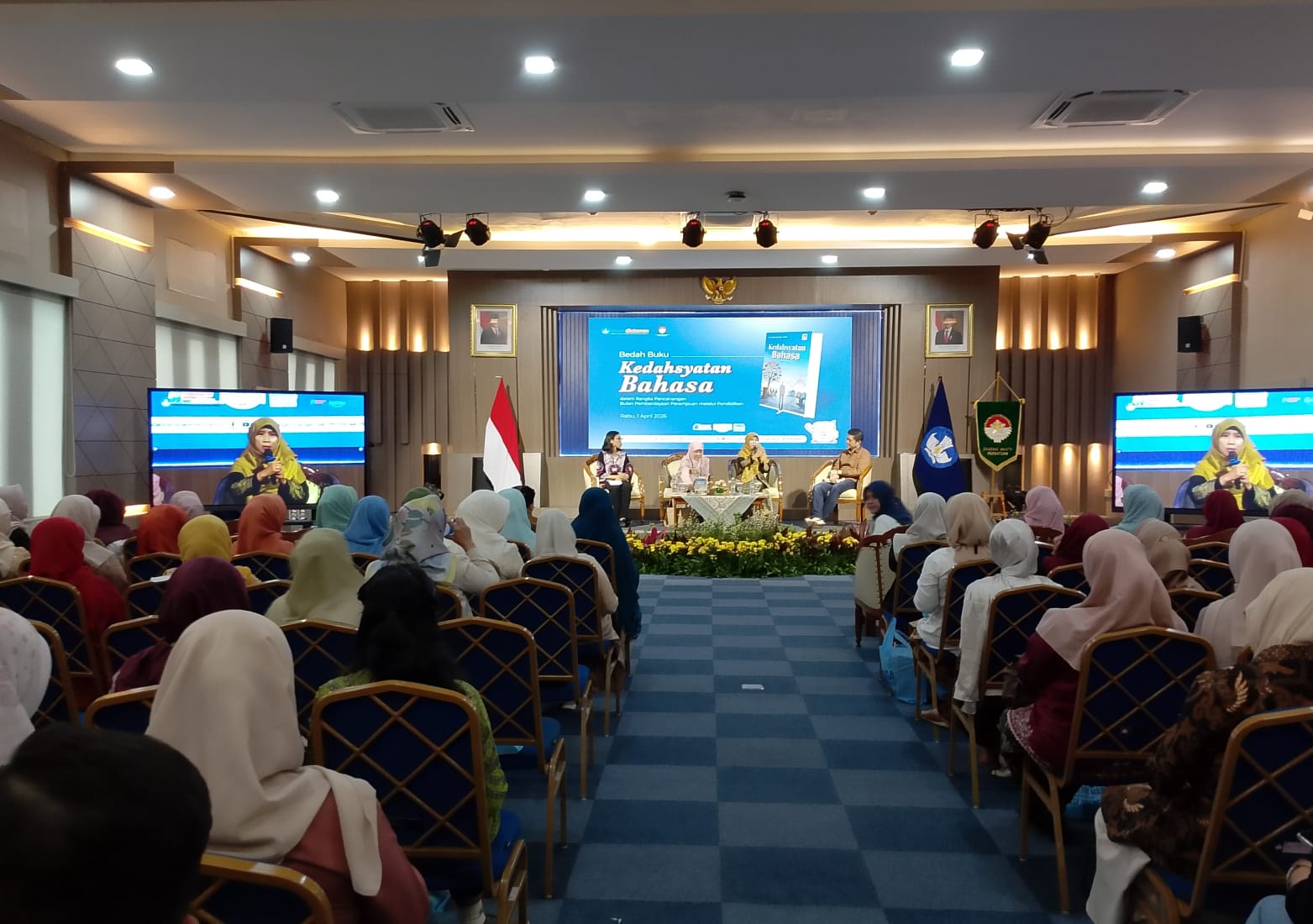
The Dharma Wanita Persatuan (DWP) of the Ministry of Basic and Secondary Education (Kemendikdasmen), in collaboration with the Language Development and Cultivation Agency (Badan Bahasa), held the Launch of Women’s Empowerment Month through Education on Wednesday (1/4) at the Badan Bahasa office in Rawamangun, East Jakarta.
Attending the event were, among others, the Minister of Basic and Secondary Education (Mendikdasmen) Abdul Mu’ti, the Minister of Women’s Empowerment and Child Protection (PPPA) Arifah Fauzi, and the Coordinating Minister for Human Development and Culture (Menko PMK) Pratikno. Also present was former Minister of Education and Culture Wardiman Djojonegoro.
In delivering a report on the activity, the Head of Badan Bahasa Kemendikdasmen, Hafidz Muksin, stated that education serves as the primary means of empowering women through strengthening character, literacy, and gender equality, enabling women to fully participate in political, economic, social, cultural, and linguistic spheres.
As part of the Launch of Women’s Empowerment Month through Education series, Badan Bahasa also organised a book dissection titled The Power of Language, a work by Atikah Solihah, a Widyabasa and language expert at Badan Bahasa. The book dissectors were author Asma Nadia and language activist Ivan Lanin.
Hafidz said the book dissection activity was designed as an intellectual discussion space on the strategic role of language in social life and the development of knowledge.
The collaboration between Badan Bahasa and DWP Kemendikdasmen, Hafidz added, is expected to broaden the reach of literacy campaigns, strengthen networks in the field of language and education, and provide public learning spaces that reinforce women’s empowerment through language and literacy.
The book The Power of Language explores language as a fundamental force that not only functions as a communication tool but also as a trigger for events, a driver of change, and a shaper of human civilisation. The book emphasises that language can be constructive energy that advances humanity, while also having the potential to be destructive if used without awareness of values, etiquette, and responsibility.
Through this book, Atikah invites readers to realise that the quality of language reflects the quality of thinking and the quality of civilisation. Language that is substantive, rule-based, and integrity-driven becomes the foundation for national progress. Neglecting language risks giving birth to conflicts, misunderstandings, and the decline of human values.