
In Silence, Regional Autonomy Changes
Every 25 April, our nation commemorates Regional Autonomy Day. This commemoration is not merely an annual ceremony, but a moment for us to reflect on how far regions have truly been given space to “govern and manage” their own households.
Regional autonomy is fundamentally an effort to bring the state closer to the people so that decisions are not always centralised at the centre, but also emerge from local needs and potentials.
Historically, the idea of regional autonomy has been present since the early days of independence. It began with Law No. 1 of 1945, which introduced regional structures such as residencies, regencies, and cities, and evolved through various regulations like Law No. 22 of 1948, which emphasised more democratic local governance.
This dynamic continued through various changes in laws, from Law No. 1 of 1957, Law No. 18 of 1965 which championed the broadest possible autonomy, to Law No. 5 of 1974 which tended to strengthen the central government’s role in the regions. (National Law Development Agency, 2024)
A major change was truly felt after the 1998 reforms. Through Law No. 22 of 1999, regional autonomy received a new lease of life. Regions were given broader authority, including in managing finances and resources. Even through financial balancing policies, regions had the opportunity to enjoy a greater share of their natural wealth.
Since 2000, regional autonomy has been implemented gradually and has become an important foundation in promoting equitable development.
Over time, these regulations have been continuously updated, now referring to Law No. 23 of 2014 and its amendments. The goal remains the same: to create self-reliant regions, especially fiscally, while accelerating equitable development.
However, the reality on the ground shows that this ideal has not been fully achieved. Not a few regions still have low Regional Original Revenue (PAD) and are highly dependent on transfers from the centre.
This condition serves as a reminder that regional autonomy is not just about authority on paper, but also about capacity, innovation, and the courage of regions to manage their own potentials.
It is at this point that Regional Autonomy Day becomes relevant. Not viewing it merely as a ceremonial celebration, but as a reflection: has autonomy truly brought independence, or does it still leave dependency?
This question is important to keep asking, so that regional autonomy does not stop as a concept, but truly becomes a path to more equitable welfare.
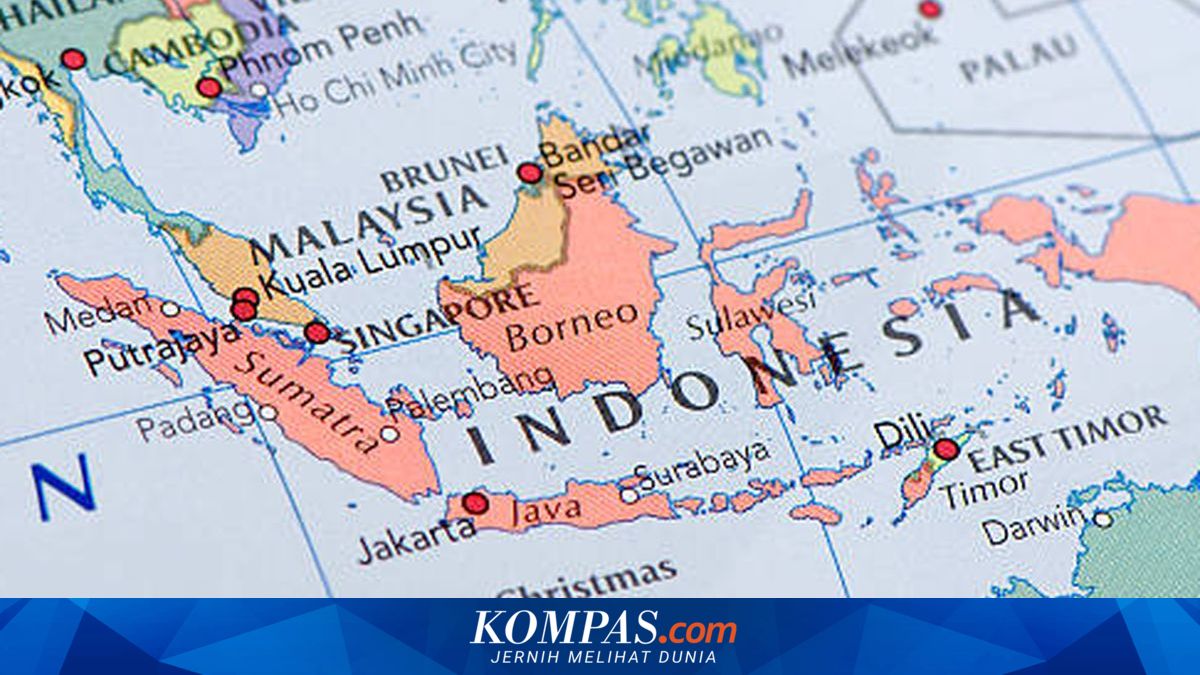
Today, Indonesia is not only vast geographically, but also complex in its regional governance. The Unitary State of the Republic of Indonesia now consists of 38 provinces stretching from Sabang to Merauke. Within them, there are 416 regencies and 98 cities that serve as nodes of government as well as centres of public services for the community. (Cabinet Secretariat, 9/12/2022)
The increase in the number of regions is seen as a strategic step to bring services closer to the people, shorten bureaucratic control distances, and encourage development so that it is not only concentrated in certain areas.
At the same time, this step is also expected to strengthen the sense of nationality that amid regional diversity, we remain within one intact framework, namely the NKRI.
This idea aligns with Prabowo Subianto’s view, who often emphasises that Indonesia is a great nation with extraordinary regional wealth. Each region has potentials in natural resources, culture, and human resources that, if managed well, can become drivers of welfare.