
In Memoriam Try Sutrisno: Thought and Dedication
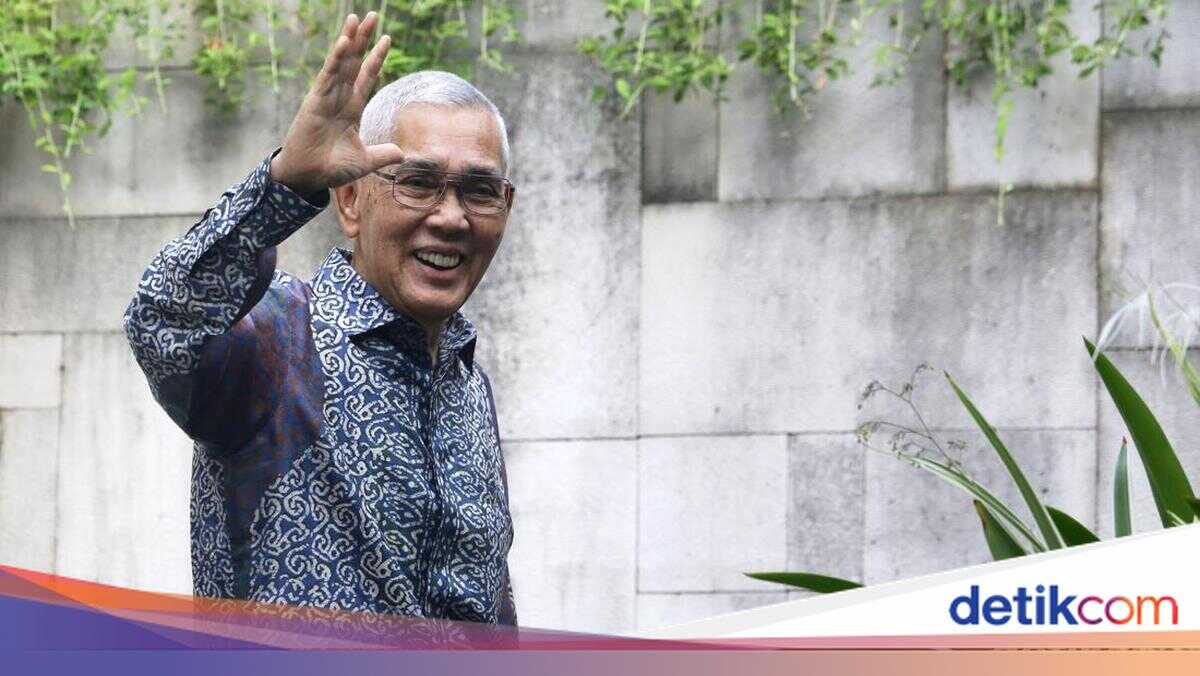
We have lost another statesman who, in his later years, continued to sow the spirit of nationalism and even conducted open critique. I remember that although we were not close friends, whenever we met, he would pat my back as if we were already close companions. This occurred repeatedly in various forums—he always greeted everyone with a smile. I suspect he listened to young people’s criticisms in public media during the 1990s, paying attention to who frequently appeared in public spaces articulating ideas. Perhaps I was among those he remembered, and when we met directly, we would greet each other like close friends.
This is also why I always paid attention to the ideas he expressed publicly, both during the Suharto era and the reformation period. Last year, Pak Try was still healthy, clear-minded, and still delivered forceful speeches in public.
In his remarks on 21 July 2025 at the Pancasila Ideology Development event marking the 80th anniversary of implementing Pancasila and the launch of the Pancasila Virtual Expo 2025 at the University of Indonesia, he stated that contemporary Indonesian national life tends towards a liberal character that erodes morality and ethics according to Pancasila principles.
The democracy being implemented tends towards westernisation as a result of four amendments to the 1945 Constitution, fundamentally changing national life. In my view, Pak Try’s critique deserves consideration because Indonesia’s face has become liberally capitalistic, increasingly distanced from the ethics, morality, and philosophical foundations of Pancasila.
Young generations no longer know their nation’s foundational philosophy. Pancasila has faded and is no longer the basis of the 1945 Constitution of the Republic of Indonesia. This fact clearly shows inconsistency and incoherence with the Preamble to the 1945 Constitution. According to Pak Try, “The practice of democracy is extremely liberal, even more liberal than the system operating in the United States.”
The sudden amendments to the 1945 Constitution, even without deep study and reflection, have revealed many weaknesses after more than two decades of implementation. Accordingly, he hoped for evaluation and re-examination of the state system referring to the 1945 Constitution as amended. What is unfortunate is the loss of the pillar of national deliberation in our state system—the disappearance of the MPR (People’s Consultative Assembly) as the embodiment of the highest state institution.
Now within the liberal system, the MPR no longer functions as the highest state institution creating the GBHN (state guidelines reflecting deliberation of all national elements), so the Indonesian people are no longer the determinants of the direction of policy and life in the Indonesian state. Currently, political directions are made by political parties whose rhythm of life only extends for short five-year electoral cycles.
I believe that this senior statesman’s critique deserves reflection as an important discourse in national life. In my view, what remains are no longer national leaders and thinkers like Sukarno, Hatta, Sjahrir and their colleagues. What exists instead are rent-seekers and merchants engaged in short-term transactions, or inexperienced individuals forced into leadership positions whilst damaging constitutional pillars.
Try Sutrisno observed the journey and implementation of reformation. In the future, reformation cannot be based on liberal principles, which do not align with fundamental Indonesian values. He emphasised that reformation should be rooted in Indonesian national values, not merely changes influenced by external waves of liberalisation.
The spirit of reformation is not westernisation and should not be merely rhetoric of freedom, but must strengthen national integrity and Pancasila values. Thus, democratic practice should not weaken moral values, ethics, and Pancasila philosophy.
In his view, democracy is merely a means to achieve independence and not the ultimate goal of state life. For a large nation like Indonesia, evaluation and reconsideration of democratic practice and national life are urgently needed to align with the fundamental values and character of the Indonesian nation.
With such a liberal system, one should not expect it to produce good leaders for the nation because everything becomes transactional for short-term interests.