
In a "Swap" Against Trump's Tariffs, Indonesia Purchases 50 Boeings and Extends Freeport's Mining Permit
JAKARTA, KOMPAS — The reciprocal trade agreement between the Indonesian government and the United States not only includes the elimination of tariffs on 1,819 Indonesian product items. Behind this agreement lies a package of business and investment commitments worth tens of billions of US dollars.
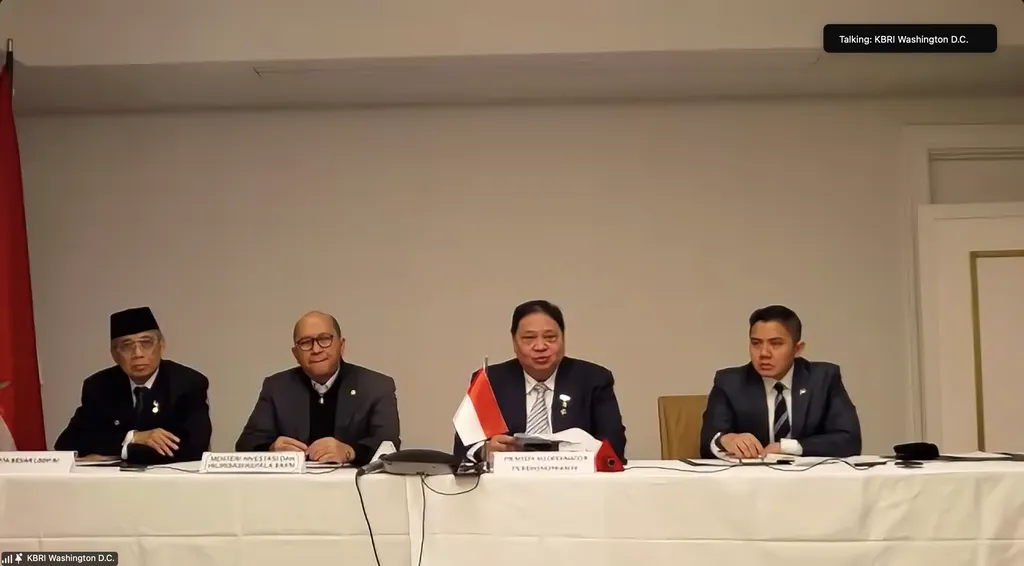
In a virtual press conference from Washington DC, Thursday (19/2/2026) evening local time, or Friday (20/2/2026) WIB, Danantara Chief Executive Officer Rosan Roeslani said that the implementation of the reciprocal tariff agreement (Agreement on Reciprocal Trade/ART) includes a number of investment plans and strategic trade transactions.
One of them is the plan to purchase 50 units of commercial aircraft produced by Boeing. According to Rosan, initial discussions with Boeing have taken place and will soon be followed up. “There is a facilitation for the purchase of 50 units of Boeing-produced aircraft that we will (Danantara) discuss further with Boeing,” said Rosan.
Citing a fact sheet document issued by the White House, the purchase value reached 13.5 billion US dollars, consisting of commercial aircraft and other goods and services related to aviation.
In addition to purchasing aircraft, Indonesia will also import gas and crude oil from the US, valued at approximately US$15 billion per year. Indonesia will also purchase US agricultural products worth over US$4.5 billion. These steps are part of efforts to strengthen economic and investment cooperation between the two countries.
Rosan added that there are currently several investment plans that are in the exploratory stage, both in the oil and gas sector as well as in other fields. The implementation of these commitments is under the coordination of Danantara and the Ministry of Investment.
In the mining sector, citing a fact sheet issued by the White House, Indonesia also agreed to extend Freeport’s mining permit and expand its operations in Grasberg, Mimika, Central Papua. For the US, this agreement is expected to generate approximately US$10 billion in annual revenue and strengthen its position in the global supply chain for critical minerals.
Rosan revealed that the Indonesian government and Freeport have also signed a memorandum of understanding (MOU) to increase investment in the next 20 years with a value of around 20 billion US dollars.
“Yesterday, a memorandum of understanding (MOU) was also signed between Freeport and the Indonesian government. The Freeport party can increase its investment by approximately in the next 20 years, with a value of 20 billion US dollars,” said Rosan.
He added that the agreement will soon be followed up with a definitive contract. The increase in investment is expected to have a positive impact on tax revenue and other state revenues.
The business and investment agreement is part of the dynamics of the “swap” in ART. On one hand, the United States has reduced tariffs on 1,819 Indonesian product items to 0 per cent, including agricultural and industrial products such as palm oil, coffee, cocoa, rubber, electronic components, and aircraft components.
On the other hand, Indonesia must provide zero per cent tariff facilities for 99 per cent of US products across various sectors, open the market for several US agricultural products, such as wheat and soybeans, lift the export ban on critical minerals to the US, and create space for strategic transactions and investments.
President Prabowo Subianto and US President Donald Trump signed an agreement titled “Toward a New Golden Age for the US-Indonesia Alliance” in Washington DC. Although the US continues to impose an average reciprocal tariff of 19 per cent on Indonesian products, 1,819 tariff items have been reduced to 0 per cent.
The government emphasises that the ART is a purely trade agreement without including defence or geopolitical clauses. The agreement will take effect 90 days after the legal processes in each country are completed, and the Indonesian government will consult with the DPR RI before ratification.
The Indonesian Ambassador to the United States, Dwisuryo Indroyono Soesilo, stated that the Indonesian representation in the US has been prepared to implement the agreement in a coordinated manner. “The task of the Indonesian Embassy in the United States is to implement the signed ART into the implementation stage,” he said.
The Indonesian Embassy in Washington DC will serve as the coordination centre. The Consulate General of Indonesia in Los Angeles will handle the development of mining cooperation, including with Freeport in Arizona. Meanwhile, digital technology cooperation will be managed through the representative office in San Francisco, covering the Silicon Valley and Seattle areas.
For the development of agricultural commodities such as soybeans and wheat in the Midwest region, coordination is carried out through the Indonesian Consulate General in Chicago. Meanwhile, the oil and gas sector will be managed by the Indonesian Consulate General in Houston, while trade, finance, and investment will be coordinated from New York.
PT Freeport Indonesia and the Government of Indonesia have signed a memorandum of understanding (MoU) for the extension of the special mining business licence from 2041 until the end of the mine’s life. This represents a strategic step to ensure the sustainability of operations and long-term investments.
The signing took place in Washington DC, United States, on Wednesday (18/2/2026) local time. The MoU was signed by the Government of the Republic of Indonesia, represented by the Minister of Investment and Downstreaming/Head of the Investment Coordinating Board Rosan Roeslani. Subsequently, President and Chief Executive Officer of Freeport-McMoRan Inc Kathleen Quirk and President Director of PT Freeport Indonesia (PTFI) Tony Wenas signed, witnessed by President Prabowo Subianto.
“This agreement is a strategic step to ensure the sustainability of long-term operations and investments. This will be achieved by optimising identified resources through detailed exploration to increase reserves and maintain production continuity beyond 2041,” said Tony Wenas.
Thus, the contribution to the country, particularly to the people of Papua, continues to be maintained. This is through state revenue estimated at 6 billion USD or 90 trillion IDR per year, based on current commodity price assumptions. This also includes 41 trillion IDR for local governments. Furthermore, the sustainability of approximately 30,000 jobs and community development programmes amounting to around 2 trillion IDR per year is ensured.
“The MoU also ensures Indonesia’s ownership in PTFI will increase by 12 per cent by 2041,” Tony said.