
Impunity and Police Reform: Learning from the KontraS Activist Case
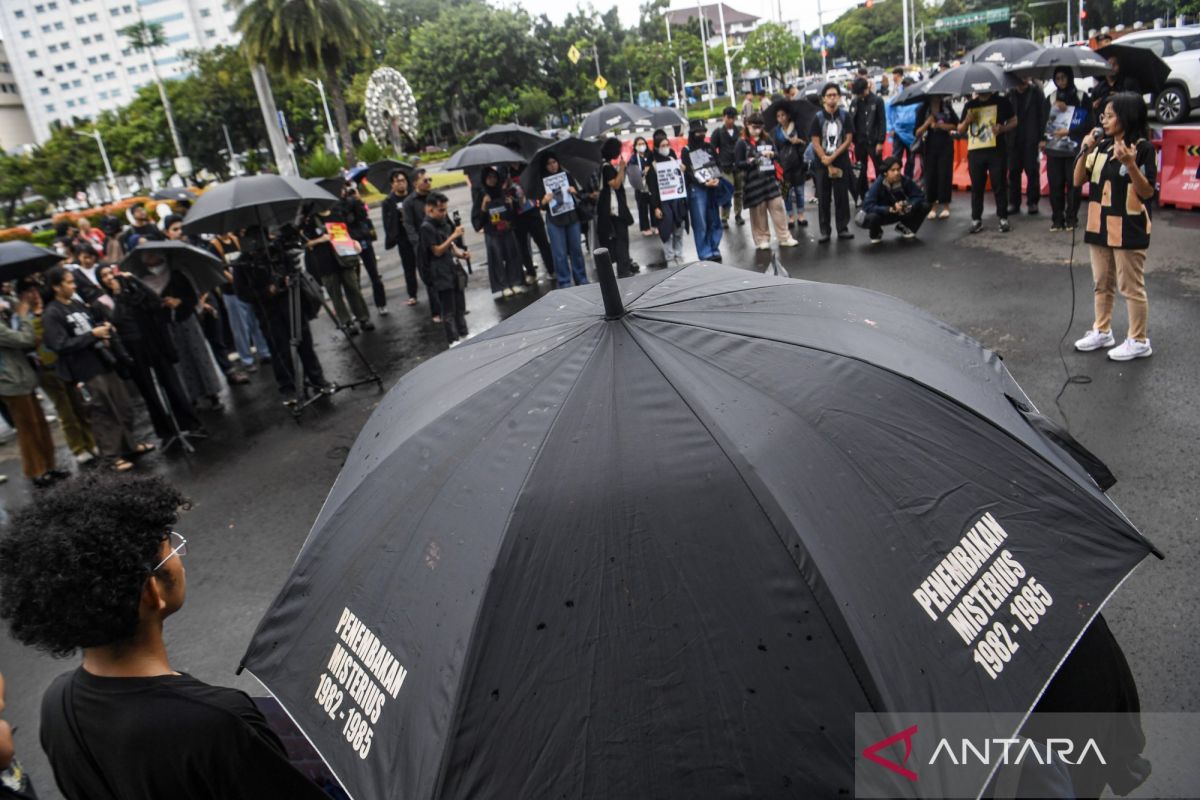
In a democratic state, civil society activists play a vital role as watchdogs over power. They monitor state official misconduct, champion justice for victims of human rights abuses, and ensure that security apparatus operate according to rule of law principles. Consequently, every attack on activists is not merely a criminal matter, but touches on the quality of democracy itself.
CCTV footage that circulated showed that the recent attack on a KontraS activist was not spontaneous. Two perpetrators on motorcycles were first observed monitoring the location before eventually attacking the victim in the Jalan Talang area, Jakarta.
The attack occurred shortly after the victim attended a podcast titled “Remilitarisation and Judicial Review in Indonesia” at the office of the Indonesian Legal Aid Foundation (YLBHI) on Thursday evening (12 March). As a result of the assault, the victim sustained serious burn injuries across multiple body parts, including the face, hands, chest, and eyes. Medical examination findings indicated burn injuries reached approximately 24 percent of the body. This incident certainly raises significant questions within society: to what extent is the state capable of providing protection for those struggling to defend public interests.
Activism and the risks to democracy
The history of democracy across various nations demonstrates that civil society activists often stand at the forefront of pursuing justice. However, this position also makes them vulnerable to various forms of pressure, ranging from intimidation and criminalisation to physical violence.
The attack on the KontraS activist serves as a reminder that safe space for human rights defenders still requires strengthening. In this context, the question that emerges is not only who perpetrated the attack, but also how the state’s protection system functions to prevent similar incidents in the future.
One important concept for understanding this phenomenon is impunity. In human rights scholarship, impunity refers to the condition when perpetrators of legal violations, particularly those involving power or state apparatus, are not effectively prosecuted by the judicial system.
Impunity does not always mean the absence of law, but frequently emerges due to weak law enforcement, institutional conflicts of interest, or a culture of corporate solidarity within security institutions.
Peace scholar Johan Galtung explained that violence does not only emerge in the form of direct action, but also through social structures that allow injustice to persist. When the state fails to provide adequate protection for human rights defenders, or when perpetrators of violence against them are not pursued firmly, such structures can indirectly reproduce violence.
The acid attack case against the KontraS activist can be read as an intersection between direct and structural violence. Direct violence occurs in the form of physical assault against an individual, whilst structural violence is reflected in the weakness of state protection mechanisms for activists and the slowness of law enforcement proceedings against perpetrators.
A test of police reform