
Improving the Quality of Farmers' Paddy Rice
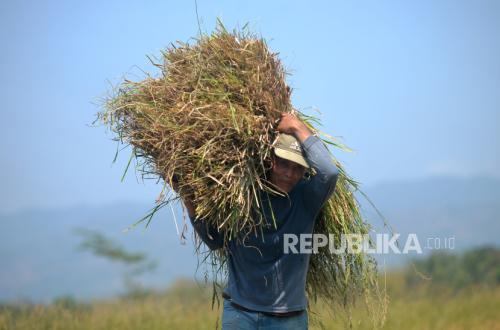
As February and March 2026 approach, various regions have recorded rice farmers conducting harvest operations. They are working earnestly to harvest the results of approximately 100 days of agricultural labour, with hopes of improving their circumstances.
For farmers, harvest season represents an opportunity to change their fortunes for the better. The harvest is an important moment because it represents the result of their hard work throughout the planting season.
There are several reasons why the harvest season is considered a moment for improving circumstances. First, the harvest results from farmers’ hard work over several months, starting from planting, caring for crops, through to harvesting. Thus, this is the time to enjoy the fruits of their labour.
Second, income increase. Harvest season typically produces larger quantities, thereby increasing farmer income. This allows them to improve their family’s economic conditions.
Third, debt repayment. With abundant harvest results, farmers can repay debts they borrowed for planting and maintenance costs.
Fourth, future investment. Harvest results can also be used to invest in the next planting season, such as purchasing seeds, fertiliser, or other agricultural equipment.
Fifth, family welfare. The harvest allows farmers to meet their family’s needs, such as purchasing food, clothing, and other necessities.
Based on the above picture, it can be asserted that the harvest is not merely about agricultural production, but also about improving circumstances and increasing the welfare of farming families.
The ideal hope is that the harvest season can break the vicious cycle of poverty that has ensnared farmers’ lives. However, a critical observation must be made: why, despite so many rice harvests conducted annually, has farmer poverty not yet been eliminated? Alternatively, one could question why the government appears to struggle in freeing farmers from the poverty and hardship they have long endured.
In reality, there are several reasons why farmers often struggle to improve their circumstances despite successful harvests. First, the selling price of harvest results is often low, so farmer income does not increase significantly.
Furthermore, high production costs. Agricultural production costs, such as seeds, fertiliser, and labour, often increase, thereby reducing farmer income.
Farmers often have accumulated debts, so harvest results are used to repay debts rather than improve welfare. Additionally, limited market access means farmers must sell harvest results to middlemen at low prices.
This may be due to dependence on middlemen. Farmers often depend on middlemen to obtain capital and market access, so they lack the power to determine selling prices. Or it may be due to lack of knowledge and skills. Farmers often lack sufficient knowledge and skills to improve productivity and harvest quality.
Finally, farmers often have limited resources, such as land, water, and equipment that prevent them from increasing production. The problem can become more complex when there are reports that agricultural extension programmes in the field are not functioning as they should.
To address this issue, there is a need for effort from government, private sector, and society to improve farmer welfare, such as improving market access and better selling prices; providing capital assistance and agricultural technology; improving farmer knowledge and skills; upgrading agricultural infrastructure, such as irrigation and roads; and developing agricultural extension systems to produce increasingly better quality paddy rice.
Formulating an effective grand design for agricultural extension requires a comprehensive and integrated approach. The following are some steps that can be taken. First, identify farmer needs and problems faced in the paddy rice production process.
Second, determine the objectives of agricultural extension, such as improving paddy rice quality, increasing productivity, and increasing farmer income. Third, select effective extension methods, such as:
— Direct extension (face-to-face)
— Group extension
— Extension through mass media (radio, TV, internet)
— Extension through demonstration plots
Fourth, develop extension materials that are relevant and suited to farmer needs, such as:
— Good paddy rice cultivation techniques
— Appropriate use of fertilisers and pesticides
— Effective water and soil management
— Prevention and control of pests and diseases
Fifth, select extension officers who possess sufficient knowledge and skills, as well as good communication abilities. Sixth, create a regular extension schedule suited to farmer needs.
Seventh, evaluate and monitor the extension process to ensure that objectives are achieved and make adjustments if necessary.
Eighth, collaborate with stakeholders, such as government, private sector, and farmer organisations, to enhance extension effectiveness.
Ninth, develop the capacity of extension officers and farmers to improve their knowledge and skills. And tenth, allocate sufficient resources to support the extension process.