
Impressive! Gunungkidul Punk Group Ventures into Rice Fields to Develop Organic Farming
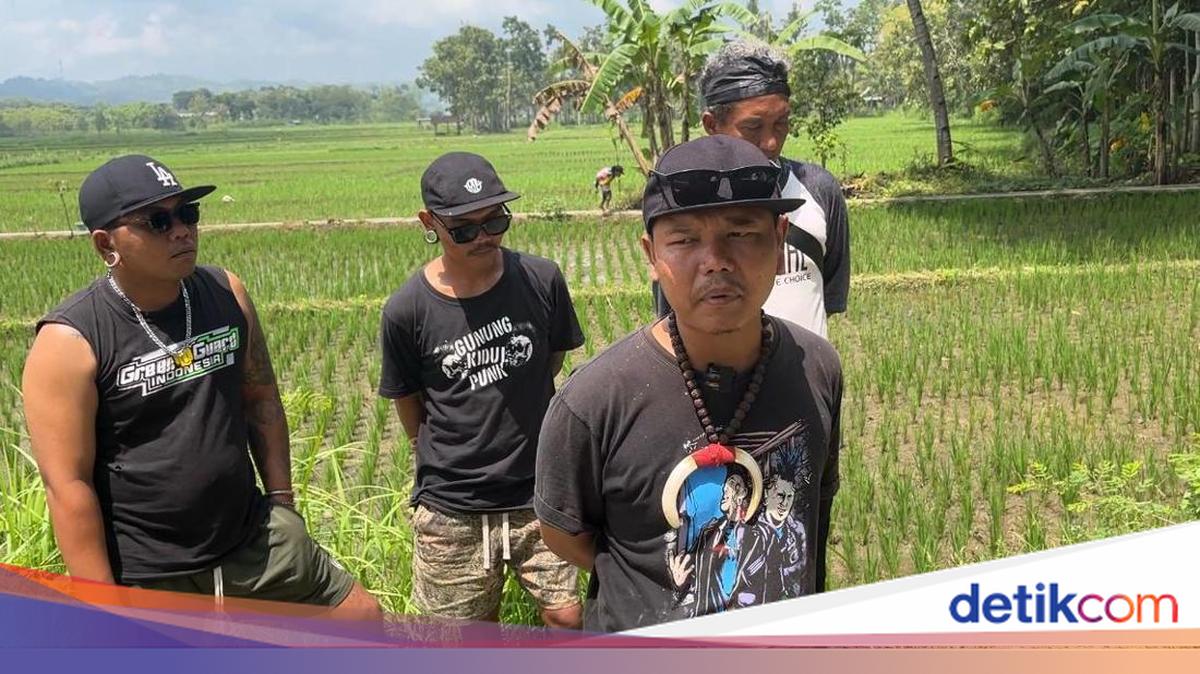
A group of punk youths in Kalangan, Ngipak, Karangmojo, Gunungkidul, are developing a farming system without using chemical-based fertilisers or pesticides. The punk youths, united under Petani Punk Gunungkidul, aim for farmer regeneration, with their agricultural produce used to help those in need.
Representative of Petani Punk Gunungkidul, SiBagz, recounted that he initially left Gunungkidul in 2004. During his time away, SiBagz switched jobs frequently and eventually decided to return to Gunungkidul in 2015.
“Then in 2017, I got married and settled here in Kalangan,” he told reporters on Wednesday (15/4/2026).
While in Gunungkidul, SiBagz often gathered with his fellow punk friends. Finally, in 2018, SiBagz and his friends sat by the rice fields and laughed at the elderly farmers still working despite their age.
“But on the way home, I thought, what if there is no farmer regeneration,” he said.
From that concern, SiBagz asked his parents’ permission to pawn the land certificate. After getting approval, SiBagz pawned it for Rp 25 million.
“I used that money for farming; at the time, I didn’t know much about agriculture, but the intention was there first. Especially since I’m a farmer’s son, so I have to be able to farm,” he stated.
Next, SiBagz obtained a loan of farmland from villagers and began utilising it with 15 fellow punk friends. At that time, SiBagz and his colleagues worked a 1,500 square metre plot.
“I still remember, because I didn’t understand farming, someone broke the sprayer because they didn’t know how to use it,” he said.
However, things gradually improved after one of their colleagues guided SiBagz and his friends in farming. Even that colleague helped SiBagz produce organic fertilisers and pesticides.
“We try as much as possible to avoid chemical materials for farming. In the end, we make natural fertilisers and pesticides, using goat urine for calcium to rice wash water for protein; for pesticides, we use ginger and turmeric,” he explained.
Their efforts bore fruit, and SiBagz along with his colleagues harvested shallots. The harvest proceeds were then used to repay the debt secured by his parents’ land certificate.
“For marketing, buyers come here, so we don’t sell to markets or anything,” he said.
From there, the Petani Punk Gunungkidul community emerged, and currently, their numbers continue to grow to 40 people, with 15 of them from Gunungkidul.
“In 2022, I took the initiative to invite youths in Kalangan to learn planting, and finally they agreed. Why did I invite them? Because most of their parents are farmers, but they’ve never been to the fields,” he said.
SiBagz then coordinated with villagers and finally got permission to use land around the cemetery in Kalangan. After that, SiBagz invited the youths to plant chillies using polybags.
“At that time, there were about 1,500 polybags filled with chilli plants; they were then trained in planting, and the harvest turned out well,” he said.
SiBagz feels pleased because now many youths in Kalangan are willing to farm. This is because his initial intention is starting to be achieved, namely introducing and encouraging the younger generation to farm.
“My goal is for young people to understand and know agriculture so there is farmer regeneration. Don’t let investors come and they only work as security guards or other employees,” he stated.
Regarding the proceeds from the planting, SiBagz admitted he never calculates them. This is because after finishing in the fields, someone usually takes vegetables from the harvest for household needs.
“I don’t know how much the proceeds are, because we don’t need the money and just want the youths to know agriculture. Moreover, they (Petani Punk Gunungkidul) still work as usual, from busking to selling food,” he said.
Even after harvest, the community pools resources again for planting capital. This is because community members can take vegetables for their respective households.
“Clearly, the money from farming is used to help villagers or members in need, like during Ramadan to buy iftar snacks and distribute them. There are also funds for rebuilding someone’s house that had been levelled to the ground,” he said.
Regarding the amount of money, SiBagz admitted he never counts it. Likewise, when asked about helping build houses, SiBagz believes good deeds shouldn’t be boasted about.
“If about building houses, there are already two houses, but I forget where they are,” he said.
Currently, SiBagz claims there are three farmlands in Kalangan that the community cultivates. The three lands are planted with rice, and two others with vegetables.
“The land is borrowed from villagers, and no fees are charged because it’s also for training the young people here,” he said.
SiBagz also revealed that one of his acquaintances invited him to become a supplier of ingredients for the free nutritious meal (MBG) programme at several nutritional fulfilment service units (SPPG) in Gunungkidul. However, SiBagz set a special condition for those SPPGs.
“A friend invited me to be an MBG supplier, but the condition is they have to pick up here instead of us delivering there. Why? Because I don’t want the agricultural produce to be wasted when sorted at the SPPG; just take what’s really needed,” he said.