
Import of 105,000 Pickup Trucks from India for Village Cooperatives Could Eliminate 10,000 New Jobs and Trigger Redundancies
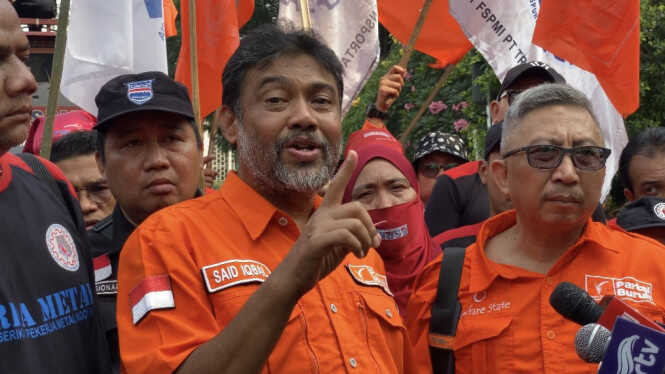
Jakarta — The Confederation of Indonesian Trade Unions (KSPI) has projected that the proposed import of 105,000 open-bed pickup trucks from India for the Merah Putih Village Cooperatives (Kopdes) programme could eliminate at least 10,000 potential new jobs.
KSPI President Said Iqbal explained that the figure represents the employment that could be created if the vehicles were manufactured domestically over a six-month to one-year production period.
“If produced in Indonesia, this could absorb more than 10,000 workers. That is not even counting the spare parts and maintenance industries that would also be stimulated. The employment impact would be far-reaching,” Said stated in Jakarta on Tuesday.
PT Agrinas Pangan Nusantara had previously announced plans to import 105,000 pickup trucks from India to support the operations of the Merah Putih village cooperatives.
The imports would comprise 35,000 units of 4x4 pickup trucks manufactured by Mahindra & Mahindra Ltd (M&M), 35,000 units of 4x4 pickups from Tata Motors, and 35,000 six-wheeled trucks from the same producers. The vehicles are to be delivered in stages throughout 2026.
Said warned that the import plan could threaten the livelihoods of tens of thousands of workers in the national automotive industry. He argued that the entry of 105,000 imported pickup trucks would reduce production output at domestic automotive plants, ultimately risking contract reductions and redundancies.
“Our members at vehicle manufacturers have come to us directly. There is a risk of redundancies because production output could decline as a result of importing 105,000 pickups from India,” Said said.
He stated that KSPI and the Labour Party have called on the government to cancel the import plan and instead entrust the contract to automotive manufacturers with factories or production facilities in Indonesia.
According to Said, several automotive manufacturers such as Hino, Isuzu, Suzuki, Toyota, and Mitsubishi possess adequate technology and production capacity to meet the requirement. Should pricing be a concern, the government could negotiate on specifications.
“If the price is considered too expensive, the specifications can be adjusted. Automatic features can be made manual, digital dashboards can be simplified. It is simply a matter of negotiation. The answer should not be to import,” he said.