
Implications of US Tariff Cancellation on Global Trade Rebalancing
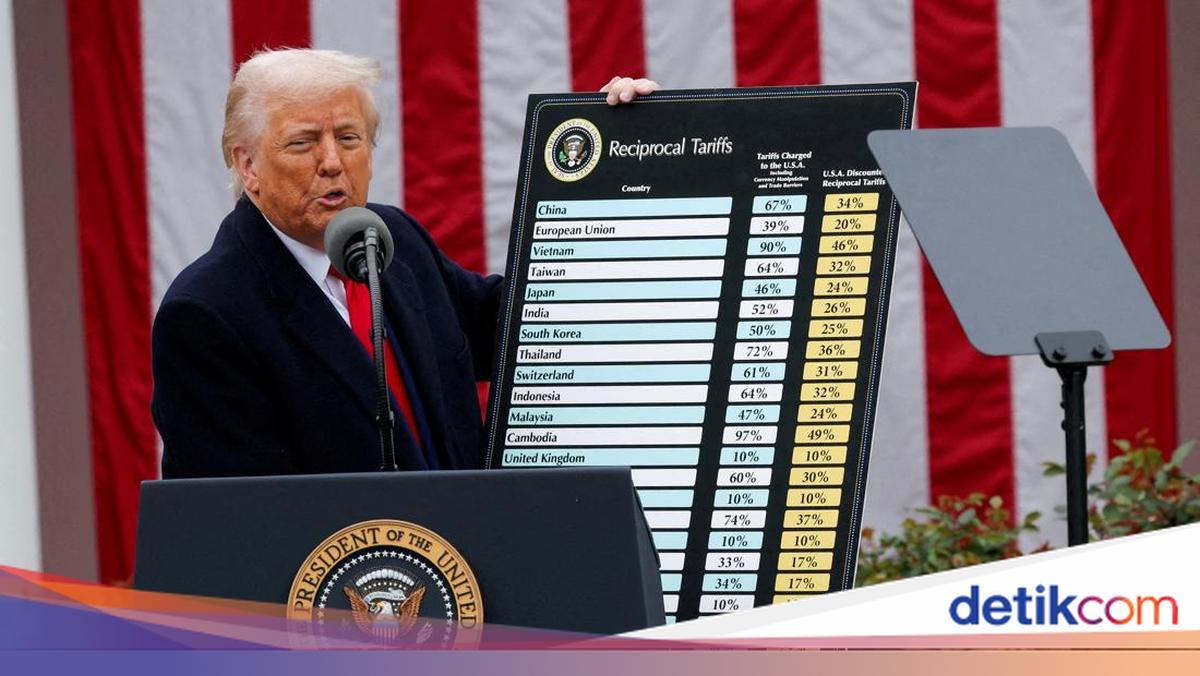
The cancellation of Donald Trump’s tariffs by the US Supreme Court marks a significant moment in the architecture of global trade. The tariff policy, previously a primary instrument of US protectionism, now faces legal delegitimisation. The question is not merely “what has changed”, but “who is ready to capitalise on this change”, and who will be left behind.
The global economy is currently experiencing a “double shock”: geopolitical disruption (the Iran–Israel conflict potentially drawing in the US) and the realignment of US trade policy. To date, there has been a strong assumption that Trump’s tariffs served as a “buffer” against import penetration (particularly from China). And, without tariffs, trade would automatically recover. This is an overly simplistic assumption.
According to the International Monetary Fund (IMF), global growth in 2025 is projected at around 3.1%, still below the historical average (~3.8%). On the other hand, the Middle East conflict has pushed Brent oil prices back into the USD 85–95 per barrel range.
Therefore, the tariff cancellation creates two simultaneous effects: trade disinflation (import prices to the US fall, pressuring global inflation downwards), and a rebound in demand, in the form of increased US imports, which could revive global trade chains.
However, the Iran–Israel conflict is holding back these positive effects. The risk of disruption in the Strait of Hormuz, a route for about 20% of the world’s oil trade, is causing markets to remain volatile. The world is not heading towards stability, but rather a phase of “new imbalance”: partial liberalisation amid escalating geopolitics.
Countries previously affected by the tariffs, such as China, the European Union, and ASEAN, have developed adaptive strategies during the trade war. However, it appears that a number of countries previously impacted by the tariffs have differing responses. One group is optimistic that the tariff cancellation offers a chance to reopen the US market, thereby increasing exports. The other group is pessimistic because the tariff cancellation will drive changes in trade structures, particularly reshoring and friend-shoring, which must continue.
According to the World Trade Organization (WTO), global trade has experienced significant trade diversion since 2018. Vietnam, Mexico, and India have replaced some of China’s position in the US market. Partner countries are no longer simply waiting for renewed access to the US market, but are strengthening regional agreements (RCEP, CPTPP), accelerating export market diversification, and promoting the creation of domestic substitute industries.
Economist Dani Rodrik emphasises that globalisation is now entering a phase of “re-embedded globalisation”, where domestic politics determine more than market efficiency. The tariff cancellation does not automatically restore the status quo ante. Partner countries are instead deepening “de-risking” strategies against the US.
An intriguing question arises: does the tariff cancellation strengthen or weaken the US economy? There are two variables that can bridge an answer to this question: the neoclassical approach, which views tariffs as distortions that eliminate efficiency gains. And, the political-economy approach, which assumes tariffs are a tool for protecting domestic industries.
Based on data from the Peterson Institute for International Economics, US inflation rates have so far fallen from a peak of 9.1% (2022) to around 3–3.5% (2025). The previous tariffs are estimated to have added USD 800–1,200 per year to US household costs. However, tariff removal has two consequences: positive, which could lower goods prices and increase consumption. Negative, it could spark pressure on domestic industries (manufacturing belt).
Economist Paul Krugman sees that protectionism is often more politically nuanced than economically, but still has real distributional effects. Meanwhile, the US is now facing a classic dilemma: economic efficiency versus domestic political stability.
Indonesia’s Strategy: Maintaining Surplus, Pressing Deficit
Indonesia faces two realities: a trade surplus with the US (around USD 14–16 billion per year), and conversely, a structural deficit with China (over USD 20 billion). Access to the US market is the main factor in the surplus, although the export structure (primary commodities and light manufacturing) is more determining.
Therefore, a strategic approach to these two realities is important to prioritise rational policies: first, accelerating export value addition by ramping up nickel downstreaming, which has proven to increase exports of metal-based products. However, it needs to be expanded to the electronics and EV supply chain sectors. Second, strategic rebalancing towards China, where deficit pressure can be minimised if balanced with productive investments. On the other hand, dependence on raw material imports needs to be reduced. Third, promoting more adaptive trade diplomacy by leveraging the tariff cancellation for penetration of textile, furniture, and footwear products into the US, which have long been flagship export products. However, this must be accompanied by strengthening non-US markets to mitigate risks from exposure due to adaptation to new markets.
Nobel laureate economist Joseph Stiglitz emphasises that modern trade strategies must be based on industrial policy, not merely liberalisation. Indonesia needs to avoid a reactive approach. This momentum must be used for structural repositioning, not just chasing short-term exports.
If observed from a quantitative perspective, we can simulate the impact of US tariff cancellation on Indonesia’s GDP through the trade channel. Simply put, Indonesia’s exports to the US, averaging USD 28–30 billion per year, have a price elasticity ranging from −1.2 to −1.5 (estimates from developing country trade literature). This means that a 10% price drop due to tariff removal could potentially boost export volume increases by around 12–15%.