
Implementing WFH to Save Fuel Amid War, Indonesia Follows These Countries
Global oil prices continue to fluctuate due to the US-Israel war with Iran. Several Asian countries have implemented fuel-saving measures by adopting work-from-home (WFH) policies. Indonesia is following suit with similar conservation steps taken by various Asian nations.
As is known, President Prabowo Subianto has emphasised fuel savings amid the Middle East conflict. The government will implement a WFH policy for one day per week.
“Then, the last point regarding the review that with high oil prices, efficiency in working hours is needed. This will open flexibility for work from home. For one day in five working days,” said Coordinating Minister for the Economy Airlangga Hartarto after a meeting with President Prabowo Subianto at the Presidential Palace Complex, Jakarta, on Thursday (19/3/2026).
The WFH policy will be enforced after Eid. However, Airlangga has not yet specified the exact timing of its implementation.
“After Eid, but we will determine the timing later,” Airlangga stated.
Airlangga emphasised that the technical details of the WFH plan are still being prepared. Not only for civil servants (ASN), he hopes WFH will also be applied to private sector workers.
The Asian countries that have implemented WFH are as follows:
- Pakistan
Pakistan’s Prime Minister Shehbaz Sharif announced a series of government measures to save fuel due to the surge in oil prices from the US-Israel war with Iran. Pakistan has asked 50% of its workers to work from home (WFH) and extended school holidays.
According to AFP on Tuesday (10/3/2026), oil prices have surged above $100 per barrel for the first time since Russia’s full-scale invasion of Ukraine in 2022. This global oil price spike occurred when Iran launched retaliatory attacks against crude oil-producing countries in the Gulf.
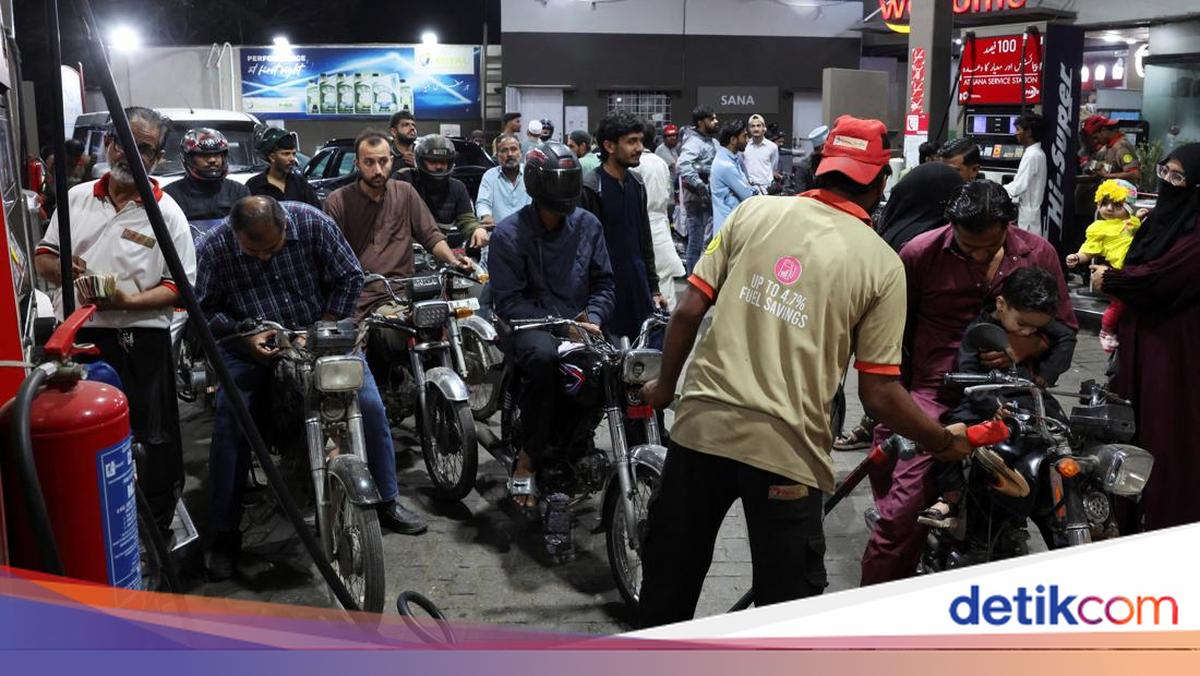
Pakistan, which relies on oil and gas from the Gulf, raised fuel prices at petrol stations by around 20% last Friday. This fuel price hike policy then triggered long queues at petrol stations across the country.
The Pakistani PM described the decision as a ‘difficult’ one, stating he wants to avoid further increases that would further burden the population, most of whom live in poverty.
- Thailand
In Thailand, Prime Minister Anutin Charnvirakul has ordered civil servants to work from home since Tuesday (10/3), except for those who must serve the public directly.
Other mandatory measures include setting air conditioner temperatures between 26-27 degrees Celsius, wearing short-sleeved shirts instead of formal attire, turning off lights and electrical equipment when not in use, and avoiding lifts in favour of stairs.
Official overseas trips have also been suspended. The government has urged the public to practise carpooling to reduce fuel consumption.
- Vietnam
Meanwhile, in Vietnam, the Ministry of Trade has asked businesses to encourage their employees to work from home (WFH) to save fuel consumption. The government has also called on the public not to hoard or speculate on fuel.
Vietnam is one of the countries most affected by supply disruptions due to the Iran war, given its high dependence on energy imports from the Middle East.
Since the end of last month, petrol prices in Vietnam have risen 32%, diesel 56%, and kerosene up to 80%. Long queues of vehicles were seen at various petrol stations in Hanoi on Tuesday (10/3).